MUSCADINE GRAPE WINE (2) Makes 1 Gallon
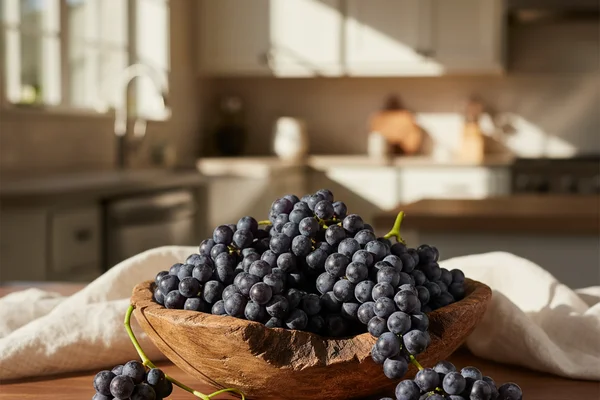
Muscadines are not Cabernet Sauvignon. They are thick-skinned, musky, almost tropical in their intensity — more grape jam than grape juice, with tannins that can punch you in the teeth if you rush them. Native to the American South, these grapes have been making wine longer than most European varieties have been on this continent. The result, when you give it time, is something genuinely singular: deep ruby, jammy, with a wild-fruit backbone that no grocery-store wine can replicate. Patience is the whole game here.
The beginner trap: New winemakers skip the 18-month aging minimum and bottle early, ending up with a tannic, harsh wine that needed another year in glass to soften into something worth drinking.
Ingredients
- 6–8 lbs muscadine grapes, fresh or frozen
- 2 lbs granulated white sugar
- 3 qts water
- 1 tsp pectic enzyme (found at homebrew shops or online)
- 1 tsp yeast nutrient (found at homebrew shops; unflavored Marmite can substitute in a pinch)
- 1 Campden tablet, crushed (potassium or sodium metabisulfite; a small pinch of either powder works too)
- 1 packet Montrachet wine yeast (Red Star brand, widely available online; bread yeast is not an acceptable substitute)
Method
- Wash and destem the grapes, then crush them thoroughly in your primary fermenter using a sanitized tool — a clean wooden dowel or the bottom of a sanitized rolling pin works fine if you don’t have a crusher.
- Bring the water to a full boil, then pour it over the crushed grapes and sugar; stir until the sugar is completely dissolved.
- Add the crushed Campden tablet and yeast nutrient, stir again, and cover the fermenter loosely with a cloth or lid.
- After 12 hours, stir in the pectic enzyme; wait another 12 hours before doing anything else.
- Measure your specific gravity (SG) — it should read 1.088 or higher; also check your titratable acidity, which should be no higher than 0.70% TA. Adjust with additional sugar or water if needed.
- Sprinkle the yeast over the must, re-cover the fermenter, and stir the must 2–4 times daily, pushing the floating cap of skins and seeds back down into the liquid each time.
- Check the SG daily; when it drops to 1.040, strain and press the pulp firmly to extract as much liquid as possible, then discard the pulp.
- Return the liquid to the primary fermenter and continue stirring daily until the SG reaches 1.020.
- Siphon the wine into a 1-gallon glass jug (secondary fermenter), fit an airlock, and let it ferment to dryness — expect 30 to 60 days.
- Once fermentation is complete, rack the wine (siphon off the sediment into a clean jug), top it up to minimize air space, and repeat this racking every 30 days until the wine runs clear.
- Wait an additional 30 days after the wine clears, then stabilize with a Campden tablet, rack one final time, and sweeten to your taste before bottling.
- Age bottled wine for a minimum of 18 months before opening — longer aging genuinely improves it.
Why this works
Muscadine skins are loaded with tannins and a compound called ellagic acid, which is why the hot-water pour at the start matters — heat opens up the cell walls and helps extract color, flavor, and those big tannins faster than cold water would. The 24-hour wait before adding yeast lets the Campden tablet do its job knocking out wild yeast and bacteria, while the delayed pectic enzyme addition is equally deliberate: pectic enzyme breaks down the pectin in the fruit pulp, which clears the wine and helps you extract more juice. Fermenting on the skins until 1.040 pulls maximum flavor before you press, then finishing off the skins keeps the tannin load manageable. Long aging mellows those tannins from harsh to smooth.
Notes
Frozen muscadines work very well here — freezing actually bursts the cells and makes crushing easier, so thaw them completely before starting. If muscadines aren’t available in your area, Concord grapes are the closest widely available substitute, though the flavor will be noticeably different. If your finished wine tastes too tannic even after aging, try blending it with a lighter fruit wine to soften the edge.