MUSTANG GRAPE WINE (Sweet, Red) [4] Makes 1 Gallon
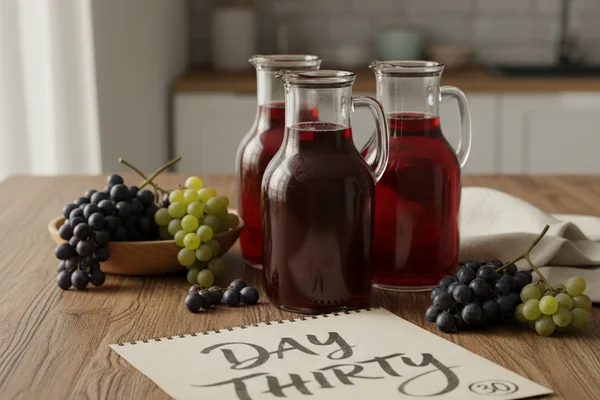
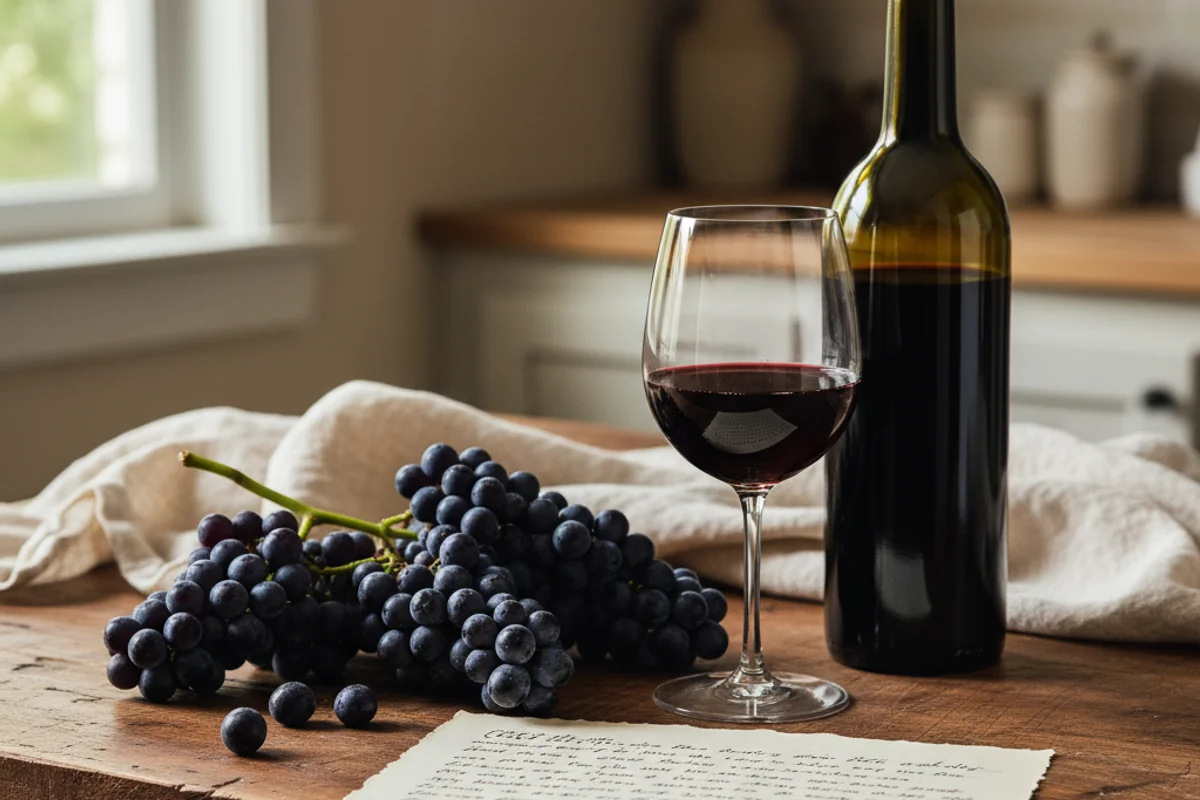
If a grape could have a personality, the black Mustang would be the loud one at the party. Native to the American South, these thick-skinned wild grapes pack an almost shockingly bold, untamed flavor — somewhere between bramble, earth, and a freight train. Heat-coaxing the juice out of the skins concentrates that intensity, and a healthy dose of sugar rounds the sharp edges into something genuinely sippable. The result is a deep, inky red that needs time to settle down but rewards patience with a wine that tastes like it was made somewhere with a front porch.
The beginner trap: Mustang grapes are naturally very high in acid, and skipping the acidity measurement and correction step will leave you with a wine that tastes harsh and mouth-puckering no matter how long you age it.
Ingredients
- 10 lbs. (roughly 1 gallon) black Mustang grapes, fresh or frozen
- 2 lbs. granulated white sugar
- ½ gallon water, plus 1 cup reserved for cooking
- 1 tsp. pectic enzyme
- 1 packet Champagne or Montrachet wine yeast (or any dry wine yeast)
- 1 tsp. yeast nutrient
Method
- Remove all stems and rinse the grapes thoroughly under cold water.
- Place grapes in a large pot with 1 cup of water, cover, and heat on low-to-medium. Stir every 10 minutes with a wooden spoon until the grapes burst open and release their juice, then remove from heat and let cool to room temperature.
- Meanwhile, bring the remaining ½ gallon of water to a boil, pour it over the sugar in your primary fermentation crock, and stir until fully dissolved. Set half of this sugar-water aside in a sealed quart jar for later.
- Once the cooked grapes are just warm to the touch, pour the juice and pulp through a nylon straining bag held over the crock. Tie the bag closed and leave it sitting in the juice.
- Stir in the yeast nutrient and pectic enzyme, then cover the crock and let it rest for 10–12 hours.
- Add the yeast, re-cover, and for the next 7 days push the straining bag down under the juice twice daily using your wooden spoon to extract color and flavor.
- After 7 days, lift the bag and press the pulp firmly to squeeze out every last bit of juice, then discard the solids.
- Test the acidity of the wine with an acid test kit and adjust downward to approximately 7 parts per thousand (ppt) tartaric if needed — cold stabilization or potassium bicarbonate are your main tools here.
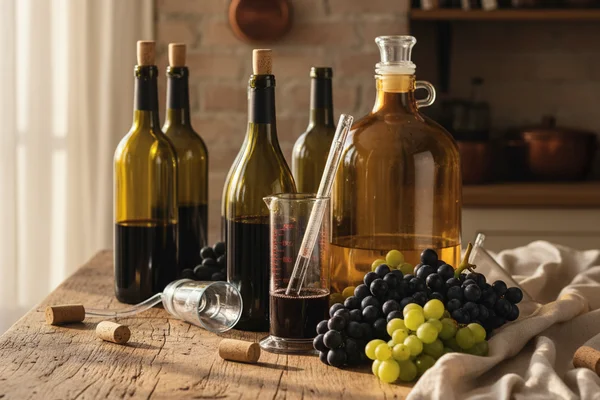
- Pour the wine into a 1-gallon glass secondary fermentation vessel (a standard carboy or jug works fine), top it up with the reserved sugar-water, fit an airlock, and let it ferment undisturbed for 3 weeks.
- Rack the wine off its sediment into a clean vessel, top up with any remaining sugar-water, fit the airlock again, and wait another 3 weeks.
- Rack once more, then set the wine aside for 2 months. Rack again and allow it to begin clearing.
- Wait 1 month and check for sediment; if lees are still dropping, give it another month before proceeding.
- Once the wine is clear and stable, rack a final time, add potassium sorbate and a Campden tablet (crushed) to stabilize, then bottle. Allow at least 1 year before opening — longer is better.
Why this works
Mustang grapes are notoriously high in malic and tartaric acids, which is why raw juice from them can feel almost caustic on the tongue. Pectic enzyme breaks down the pectin in the grape skins, which does two jobs: it helps more juice escape the pulp and prevents a pectin haze from clouding your finished wine. The extended 7-day maceration with daily punch-downs pulls anthocyanins — the pigments and tannins locked in those thick skins — into solution, building the deep color and structure this wine is known for. Splitting the sugar-water addition (some upfront, some reserved) gives you a gentle way to top up the vessel after each racking without diluting the wine or shocking the yeast mid-fermentation.
Notes
Frozen Mustang grapes work very well here — freezing ruptures the cell walls and actually makes juice extraction easier during the heating step. If you can’t source Mustang grapes locally, look for them at Southern farm stands or online frozen fruit suppliers; Concord grapes can substitute but will produce a noticeably milder, less wild-tasting wine. An acid test kit (available at any homebrew shop or online for around $10) is not optional with this recipe — it is the single most important tool you will use.