NANKING CHERRY WINE
Nanking cherries are tiny, tart, and criminally underused. Related to sour cherries but smaller than a grape, these little red fruits pack an assertive, tangy punch that translates beautifully into wine. A splash of Concord grape concentrate rounds out the body and adds depth that straight cherry juice alone struggles to deliver. The result is a bright, garnet-colored wine with enough acidity to make your mouth water and enough fruit character to keep you coming back for a second glass. Give it at least six months in the bottle — patience is the secret ingredient here.
The beginner trap: Skipping the dark fermentation vessel (or the brown-paper wrap) will cause the wine’s deep red color to fade badly before it ever hits a glass.
Ingredients
- 3 lbs Nanking cherries, fresh or frozen, destemmed
- 1½ lbs granulated white sugar
- 1 (11 oz) can Welch’s frozen Concord grape concentrate, thawed
- 6 pints (3 quarts) water
- 1 Campden tablet, crushed
- 1 tsp pectic enzyme
- ½ tsp acid blend (or 1 tsp lemon juice as a rough substitute)
- 1 tsp yeast nutrient
- 1 packet Burgundy wine yeast (or any robust red wine yeast)
Method
- Bring the water to a boil and dissolve the sugar completely, stirring until the liquid runs clear.
- Wash and destem the cherries, place them in a nylon straining bag, and crush them by hand directly into your primary fermentation vessel.
- Add the acid blend and yeast nutrient to the crushed fruit, then pour the hot sugar-water over everything and stir briefly.
- Cover the vessel and let it cool to 70–75°F, then stir in the crushed Campden tablet, cover again, and wait 12 hours.
- Add the thawed grape concentrate and pectic enzyme, stir well, recover, and wait another 12 hours.
- Sprinkle in the yeast, cover loosely, and ferment for 7 days — squeeze the fruit bag twice daily to pull out juice and flavor.
- Squeeze the bag firmly to extract all remaining juice, discard the pulp, and transfer the wine to a dark secondary vessel (or a clear vessel wrapped in brown paper).
- Top up to minimize headspace, fit an airlock, and rack after 30 days — top up and reseal.
- Rack again after another 30 days, then once more two months after that.
- Stabilize, sweeten to taste if desired, and rest 2–3 weeks before bottling.
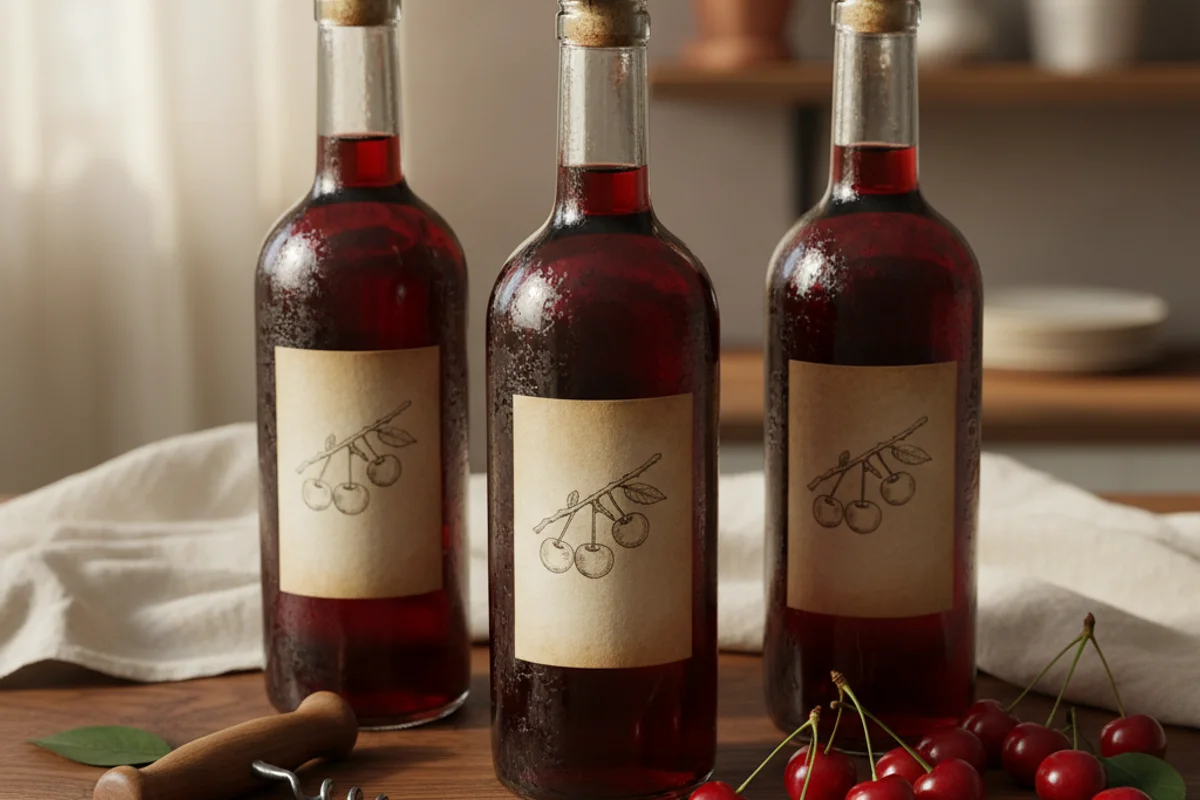
- Store bottles in a dark place and wait at least 6 months before opening — longer aging improves the wine noticeably.
Why this works
Nanking cherries are naturally high in acid and tannin but relatively low in fermentable sugar and body, which is why this recipe brings in backup. The Concord grape concentrate does double duty: it adds fermentable sugars and contributes grape tannins that give the finished wine a more structured mouthfeel. Pectic enzyme is non-negotiable here — cherries are loaded with pectin, and without the enzyme you will end up with a hazy wine that refuses to clear no matter how long you wait. The two-stage wait (12 hours after the Campden, then another 12 after adding the concentrate and enzyme) gives sulfite time to do its sanitation work before you introduce live yeast.
Notes
Frozen Nanking cherries work just as well as fresh and are often easier to source — freezing also breaks down cell walls, which helps juice extraction. If you cannot find Nanking cherries at all, sour (tart) cherries such as Montmorency make a solid substitute at the same weight. Acid blend is available at homebrew shops; in a pinch, use tartaric acid or a small measured amount of lemon juice, but test your pH if you go that route.