Native North American Grapes — Vitis Riparia
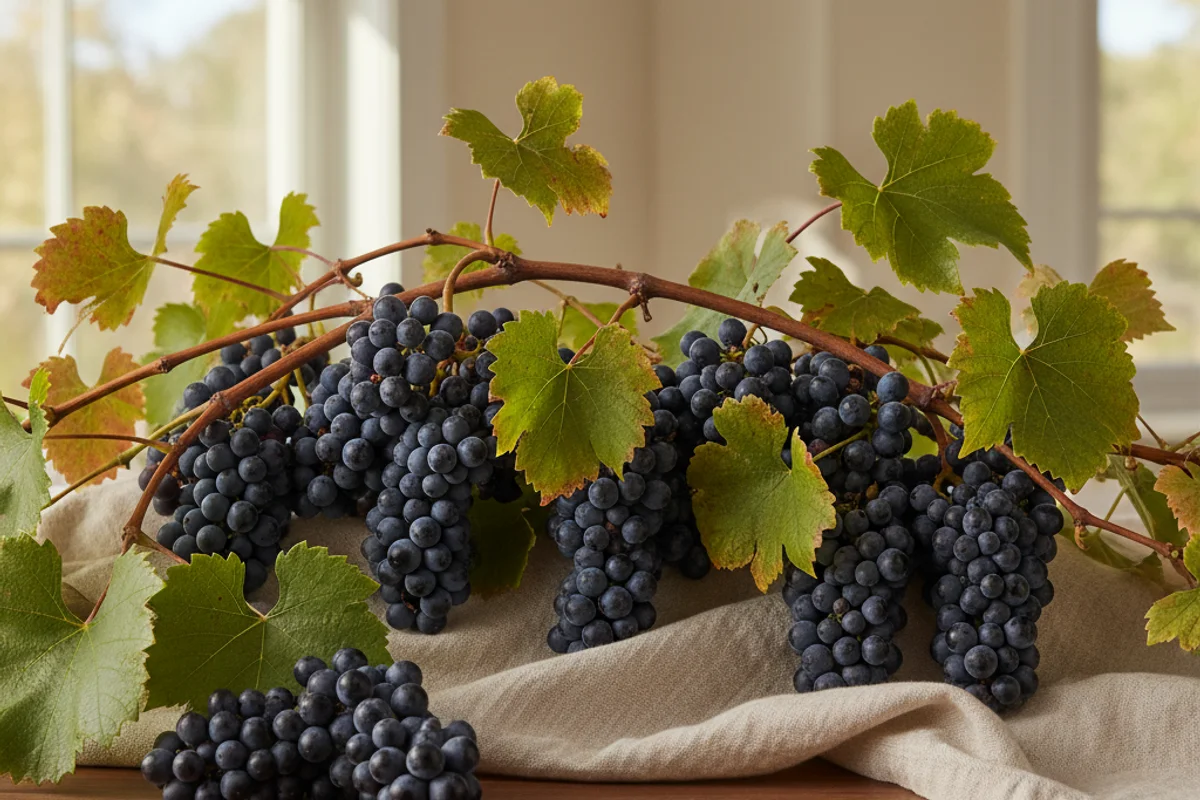
Here’s the thing about Vitis Riparia — it survived the ice age, shrugged off phylloxera when it nearly wiped out every vineyard in Europe, and grows wild from the Gulf Coast to the Canadian Shield. The berries are small, dark, and dusted with a blue-black bloom. Fresh off the vine they hit you with a sharp, clean acid — no foxy funk, none of that wild grape weirdness. Let them hang until they’re past ripe, almost shriveled, and something shifts. The flavor softens and deepens into something genuinely worth putting in a bottle.
The beginner trap: Riparia berries carry brutally high acid at normal harvest time — pick them too early and no amount of sweetening will fix that sharp, harsh finish; leave them on the vine until they’re soft and slightly shriveled, or you’re fighting chemistry the whole way.
Ingredients
- 4 lbs fresh Vitis Riparia (riverbank or frost grape) berries, fully ripe to over-ripe — fresh or frozen
- 1½ lbs granulated white sugar (adjust to target SG 1.085–1.090)
- 1 qt water (filtered or boiled and cooled)
- 1 tsp acid blend (citric/tartaric/malic mix, available at homebrew shops — or substitute 1½ tsp lemon juice per gallon as a rough stand-in)
- ½ tsp pectic enzyme (helps break down the pulp and clear the wine)
- ¼ tsp potassium metabisulfite (Campden tablet crushed — 1 tablet per gallon works the same)
- ½ tsp yeast nutrient
- 1 packet wine yeast — Lalvin 71B or Red Star Côte des Blancs work well here
Method
- Crush the berries thoroughly in a sanitized primary fermenter — a potato masher or clean hands both work fine.
- Dissolve the sugar in the water over low heat, let it cool to room temperature, then pour it over the crushed fruit.
- Stir in the acid blend, pectic enzyme, yeast nutrient, and crushed Campden tablet. Cover loosely and let it sit for 12 hours.
- Sprinkle the yeast over the must and stir gently to incorporate. Cover the fermenter with a cloth or loose lid — not airtight yet.
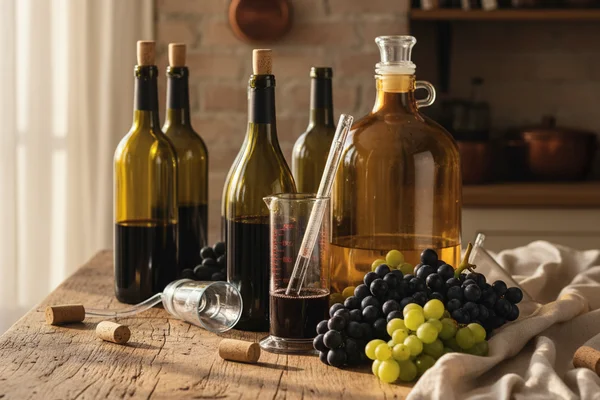
- Stir the cap (the floating fruit solids) down twice daily for 5–7 days. Check your specific gravity each day with a hydrometer.
- When SG drops to around 1.020, strain out the solids and press the pulp firmly through a mesh bag or cheesecloth into a sanitized secondary fermenter (a glass carboy or food-grade jug).
- Fit the secondary with an airlock and let fermentation finish — this usually takes another 1–2 weeks, until bubbling stops and SG holds steady near 1.000.
- Rack the wine off the sediment into a clean vessel using a siphon tube. Add one more crushed Campden tablet per gallon to protect against oxidation.
- Rack again every 4–6 weeks until the wine is clear. Then bottle and age at least 6 months — a year is better.
Why this works
Riparia grapes have two things working against them out of the gate: high acid and modest sugar. That’s actually a manageable chemistry problem. Adding water dilutes the acid, and adding sugar raises the fermentable sugar level (measured as specific gravity) to a range where yeast can produce a balanced 10–12% alcohol wine. The pectic enzyme breaks down the pectin in the grape pulp — skip it and you get a permanently hazy wine, because pectin doesn’t respond to fining or time alone. Waiting until the berries are over-ripe matters too: as the grapes shrivel, sugar concentration rises and some of the harsh malic acid converts or drops, so you’re starting from a better place before you even touch a measuring cup.
Notes
Frozen Riparia berries work excellently here — freezing ruptures the cell walls and actually improves juice extraction. If you forage your own, pick after the first frost for the best flavor. If Riparia isn’t accessible in your area, Concord grapes (widely available fresh or frozen at most grocery stores) are a reasonable stand-in, though they carry more of the characteristic foxy flavor that Riparia lacks.