NECTARINE WINE
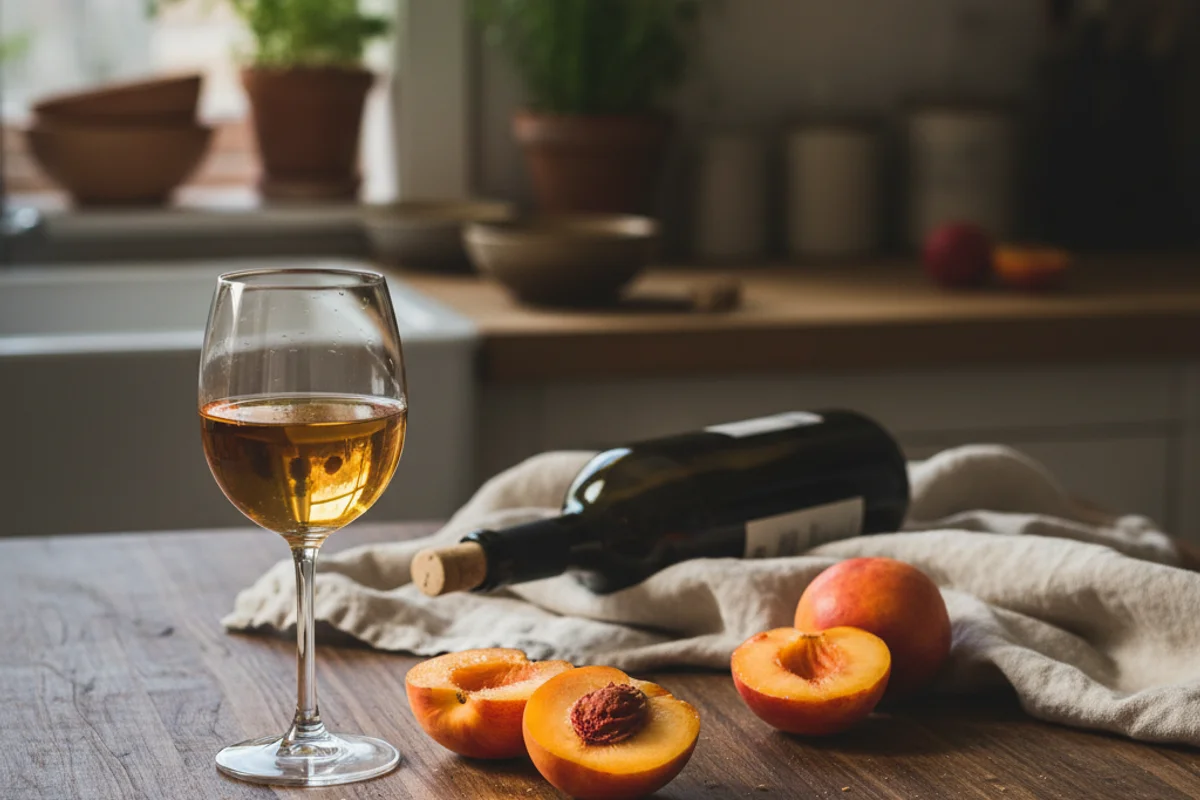
Nectarines are basically peaches that skipped the fuzzy sweater — same stone-fruit DNA, smoother skin, and a flavor that runs a little sharper and more aromatic. That brightness translates beautifully into wine. What you end up with is a pale golden, floral sipper with enough acid to keep it lively and enough fruit depth to make you stop and pay attention. Leave the skins on during fermentation; they carry color, tannin, and flavor compounds that a peeled fruit simply can’t deliver.
The beginner trap: Skipping the 12-hour wait before adding pectic enzyme means the enzyme fights the Campden tablet — and the enzyme loses, leaving you with a permanently cloudy wine.
Ingredients
- 4 lbs nectarines, fresh or frozen, pits removed, skins on, cut into small chunks
- 2 lbs granulated white sugar
- 7 pints water
- 1½ tsp acid blend (or 2 tbsp fresh lemon juice as a substitute)
- ½ tsp pectic enzyme
- ⅛ tsp grape tannin (or 1 cup strongly brewed, cooled black tea)
- 1 tsp yeast nutrient
- 1 Campden tablet, crushed
- 1 packet Champagne or Montrachet wine yeast
Method
- Bring the water to a boil. While it heats, pit the nectarines and cut them into small pieces over a bowl, keeping all the juice.
- Load the fruit and juice into a nylon straining bag, tie it closed, and set it in your primary fermenter.
- Mash the bagged fruit firmly with your hands, then pour the sugar over the top of the bag.
- Pour the boiling water over the sugar and fruit, then stir until the sugar fully dissolves.
- Let the must cool to room temperature, then stir in the acid blend, grape tannin, yeast nutrient, and crushed Campden tablet.
- Cover the fermenter and leave it alone for 12 hours.
- Add the pectic enzyme, stir, recover, and wait another 12 hours.
- Sprinkle in the yeast, stir, and cover the fermenter again.
- Squeeze the bag gently and stir the must twice a day for seven days.
- After seven days, lift the bag and let it drip-drain into the fermenter — do not squeeze. Discard the spent fruit.
- Cover the fermenter and let the must rest for one more week.
- Rack into a glass secondary fermenter and fit an airlock.
- After 14 days, rack again, top up to reduce headspace, and refit the airlock.
- Rack every 60 days until the wine runs clear.
- Stabilize the wine, stir in ¼ cup of simple syrup (equal parts sugar dissolved in water), wait 10 days, then rack into bottles.
- Age 6–12 months before opening. Serve chilled.
Why this works
Nectarines are loaded with pectin — the same stuff that makes jam set. In wine, pectin creates a stubborn haze that no amount of racking will fix. Pectic enzyme breaks those long pectin chains apart, clearing the wine from the inside out. The catch: Campden tablets release sulfur dioxide, which knocks out wild yeast and bacteria — but at high enough levels it also deactivates pectic enzyme. By waiting 12 hours after adding the Campden tablet, you let the sulfur dioxide level drop to a safe range before introducing the enzyme. Get the timing wrong, and you get a wine that looks like diluted lemonade no matter how long you wait.
Notes
Frozen nectarines work well here and are available year-round — thaw them completely and include all the juice. If you can’t find acid blend at a homebrew shop, lemon juice is a workable stand-in, though the flavor profile will shift slightly. If your finished wine tastes flat or one-dimensional after aging, a small acid adjustment at bottling time usually brings the fruit character back into focus.