NETTLE WINE (1)
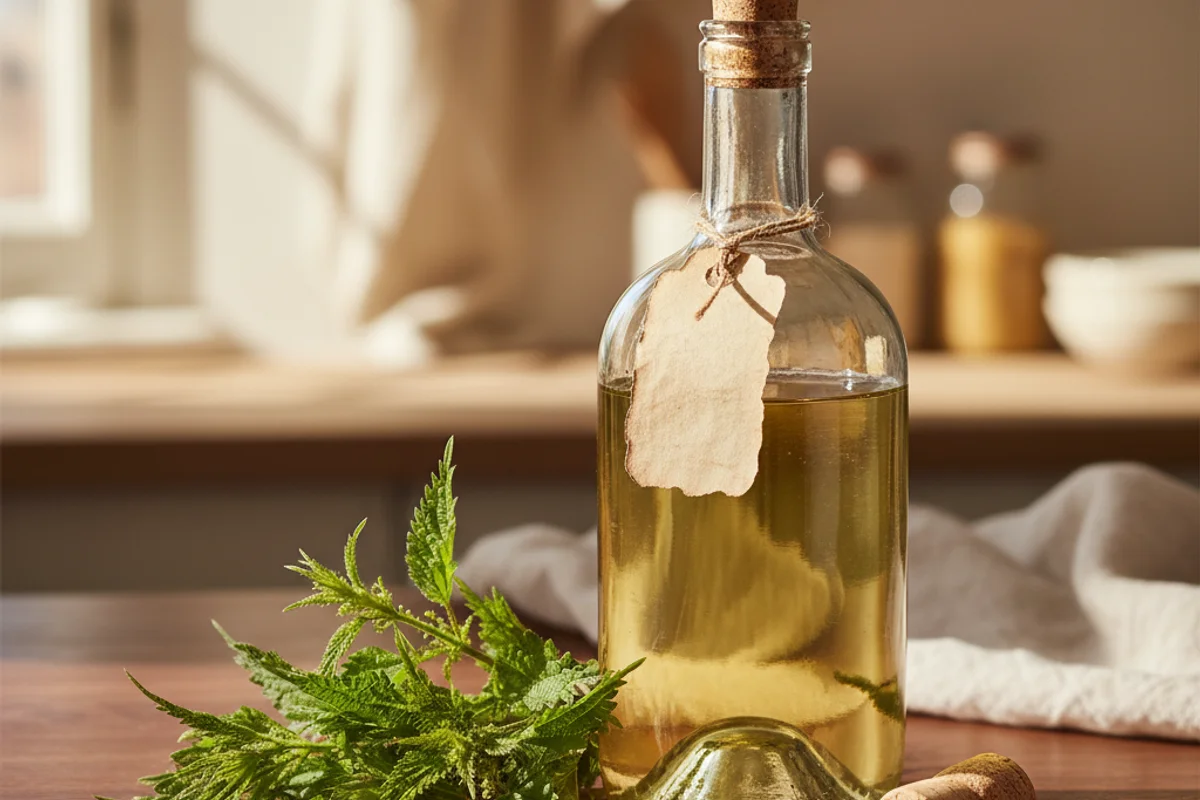
Stinging nettles have a reputation for ruining hikes, but strip away their defensive chemistry and you get a surprisingly earthy, herb-forward green that has been fermented across northern Europe for centuries. Cooked or steeped in boiling water, nettles lose their sting entirely and release grassy, faintly mineral flavors. Combined with the bright acid of fresh citrus, the result is a light, dry country wine with a pale golden color and a clean herbal finish — the kind of bottle that makes people ask, “Wait, what is that?”
The beginner trap: Skipping gloves while handling raw nettles — those fine hairs inject formic acid on contact, so wear kitchen or garden gloves from harvest through the boiling step.
Ingredients
- 3 quarts fresh nettle tops (young, tender growth; see Notes for handling tips)
- 3½ lbs granulated white sugar
- 7½ pints water (roughly 15 cups)
- 1 lemon
- 1 orange
- 1 tsp yeast nutrient (available at homebrew shops or online)
- 1 packet wine yeast (e.g., Lalvin EC-1118 or any general-purpose wine yeast)
Method
- Put on gloves before touching raw nettles. Bring the water to a full boil.
- Use a vegetable peeler to remove thin strips of zest from the lemon and orange, avoiding the bitter white pith underneath.
- Juice both fruits and set the juice aside.
- Place the nettle tops, citrus zest, citrus juice, sugar, and yeast nutrient into your primary fermentation vessel (a food-safe bucket works well).
- Carefully pour the boiling water over everything and stir until the sugar is fully dissolved — the heat also neutralizes the nettles’ sting.
- Cover the vessel with a clean, sanitized cloth secured with a rubber band and let it cool to room temperature (around 65–75°F).
- Once cooled, sprinkle or add your rehydrated wine yeast and stir gently.
- Ferment in the primary vessel for five days, stirring once daily; you should see active bubbling within 24–48 hours.
- Strain the liquid through a fine mesh strainer or cheesecloth into a sanitized glass secondary (a one-gallon jug or carboy), discard the solids, and fit an airlock.
- When the wine begins to clear — usually two to four weeks — rack it off the sediment into a clean secondary vessel and refit the airlock.
- After three months of aging in the secondary, bottle the wine and allow it to rest at least another month before drinking.
Why this works
Boiling water does two jobs at once here. First, it denatures the silica-tipped hollow hairs on the nettles that deliver formic acid — no more sting. Second, it starts extracting the water-soluble flavor compounds and chlorophyll from the leaves. The citrus zest adds aromatic terpenes and a small amount of pectin, while the juice contributes tartaric and citric acids that keep the must at a yeast-friendly pH. Sugar provides the fermentable fuel, and yeast nutrient supplies nitrogen so the yeast colony stays healthy and avoids producing off-flavors like hydrogen sulfide. The result is a controlled, clean fermentation rather than a stressed one.
Notes
Fresh nettle tops are the standard here — look for young spring growth at farmers’ markets or forage from areas free of pesticides and road runoff. If you can’t find nettles locally, some specialty grocery stores and online herb suppliers sell dried nettles; use about 2 oz dried in place of 3 quarts fresh, and skip the boiling-for-extraction step since they’re already shelf-stable. A campden tablet (potassium metabisulfite) crushed and added 24 hours before the yeast can help prevent wild-yeast competition if you’re unsure about your water source.