NETTLE WINE (2)
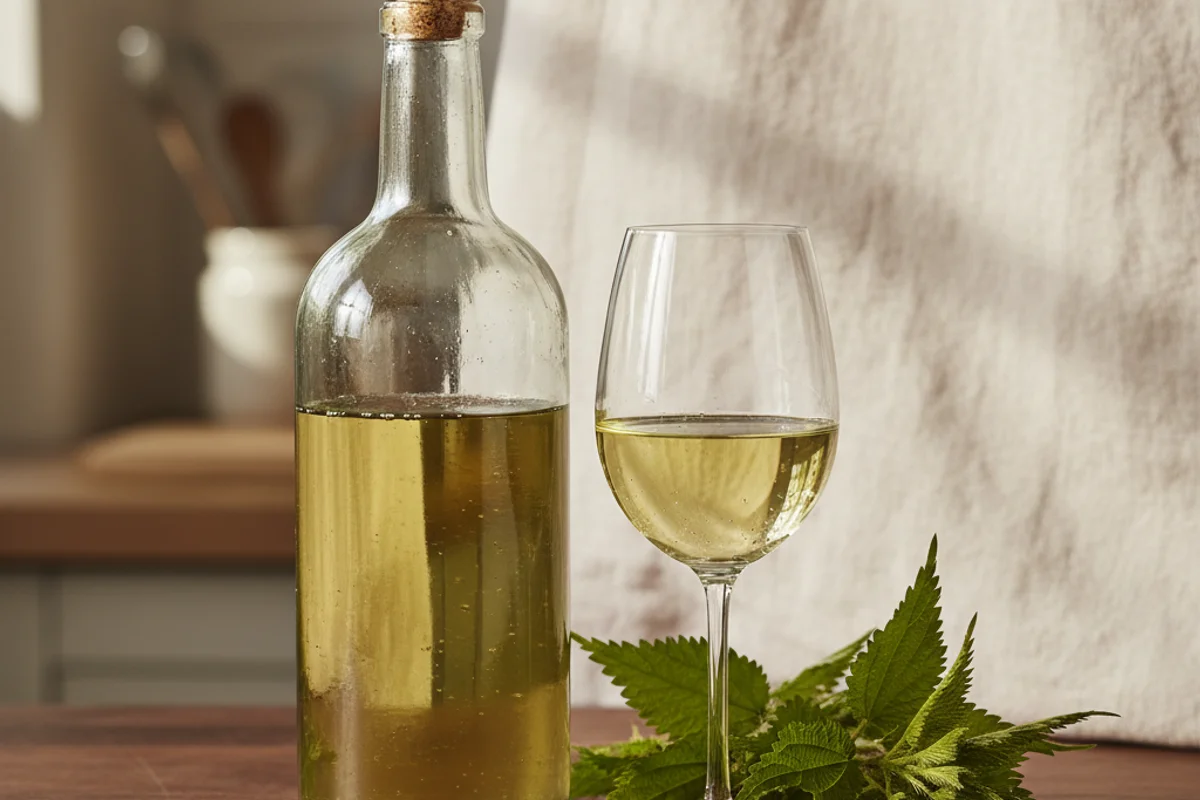
Stinging nettles have a reputation for being the plant that fights back, but cook them for even a few minutes and that sting disappears completely, leaving behind a flavor that lands somewhere between green tea and fresh spinach. Paired with bright lemon and a quiet warmth from fresh ginger, this wine comes together as something genuinely surprising — light, herbal, and a little floral. It’s one of those “forage-it-or-find-it” wines that rewards curiosity, and it’s ready to drink almost as soon as it’s bottled.
The beginner trap: Skipping gloves when you handle the raw nettles — those tiny needles deliver a real sting, so wear kitchen or garden gloves until the nettles hit boiling water.
Ingredients
- 2 quarts fresh nettle tops (young, tender growth; wear gloves to handle)
- 3½ lbs granulated white sugar
- ½ oz fresh ginger root, thinly sliced (about a 1-inch knob)
- 7½ pints water (just under 1 gallon total)
- 2 lemons
- 1 tsp yeast nutrient
- 1 packet wine yeast (a general-purpose white wine yeast works well)
Method
- Put on gloves and rinse the nettle tops. Use a vegetable peeler to remove thin strips of zest from both lemons, then juice the lemons and set the juice aside.
- Combine the nettles, ginger slices, and lemon zest in a large pot with 2 quarts of water. Bring to a boil, then reduce heat and simmer for 45 minutes.
- Add the sugar and reserved lemon juice to your primary fermentation bucket.
- Strain the hot nettle liquid directly over the sugar, discarding the solids. Stir until the sugar fully dissolves, then pour in the remaining water.
- Cover the bucket with a clean, sanitized cloth and let it cool to room temperature — around 70°F.
- Once cool, stir in the yeast nutrient and pitch the yeast. Cover again and let ferment for four days, stirring once daily.
- After four days of active fermentation, stir the must well and transfer it to a sanitized secondary fermenter (a 1-gallon glass jug works). Fit the airlock.
- When the wine begins to clear — usually a few weeks — rack it off the sediment into a clean secondary fermenter and refit the airlock.
- After 3 months, rack into bottles. This wine is drinkable right away.
Why this works
Nettles are high in chlorophyll, minerals, and plant tannins — enough structure to give the wine some body without needing grape tannin added. The long simmer extracts flavor and color while neutralizing formic acid, the compound responsible for the sting. Lemon juice drops the pH into a range where yeast thrive and spoilage bacteria struggle. Ginger contributes volatile aromatic compounds that survive fermentation at low levels, showing up as a subtle warmth in the finished wine rather than a sharp bite. Together, these ingredients build a balanced must that doesn’t need much intervention to ferment clean.
Notes
If you can’t forage nettles, check farmers markets in spring, or look for dried nettles at health food stores — use about half the volume if dried. Frozen nettles (thawed and drained) also work well here. For the ginger, any fresh knob from the grocery store produce section is perfect; don’t substitute powdered ginger, as it will cloud the wine and add bitterness.