NETTLE WINE (3)
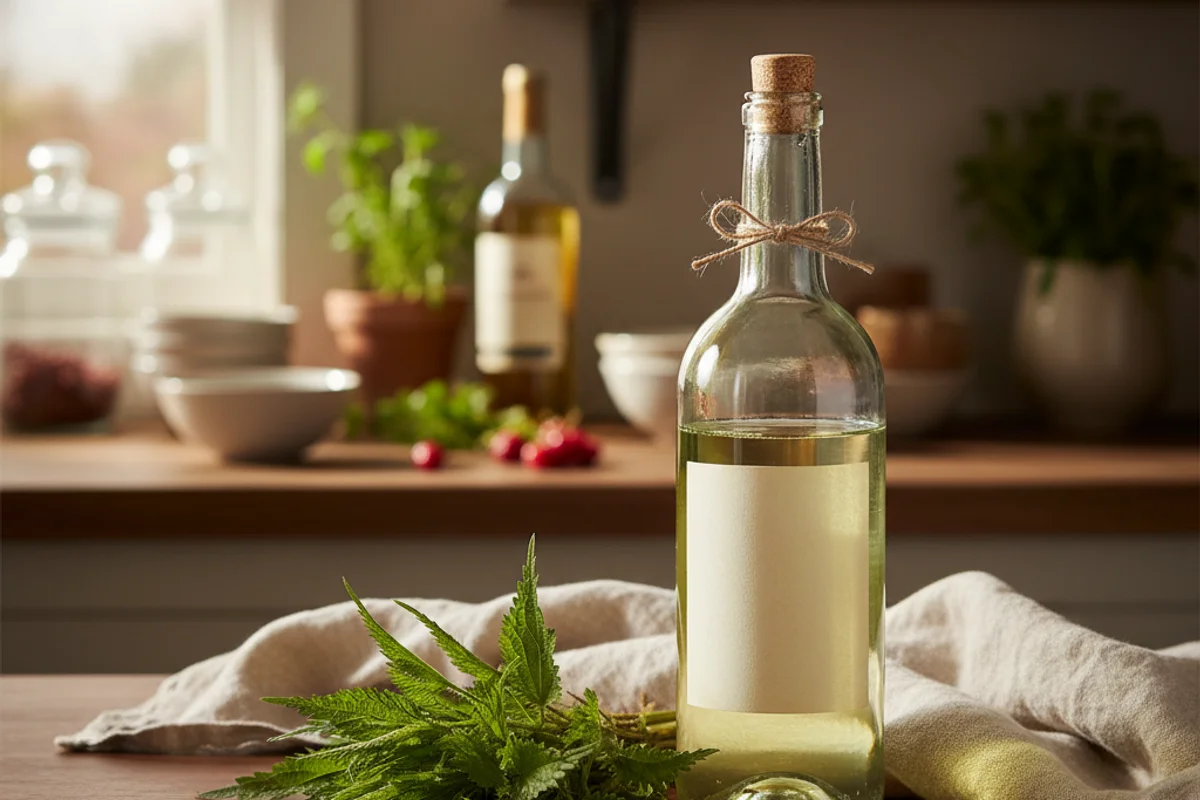
Stinging nettles have a bad reputation — and fair enough, since brushing against them bare-handed feels like grabbing a lit sparkler. But once heat hits those leaves, the sting vanishes completely and something genuinely interesting takes its place: a grassy, faintly mineral flavor with real backbone. Add parsley for a fresh herbal lift and citrus peel for brightness, and you’ve got a country wine that tastes nothing like grape but earns its place on the table anyway. This one ferments fast and clears quickly, so you won’t be waiting long to find out what all the fuss is about.
The beginner trap: Skipping gloves when handling raw nettles — those tiny barbs will sting your hands for hours, so wear kitchen or rubber gloves from the moment you touch them until they hit the boiling water.
Ingredients
- 2 quarts fresh nettle tops (young growth, tips only; wear gloves when measuring)
- 3 lbs granulated white sugar
- 2 cups fresh flat-leaf or curly parsley
- 7½ pints water (about 15 cups), divided
- 1 lemon
- 1 orange
- ⅛ tsp wine tannin (or substitute 1 strong cup of plain black tea)
- 1 tsp yeast nutrient
- 1 packet wine yeast (Lalvin EC-1118 or similar)
Method
- Using a vegetable peeler, remove thin strips of zest from the lemon and orange, avoiding the white pith underneath.
- Combine the nettle tops, parsley, and citrus peels in a large saucepan with 2 quarts (4 pints) of the water. Bring to a boil, then reduce heat and simmer for 45 minutes.
- While the pot simmers, juice the lemon and orange. Add the juice, sugar, and tannin to your primary fermenter.
- Strain the hot nettle liquid through a fine mesh strainer or cheesecloth directly over the sugar in the fermenter. Discard the solids.
- Stir until the sugar fully dissolves, then pour in the remaining water. Cover the fermenter with a clean sanitized cloth and let it cool to room temperature.
- Once cool, stir in the yeast nutrient, then sprinkle the wine yeast on top. Cover again and leave it to ferment.
- After 4 days of active fermentation, stir the must well and transfer it to a sanitized secondary fermenter. Seal with an airlock.
- Once the wine starts to look clear, rack it off the sediment into a clean secondary fermenter and refit the airlock.
- After 3 months, rack directly into bottles. This wine is ready to drink right away but will improve with a few more weeks of bottle rest.
Why this works
Raw nettles sting because tiny hollow hairs on the leaves inject a cocktail of formic acid, histamine, and serotonin into your skin. Heat breaks down those structures completely — boiling or even brief blanching neutralizes every one of them. That long 45-minute simmer does double duty: it extracts the grassy, chlorophyll-rich flavor compounds from both the nettles and parsley while driving off any vegetal harshness. The citrus peel contributes aromatic oils and natural pectin, while the juice adds tartaric and citric acid to keep the pH in a range where yeast thrives and spoilage bacteria can’t get a foothold. Tannin provides just enough grip and structure to stop the finished wine from tasting flat.
Notes
If you can’t forage nettles locally, some farmers markets and natural food stores carry them seasonally — call ahead. Frozen nettles work well here; thaw them fully and measure the same 2 quarts before adding to the pot. Flat-leaf parsley has a slightly stronger flavor than curly, but either works fine.