NETTLE WINE (4)
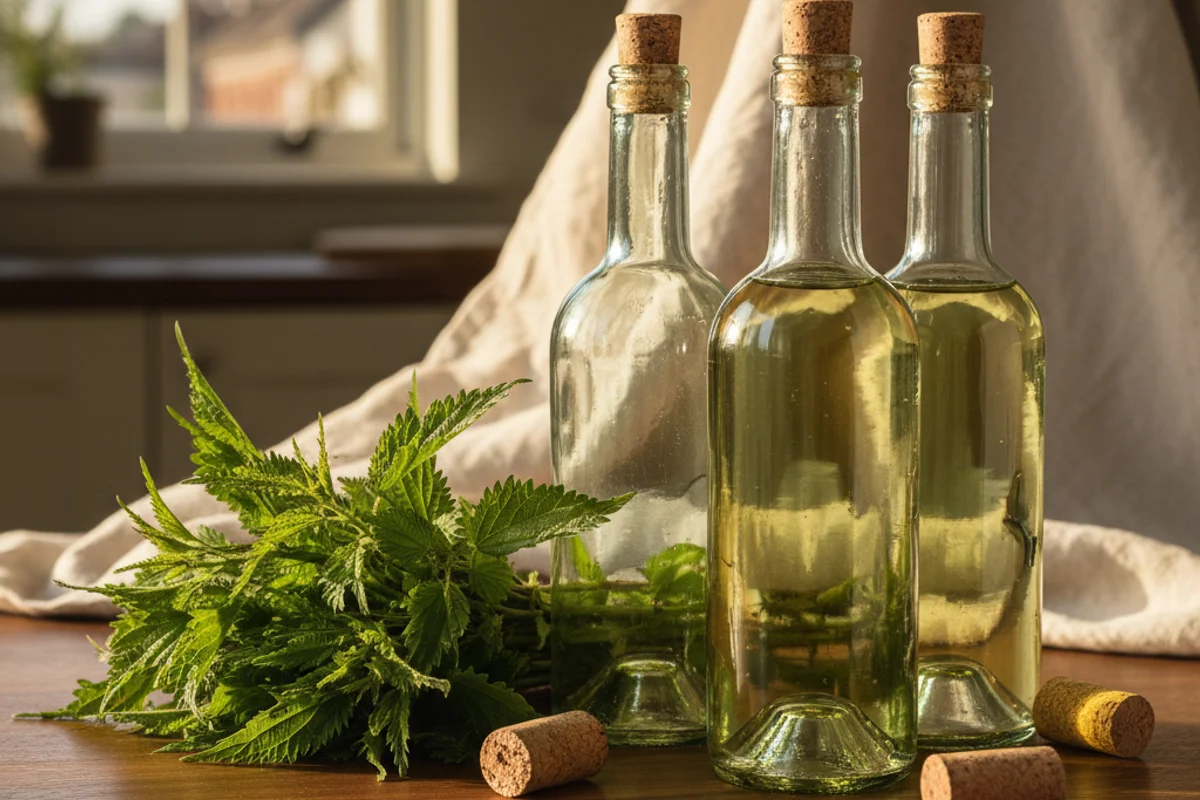
Stinging nettles have a bad reputation, but heat neutralizes their sting and unlocks something genuinely surprising — a grassy, mineral-forward base with quiet green depth. Pair that with a full quart of lemon thyme, and you get a wine that smells like a sun-warmed herb garden and tastes clean, bright, and a little wild. Citrus peel and juice sharpen the edges. The result is light, dry, and ready to drink the moment it clears — no long cellar wait required. Think of it as the winemaker’s version of a foraged gin.
The beginner trap: Skipping the full 45-minute simmer means you won’t fully extract flavor from the nettles and thyme — don’t rush it.
Ingredients
- 2 quarts fresh nettle tops (wear gloves when handling raw)
- 1 quart fresh lemon thyme sprigs (standard thyme works in a pinch)
- 3 lbs granulated white sugar
- 7½ pints water, divided
- 1 lemon, zest peeled thin + juice reserved
- 1 orange, zest peeled thin + juice reserved
- ⅛ tsp wine tannin (or 1 cooled cup strong black tea)
- 1 tsp yeast nutrient
- 1 packet wine yeast (Lalvin 71B or EC-1118)
Method
- Use a vegetable peeler to remove thin strips of zest from the lemon and orange, avoiding the bitter white pith.
- Combine nettle tops, lemon thyme, and citrus zest strips in a large pot with 2 quarts of water. Bring to a boil, then reduce heat and simmer for 45 minutes.
- While the herb mixture simmers, juice the lemon and orange. Add the citrus juice, sugar, and tannin to your sanitized primary fermenter.
- Strain out all solids from the herb liquid and pour the hot liquid directly over the sugar mixture in the primary. Stir until the sugar fully dissolves.
- Add the remaining water, stir to combine, then cover the fermenter with a sanitized cloth. Let it cool to room temperature.
- Once cooled, stir in the yeast nutrient, then pitch your wine yeast. Cover again and let it ferment at room temperature.
- After 5 days of active fermentation, stir the must well, then transfer to a sanitized secondary fermenter and fit the airlock.
- Once the wine begins to clear noticeably, rack it into a clean secondary fermenter and refit the airlock.
- After 3 months, rack into bottles. This wine is ready to drink right away.
Why this works
Nettles are rich in chlorophyll, minerals, and plant-based compounds that give this wine its distinctive green character — but raw nettles are also loaded with formic acid and histamine, which cause the sting. Boiling denatures both. A long simmer (45 full minutes) also breaks down cell walls in both the nettles and thyme, releasing water-soluble flavor compounds that a quick steep would miss. Lemon thyme contributes thymol and carvacrol — the same aromatic compounds in its essential oil — which survive the simmer in small, pleasant amounts. The citrus juice lowers the must pH slightly, creating a cleaner fermentation environment and giving yeast less competition from unwanted microbes.
Notes
Fresh lemon thyme is ideal, but standard thyme is a solid substitute — just add a teaspoon of lemon juice to compensate for the missing citrus note. If fresh nettles aren’t available, dried nettles (available online or in health food stores) can work; use about half the volume. Wear kitchen gloves any time you handle raw nettles — the sting is real until heat is applied.