NETTLE WINE (5)
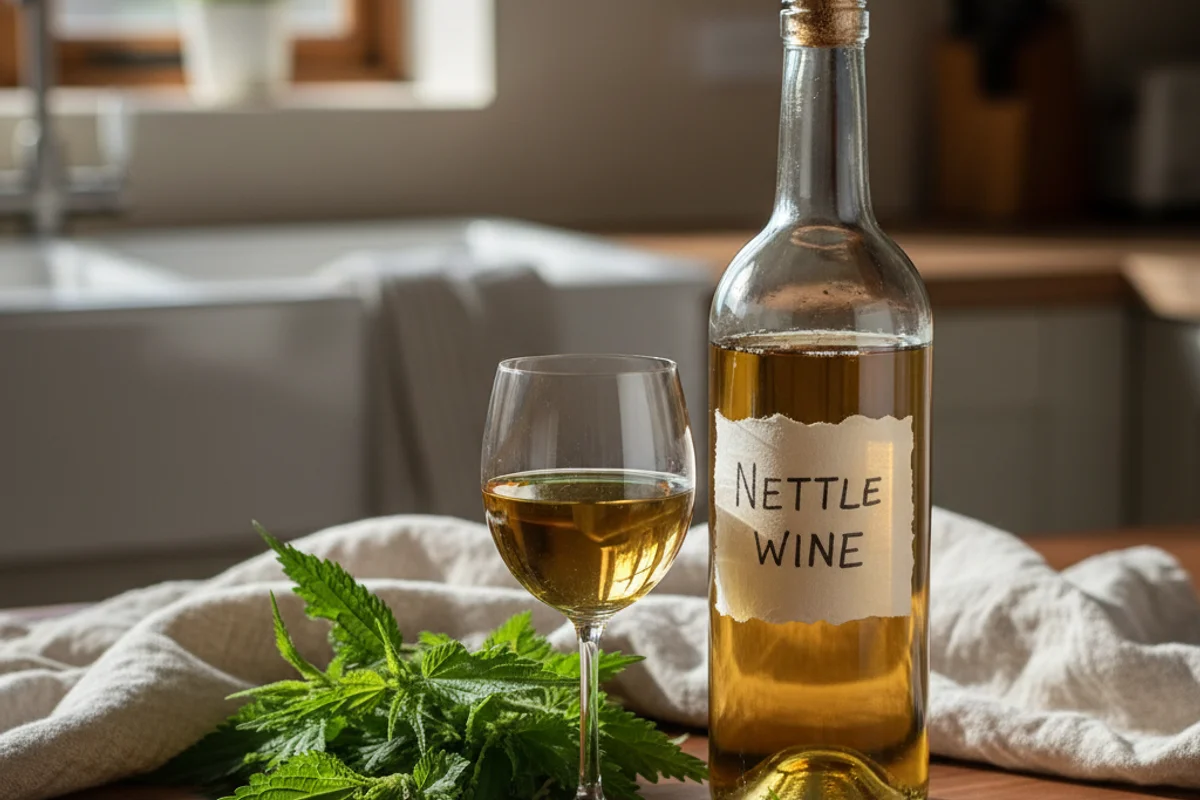
Stinging nettles have a reputation for making your hands miserable, but they make a surprisingly elegant wine — earthy and green up front, with a gentle citrus brightness that keeps it from tasting like a salad. White grape concentrate pulls everything together and gives the yeast something substantial to work with. The result is a light, dry wine that’s ready to drink as soon as it hits the bottle, which is a rare and welcome thing in the world of country wines.
The beginner trap: Skipping gloves when handling fresh nettles — the sting is real, so use thick rubber gloves until the heat of the simmer neutralizes the plant’s barbs.
Ingredients
- 2 quarts fresh nettle tops (young shoots work best; wear gloves when handling)
- 2½ lbs granulated white sugar
- 1 can (11.5 oz) Welch’s 100% White Grape frozen concentrate
- 7 pints water, divided
- 1 lemon
- 1 orange
- Pinch of wine tannin (or one strong cup of plain black tea as a substitute)
- 1 tsp yeast nutrient
- 1 packet wine yeast (Lalvin EC-1118 or Red Star Côte des Blancs work well)
Method
- Using a vegetable peeler, remove thin strips of zest from the lemon and orange, avoiding the white pith as much as you can.
- Combine the nettle tops and citrus peels in a large pot with 2 quarts of water. Bring to a boil, then reduce heat and simmer for 45 minutes.
- While the nettles simmer, juice the lemon and orange and add the juice to your primary fermenter along with the grape concentrate, sugar, and tannin.
- Strain the nettle liquid through a fine mesh strainer or cheesecloth directly into the primary fermenter over the other ingredients. Discard the solids.
- Stir well until the sugar fully dissolves, then add the remaining water. Cover the fermenter with a sanitized cloth and let it cool to room temperature.
- Once cool, stir in the yeast nutrient, then sprinkle in the wine yeast. Cover again and leave to ferment.
- Ferment actively for 5 days, stirring the must once daily, then transfer to a glass secondary fermenter and fit an airlock.
- After 30 days, rack into a clean secondary, top up to minimize headspace, and refit the airlock.
- Rack again 60 days later, top up, and refit the airlock. Age for another 3 months.
- Rack into bottles. This wine is drinkable right away but will improve with a few extra months in the bottle.
Why this works
Boiling the nettles does two things at once: it extracts their green, grassy flavor compounds and permanently disables the formic acid and histamines that cause the sting. The citrus zest (not just the juice) adds aromatic oils that give the wine a lifted, floral edge. White grape concentrate provides fermentable sugar, body, and a mild grape backbone without overwhelming the nettle character — it acts more like a support structure than a flavor statement. Tannin, even just a pinch, gives the wine a slight grip on the palate and helps it age and clarify more cleanly.
Notes
Frozen nettles can be substituted if you find them at a specialty or health food store — no need to thaw before simmering. If you can’t find wine tannin, steep a single bag of plain black tea in a small amount of hot water for 10 minutes and add the liquid to the primary. This recipe scales well if you double it; just keep all ratios the same.