NETTLES WINE
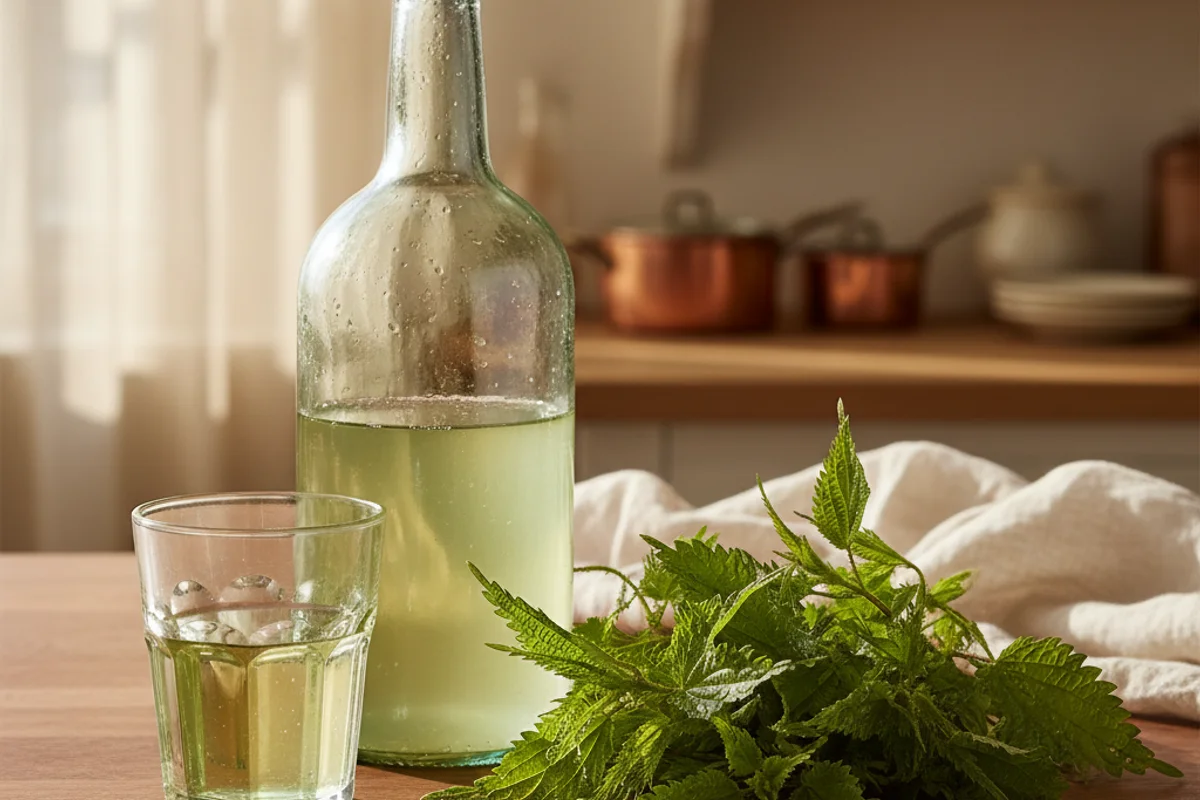
Here’s something your grandmother probably never bottled: a wine made from the same plant that sent you running as a kid. Stinging nettles (Urtica dioica) taste nothing like they feel. Once heat neutralizes the formic acid in those tiny needle-like hairs, what’s left is a green, grassy, faintly mineral flavor — somewhere between spinach and fresh-cut hay. On its own, nettle wine is light and a little plain. Pair it with citrus zest and a supporting ingredient like ginger, parsley, or thyme, and it becomes something genuinely interesting. Five versions follow, from bare-bones to body-forward.
The beginner trap: Harvesting nettles bare-handed — always wear gloves and long sleeves, because the sting from mature plant parts can last for hours.
Ingredients
Version 1 — Classic Nettle (pure, simple)
- 3 quarts fresh nettle tops, loosely measured
- 2 lbs granulated white sugar
- 7½ pints water
- 1 lemon, zest and juice
- 1 orange, zest and juice
- 1 tsp yeast nutrient
- 1 packet wine yeast (Lalvin EC-1118 or similar)
Version 2 — Nettle & Ginger
- 2 quarts fresh nettle tops, loosely measured
- 2 lbs granulated white sugar
- ½ oz fresh ginger root, thinly sliced
- 7½ pints water
- 2 lemons, zest and juice
- 1 tsp yeast nutrient
- 1 packet wine yeast
Version 3 — Nettle & Parsley
- 2 quarts fresh nettle tops, loosely measured
- 2 cups fresh flat-leaf parsley
- 2 lbs granulated white sugar
- 7½ pints water
- 1 lemon, zest and juice
- 1 orange, zest and juice
- ⅛ tsp wine tannin (or 1 cup strong-brewed plain black tea)
- 1 tsp yeast nutrient
- 1 packet wine yeast
Version 4 — Nettle & Thyme
- 2 quarts fresh nettle tops, loosely measured
- 1 quart fresh lemon thyme (or regular thyme)
- 2 lbs granulated white sugar
- 7½ pints water
- 1 lemon, zest and juice
- 1 orange, zest and juice
- ⅛ tsp wine tannin (or 1 cup strong-brewed plain black tea)
- 1 tsp yeast nutrient
- 1 packet wine yeast
Version 5 — Nettle & White Grape (most body, recommended for beginners)
- 2 quarts fresh nettle tops, loosely measured
- 1 lb 13 oz granulated white sugar
- 1 can (11.5 oz) frozen white grape juice concentrate, thawed (Welch’s 100% white works well)
- 7 pints water
- 1 lemon, zest and juice
- 1 orange, zest and juice
- Pinch of wine tannin (or ½ cup strong-brewed plain black tea)
- 1 tsp yeast nutrient
- 1 packet wine yeast
Method
Versions 2–5 (simmered extraction — recommended)
- Put on gloves. Rinse nettle tops under cold water and drain well.
- Peel the lemon and orange in thin strips, avoiding the white pith.
- Combine nettles, citrus peel, and any secondary botanicals (ginger, parsley, or thyme) in a large pot with 2 quarts of the water. Bring to a boil, then reduce heat and simmer for 45 minutes.
- While the pot simmers, add sugar, citrus juice, and tannin (if using) to your sanitized primary fermenter.
- Strain the hot nettle liquid directly over the sugar mixture and stir until fully dissolved. Add the remaining water. For Version 5, stir in the grape concentrate now.
- Cover the fermenter with a clean cloth and let it cool to room temperature — this usually takes 2–3 hours.
- Stir in the yeast nutrient, then sprinkle the wine yeast on top. Cover again.
- Stir once daily. After 4–5 days of active bubbling, stir well and transfer the liquid to a sanitized secondary fermenter (carboy or jug). Fit an airlock.
- When the wine starts to clear — usually 3–5 weeks — rack it off the sediment into a clean secondary. Refit the airlock.
- Versions 2–4: After 3 months, rack into bottles. Version 5: Rack at 30 days, again at 90 days, then bottle after 3 more months.
Version 1 (no-cook method)
- Put on gloves. Rinse nettle tops and drain well.
- Bring all 7½ pints of water to a boil.
- Peel the lemon and orange in thin strips. Juice both fruits.
- Place nettles, citrus peel, citrus juice, sugar, and yeast nutrient into your sanitized primary fermenter.
- Pour the boiling water over everything and stir until the sugar fully dissolves.
- Cover with a clean cloth and cool to room temperature.
- Add the wine yeast, cover again, and stir once daily.
- After 5 days of vigorous fermentation, strain the liquid into a sanitized secondary fermenter. Fit an airlock.
- When the wine begins to clear, rack into a clean secondary and refit the airlock.
- After 3 months, rack into bottles.
Why this works
Nettles sting because their hollow surface hairs work like tiny hypodermic needles, injecting formic acid and histamine into skin. Heat — from boiling water or a 45-minute simmer — breaks down those compounds completely, leaving behind the plant’s actual flavor: chlorophyll-rich and vegetal. On its own, that flavor is thin in wine terms, because nettles are low in sugar, acid, and tannin. That’s why every version here adds citrus for acid, sugar for fermentable body, and optional tannin for structure. Version 5 goes furthest by adding grape concentrate, which contributes natural grape sugars, a little tannin, and enough body to give the wine genuine staying power. Yeast nutrient is non-negotiable here — nettles won’t supply the nitrogen yeast need to stay healthy and finish clean.
Notes
If you can’t forage nettles, some natural grocery stores (like Whole Foods or co-ops) carry them fresh in spring, and several online retailers sell dried nettles year-round — use about half the volume if substituting dried. Regular thyme works fine in Version 4 if lemon thyme isn’t available. All five versions are drinkable young, but Versions 2–5 improve noticeably with an extra 3–6 months of bottle aging.