North Dakota
North Dakota doesn’t get much credit in the winemaking world, but the northern plains have a quiet secret: hardy cold-climate grapes, chokecherries, and wild fruits that produce wines with real backbone and personality. Short growing seasons concentrate sugars fast. Bitter winds keep disease pressure low. What comes out of this landscape — whether from a backyard patch or a farmer’s market haul — tends to be bold, tannic, and unapologetically itself. If you’ve never made wine from foraged or cold-climate fruit, North Dakota styles are a great place to start.
The beginner trap: Cold-climate and wild fruits like chokecherries are extremely high in tannin and acid, so skipping a bench trial before back-sweetening will leave you with a wine that tastes like a dry oak plank.
Ingredients
Note: The source for this page contained only a regional supply store listing — no specific recipe. The recipe below is a representative North Dakota chokecherry wine, one of the state’s most traditional homemade wines.
- 3 lbs chokecherries (fresh or frozen, stems removed)
- 2 lbs granulated white sugar
- 1 tsp acid blend (or 2 tbsp fresh lemon juice)
- ½ tsp pectic enzyme
- ¼ tsp grape tannin powder (or 1 strong-brewed black tea bag, cooled)
- 1 Campden tablet (potassium metabisulfite), crushed
- ½ tsp yeast nutrient
- 1 packet wine yeast (Lalvin EC-1118 or Red Star Premier Blanc)
- Water to make 1 gallon total volume
Method
- Rinse the chokecherries and place them in a sanitized fermentation bucket. Crush them by hand or with a potato masher to break the skins.
- Dissolve the sugar in 1 quart of warm water, then pour it over the fruit. Add enough additional water to bring the total volume close to 1 gallon.
- Stir in the acid blend, grape tannin, yeast nutrient, and crushed Campden tablet. Cover loosely and wait 24 hours.
- After 24 hours, stir in the pectic enzyme. Wait another 12 hours before adding yeast.
- Sprinkle the yeast over the must and stir gently. Cover with a breathable cloth and ferment at room temperature (65–75°F) for 5–7 days, stirring once daily.
- Strain out the fruit through a fine mesh bag or cheesecloth, pressing gently to extract juice without forcing bitter solids through.
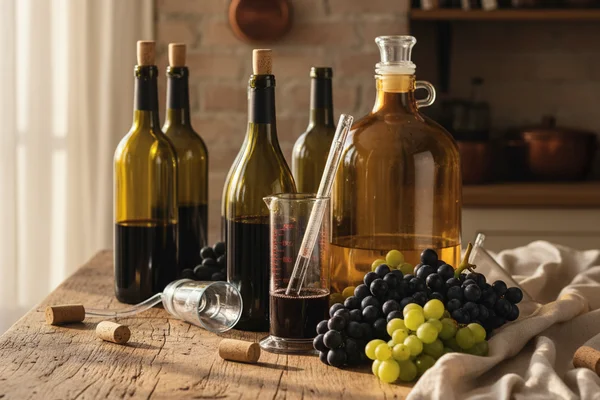
- Transfer the liquid to a sanitized 1-gallon glass jug. Attach an airlock and move to a cool, dark spot to finish fermentation — usually another 3–4 weeks.
- Rack the wine off the sediment into a clean jug once fermentation is fully complete. Add a fresh Campden tablet, reattach the airlock, and age at least 3 months before bottling.
Why this works
Chokecherries are loaded with procyanidins — the same class of tannins you find in grape seeds. That’s great for structure but rough on your palate if left unchecked. Pectic enzyme breaks down the pectin in the fruit cell walls, which releases more juice, improves clarity, and reduces the haze you’d otherwise spend months trying to clear. The 24-hour Campden tablet rest knocks out wild yeast and bacteria on the fruit skins without killing your pitched yeast, which goes in later. Aging matters here more than with most fruit wines: tannins polymerize and soften over time, transforming something astringent and sharp into something genuinely drinkable.
Notes
Frozen chokecherries work just as well as fresh — freezing actually ruptures cell walls and improves juice extraction. If you can’t find chokecherries, tart pie cherries (fresh or canned, juice-packed) make a reasonable substitute; reduce tannin addition by half since they’re gentler. If the finished wine tastes too dry or puckering, dissolve 1–2 oz of sugar in a small amount of wine and stir it back in gradually until balanced — always add a stabilizer (½ tsp potassium sorbate) before back-sweetening to prevent re-fermentation.