NORTH STAR CHERRY WINE
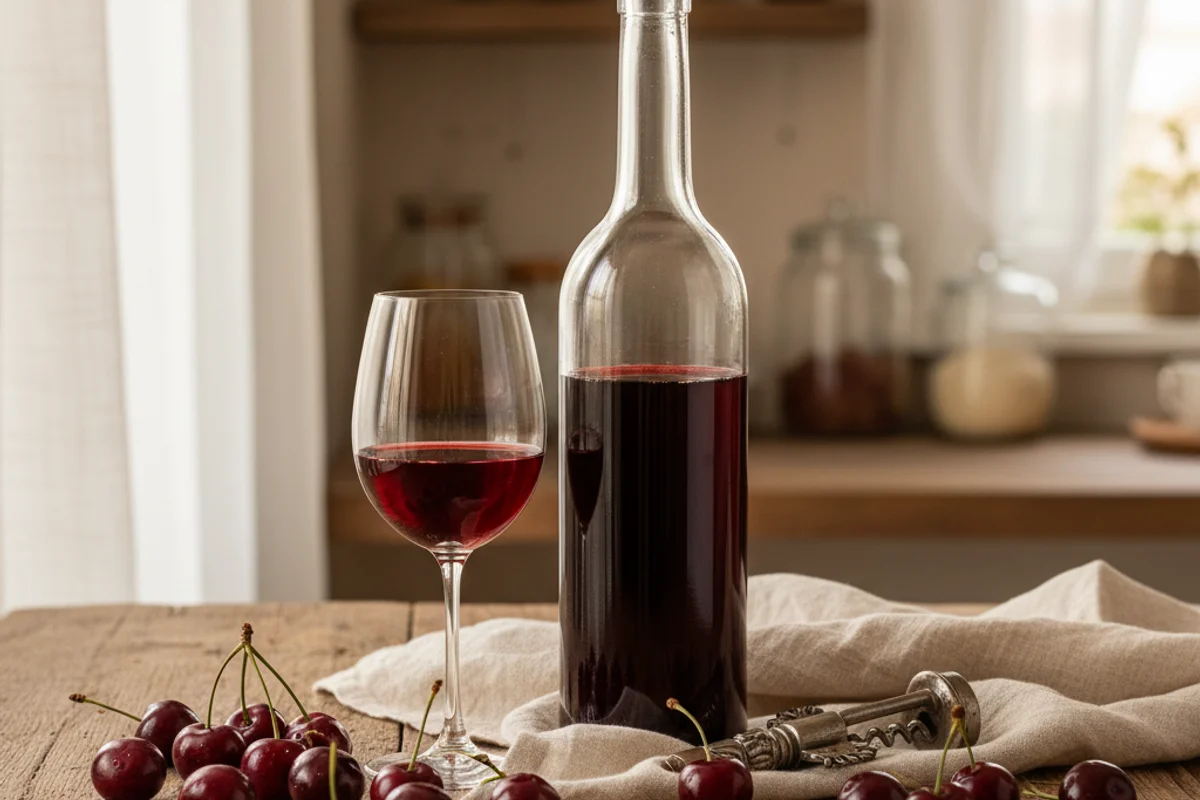
North Star cherries are the overachievers of the sour cherry world — thin red skin, blood-red flesh, and juice that tastes like someone distilled the concept of “cherry” into a single fruit. Born from a Siberian cherry and an English Morello, they carry an intense tartness that fermentation transforms into something dry, complex, and deeply colored. This is a wine that earns patience. Give it a year in the bottle and it will reward you with a flavor that store-bought cherry wine can only dream about.
The beginner trap: Skipping the pitting step or rushing it — cherry pits contain compounds that can push bitter, off flavors into your finished wine, so take the time to remove every single one.
Ingredients
- 4–5 lbs ripe North Star cherries, fresh or frozen, pitted and de-stemmed
- 1¾ lbs granulated white sugar
- Water to make 1 gallon total
- 1 Campden tablet, crushed
- ¼–½ tsp acid blend (or malic acid, found at homebrew shops or online)
- ½ tsp pectic enzyme
- 1 tsp yeast nutrient
- 1 packet wine yeast (Lalvin 71B or Red Star Premier Classique work well)
Method
- Dissolve the sugar in 3 quarts of boiling water, then set it aside to cool to room temperature.
- Pit and de-stem your cherries; if using fresh fruit, you can freeze them now and thaw before use to help break down the cell walls for better juice extraction.
- Crush the thawed or fresh cherries and place them inside a nylon mesh straining bag, then tie it closed and set it in your primary fermenter.
- Pour the cooled sugar water over the bag, then add the crushed Campden tablet and the acid blend; top up with cool water to reach one gallon.
- Cover the fermenter loosely and let it sit for 10–12 hours.
- Add the pectic enzyme, re-cover, and wait another 10–12 hours.
- Add the yeast, re-cover, and punch the bag down once daily — squeezing it gently — for about 10 days.
- Remove the bag and press the fruit lightly to recover juice; do not wring it hard or you risk extracting bitter tannins.
- Transfer the liquid to a one-gallon glass jug (secondary fermenter), top up to the shoulder with water if needed, and fit an airlock.
- Rack into a clean jug after 30 days, then again every two months until the wine runs clear.
- Once clear, rack once more at the two-month mark; if no sediment appears, the wine is stable enough to bottle.
- Stabilize with potassium sorbate and a Campden tablet, wait 10–14 days, then bottle; age at least 6 months — 12 months is better.
Why this works
North Star cherries are naturally high in malic acid, which gives them that sharp, mouthwatering bite. During fermentation, Lalvin 71B yeast partially converts some of that malic acid into softer lactic acid — a process called partial malolactic conversion — which rounds out the harshness without killing the fruit character. The pectic enzyme is doing its own heavy lifting: cherry skins are loaded with pectin, a natural gelling agent that will leave your wine hazy if you skip this step. Adding it after the Campden tablet wait is intentional — sulfite kills enzymes, so you need to give the SO₂ time to off-gas before the pectic enzyme can do its job.
Notes
Frozen pitted cherries from the grocery store work very well here and skip the most labor-intensive part of the process entirely — look for unsweetened varieties. If you cannot find acid blend at a local homebrew shop, a small amount of cream of tartar (tartaric acid) from the baking aisle is a reasonable substitute. If your finished wine tastes flat or thin, a small addition of acid at bottling time can brighten it back up.