OAK LEAF WINE (Old)
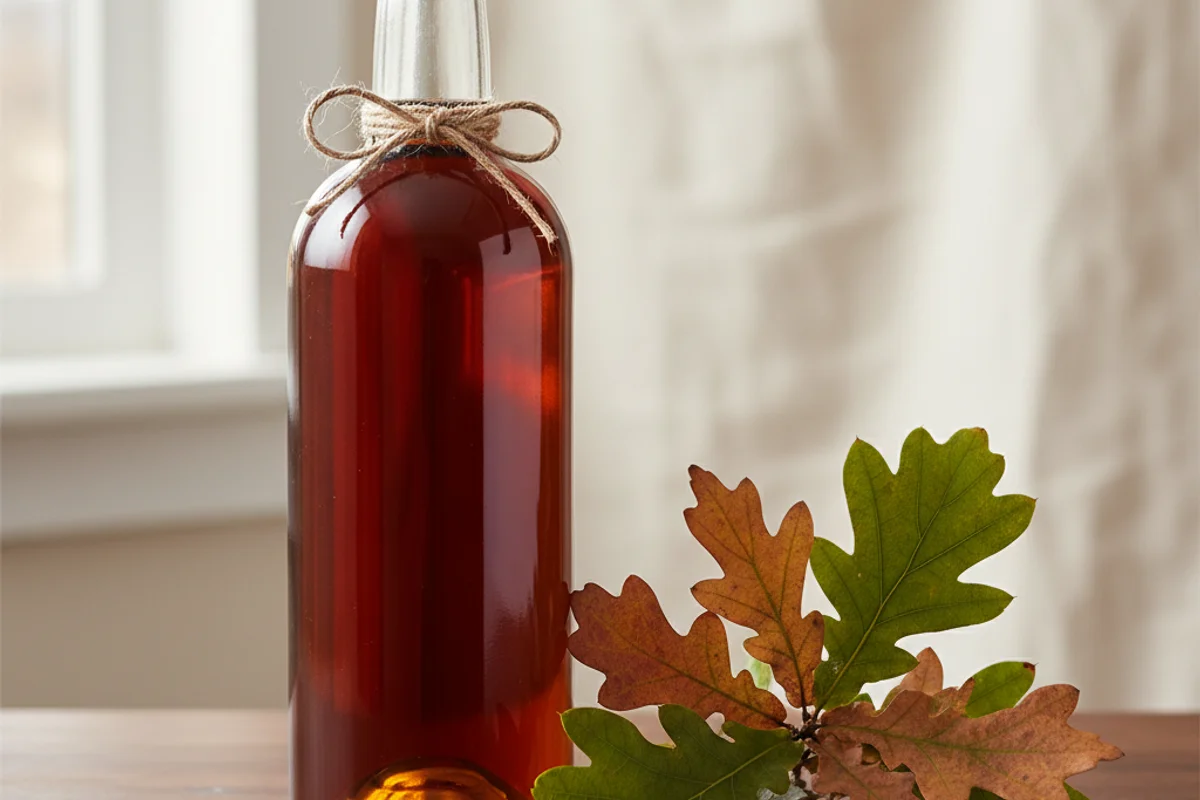
Oak leaves sound like a prank ingredient — something you’d dare a friend to use. But there’s real history behind this wine, and the result is a dry, faintly tannic white-style wine with a subtle woodsy character and bright citrus notes from orange and lemon. The tannins in oak leaves do what grape skins do: give the wine structure and a pleasant bite. Think of it as a country wine that tastes like it knows something the grapes don’t.
The beginner trap: Topping up the fermenter too early drowns the vigorous early foam and can cause a mess — leave headspace for the first four to five days.
Ingredients
- 7 pints fresh oak leaves (green to yellow; avoid brown or dead leaves)
- 3 lbs. granulated white sugar
- 2 oranges, juiced and zested
- 1 lemon, juiced and zested
- 1 gallon water, divided
- 1 packet wine yeast (Lalvin EC-1118 or similar dry wine yeast)
- 1 tsp. yeast nutrient
Method
- Rinse the oak leaves thoroughly in cold water, then place them in a large sanitized bucket or crock.
- Bring 6 pints of water to a boil and pour it over the leaves. Cover and let steep for 24 hours.
- Strain the liquid into a large pot, discarding the leaves. The pot should have enough room for the liquid plus the sugar.
- Add the sugar, orange juice, lemon juice, orange zest, and lemon zest to the pot. Stir well to dissolve the sugar.
- Bring the mixture to a boil, then reduce heat and simmer for 20 minutes.
- Remove from heat and let cool to 70°F. Strain through a fine mesh strainer or nylon straining bag into your fermentation vessel.
- Add the yeast nutrient, then sprinkle the yeast on top. Do not stir yet — let it hydrate for 15 minutes, then stir gently.
- Transfer to a secondary fermentation vessel (a 1-gallon glass jug works well) and fit an airlock. Do not top up with water yet.
- After 4–5 days, once the foam has died down, top up with the remaining water to reduce headspace.
- Ferment until the wine clears, roughly 2–3 months.
- Rack into a clean vessel, then rack again after two more months. Bottle and age at least 6 months before drinking — one year is better.
Why this works
Oak leaves contain tannins — the same class of polyphenol compounds that give red wines their grip and structure. When you steep the leaves in boiling water, those tannins dissolve into the liquid, creating a base that can actually support a wine-style fermentation rather than producing something flat and watery. The citrus juice adds acid, which is critical: yeast needs a low-pH environment to work efficiently and to protect the wine from spoilage bacteria. The citrus zest contributes aromatic oils that round out the flavor. Simmering the must after steeping helps sanitize it and fully dissolves the sugar, giving your yeast a clean, consistent environment to do its job.
Notes
Any oak species works here — white oak, red oak, pin oak — as long as the leaves are green or just turning and show no signs of mold or disease. If fresh oak leaves aren’t available seasonally, collect and freeze them in a zip-top bag; frozen leaves work just as well. Substitute a campden tablet (crushed) added at step 6 if you want extra protection against wild yeast before pitching your wine yeast.