OAK LEAF WINE (Young)
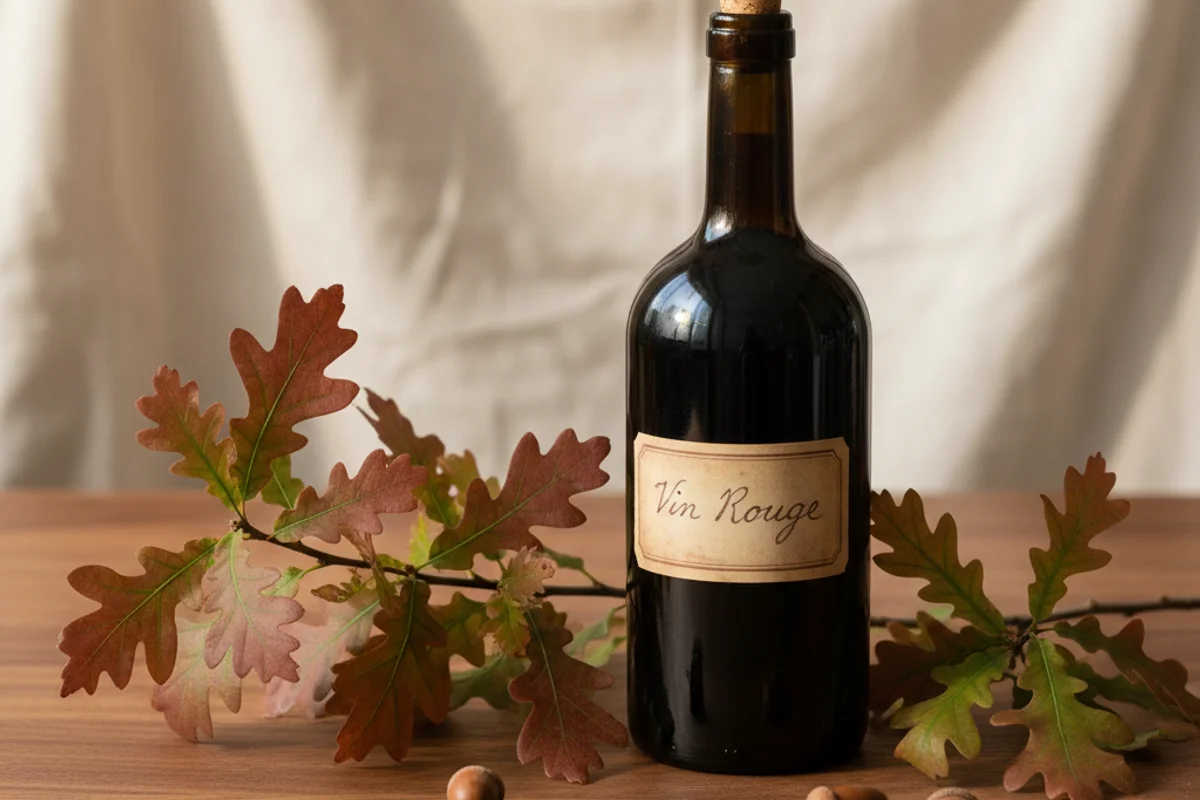
There’s a moment every spring when oak trees push out soft, tannin-light leaves that smell faintly green and almost floral. Catch them young — before the tree loads them up with harsh astringency — and you have the raw material for a pale, delicate country wine that’s closer to a crisp white than anything you’d expect from a tree. Citrus juice brightens it, a long simmer pulls the flavor cleanly from the leaves, and time does the rest. This is foraging winemaking at its most approachable.
The beginner trap: Topping up the fermentation vessel too early drowns the vigorous primary foam and risks a sticky, overflowing mess — wait until that foam fully collapses before adding water.
Ingredients
- 7 pints fresh young oak leaves (picked in early spring, before leaves fully harden)
- 3 lbs. granulated white sugar
- 2 oranges, juiced (and peel grated)
- 1 lemon, juiced (and peel grated)
- 1 gallon water, divided
- 1 packet wine yeast (Lalvin EC-1118 or any general-purpose wine yeast)
- 1 tsp. yeast nutrient
Method
- Rinse the oak leaves thoroughly under cold running water and place them in a large sanitized bucket or crock.
- Bring 6 pints of water to a full boil and pour it over the leaves. Cover and let steep for 24 hours.
- Strain the liquid into a large pot, pressing the leaves lightly to extract as much liquid as possible, then discard the leaves.
- Add the sugar, orange juice, lemon juice, and the grated peel of both the oranges and the lemon to the pot. Stir well.
- Bring the mixture to a boil, then reduce heat and simmer for 20 minutes.
- Remove from heat and let the liquid cool to 70°F (about room temperature). Strain through a fine mesh strainer or nylon sieve into your fermentation vessel.
- Add the yeast nutrient, then sprinkle the wine yeast over the surface and stir gently. Do not top up with water yet.
- Fit an airlock and let fermentation run for 4–5 days. Expect a vigorous foam during this period — leave headspace for it.
- Once the foam subsides, top up with the remaining water to reach one gallon. Continue fermenting until the wine clears, typically 2–3 months.
- Rack into a clean vessel, then rack again after 2 more months. Bottle and age for at least 6 months before drinking, or up to 1 year for best results.
Why this works
Young oak leaves contain far less tannin than mature ones, so the steeping step extracts flavor compounds and subtle structure without turning the wine mouth-puckering. Boiling the strained liquid with citrus juice and peel does two things at once: it pasteurizes the must (killing off wild microbes that could compete with your yeast) and it drives off volatile compounds that can taste harsh or grassy. The citrus acid also drops the pH into a range where wine yeast thrives and spoilage bacteria struggle. Holding off on topping up during early fermentation lets CO₂ act as a natural blanket, protecting the wine while fermentation is most active.
Notes
If you don’t have access to oak trees, this recipe doesn’t have a clean substitute — the leaves are the point. However, young grape leaves (available at some Middle Eastern grocery stores, or in brine at most supermarkets — just rinse them well) can produce a similar light, tannic-edged country wine. Avoid leaves collected near roads or treated landscapes. If you’re unsure about a positive oak identification, bring a sample to your local cooperative extension office before using.