OAKBUD WINE (Sweet)
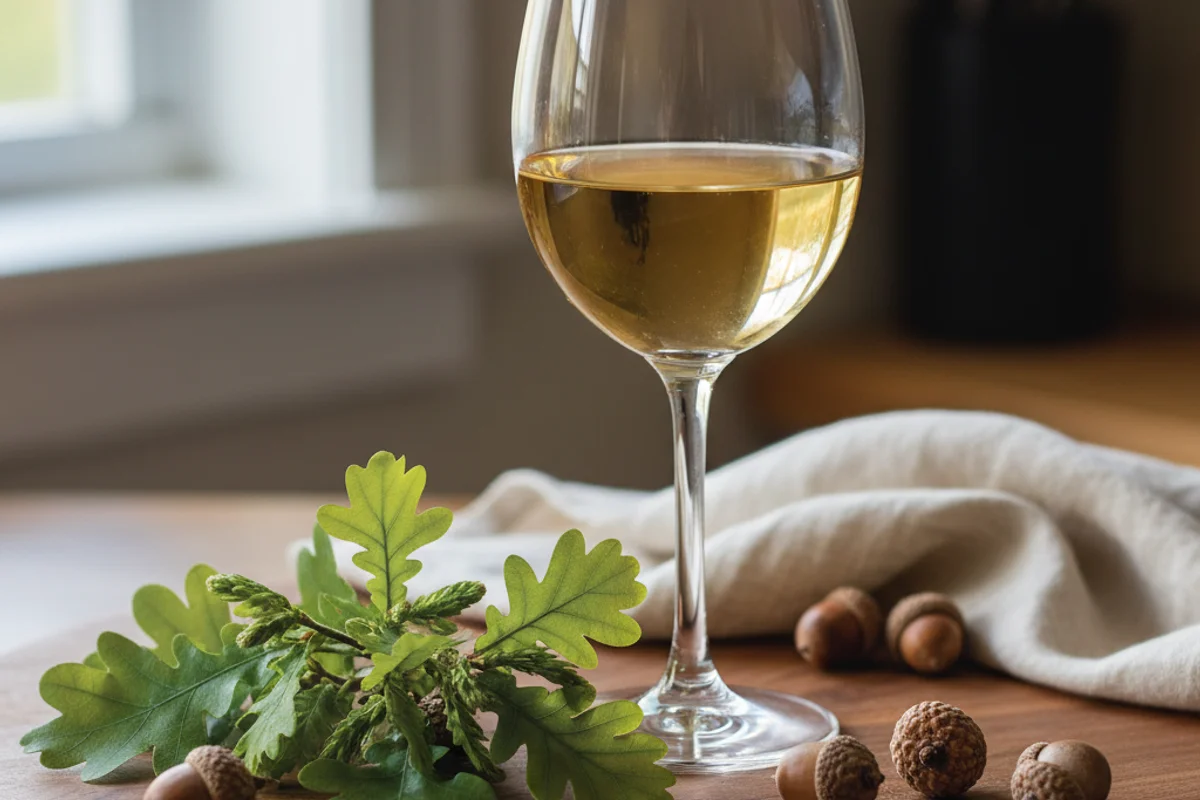
Spring arrives for about ten minutes, and if you’re paying attention, you’ll notice oak trees pushing out pale, almost translucent buds and young leaves. That brief window is your ingredient. Brewed with dates and raisins for body and a quiet sweetness, this country wine lands somewhere between a light floral white and a soft amber dessert sipper. The tannins from the oak material give it structure you wouldn’t expect from a foraged recipe, and the whole thing rewards patience in a way that feels genuinely earned.
The beginner trap: Harvesting too late — once oak leaves are fully dark and mature, the tannins turn harsh and bitter, so collect only the youngest, palest buds and leaves.
Ingredients
- 8 oz (½ lb) fresh young oak buds and new leaves, rinsed
- 8 oz (½ lb) pitted dates, chopped (Medjool from the grocery store work great)
- 8 oz (½ lb) raisins, chopped
- 2¾ lb granulated white sugar
- 1 lemon, juiced
- 1 gallon water, divided
- 1 packet wine yeast (Lalvin 71B or EC-1118)
- 1 tsp yeast nutrient
Method
- Bring 6 pints of the water to a boil, then add the oak buds and leaves, chopped dates, and chopped raisins. Simmer for 20 minutes.
- Strain the hot liquid through a fine mesh strainer or cheesecloth directly onto the sugar in your primary fermenter. Stir well until the sugar fully dissolves.
- Let the must cool to 70°F, then stir in the lemon juice, yeast nutrient, and your prepared wine yeast.
- Cover the fermenter loosely but securely and let it ferment at room temperature for four days, stirring once daily.
- Transfer to a 1-gallon glass secondary fermentation vessel (carboy) and top up with the remaining water to reach the 1-gallon mark. Fit an airlock.
- Rack the wine off its sediment once it clears, typically 2–3 months in. Rack again after another two months.
- Bottle the wine and age for at least six months — a full year will reward you with noticeably smoother results.
Why this works
Dates and raisins do double duty here. They add fermentable sugar, yes, but more importantly they contribute body, a touch of unfermentable sweetness, and trace nutrients that keep the yeast happy without going overboard. The oak material brings genuine tannin — the same structural compound that makes a barrel-aged wine feel “gripping” on your tongue. Young leaves and buds are lower in harsh tannins than mature oak, so the simmering step extracts a gentler, more balanced phenolic character. The lemon juice drops the pH slightly, which discourages spoilage bacteria and helps the finished wine hold its color and stay shelf-stable over that long aging window.
Notes
If you can’t forage oak buds, a small amount of untoasted oak chips (about ¼ oz, available at homebrew shops) can approximate the tannin contribution — steep them in the boiling water instead. Medjool dates are ideal, but any soft pitted variety from the grocery store works fine. If the wine tastes sharp or thin at six months, give it three more months in the bottle before judging it; this one genuinely needs time.