ONION WINE
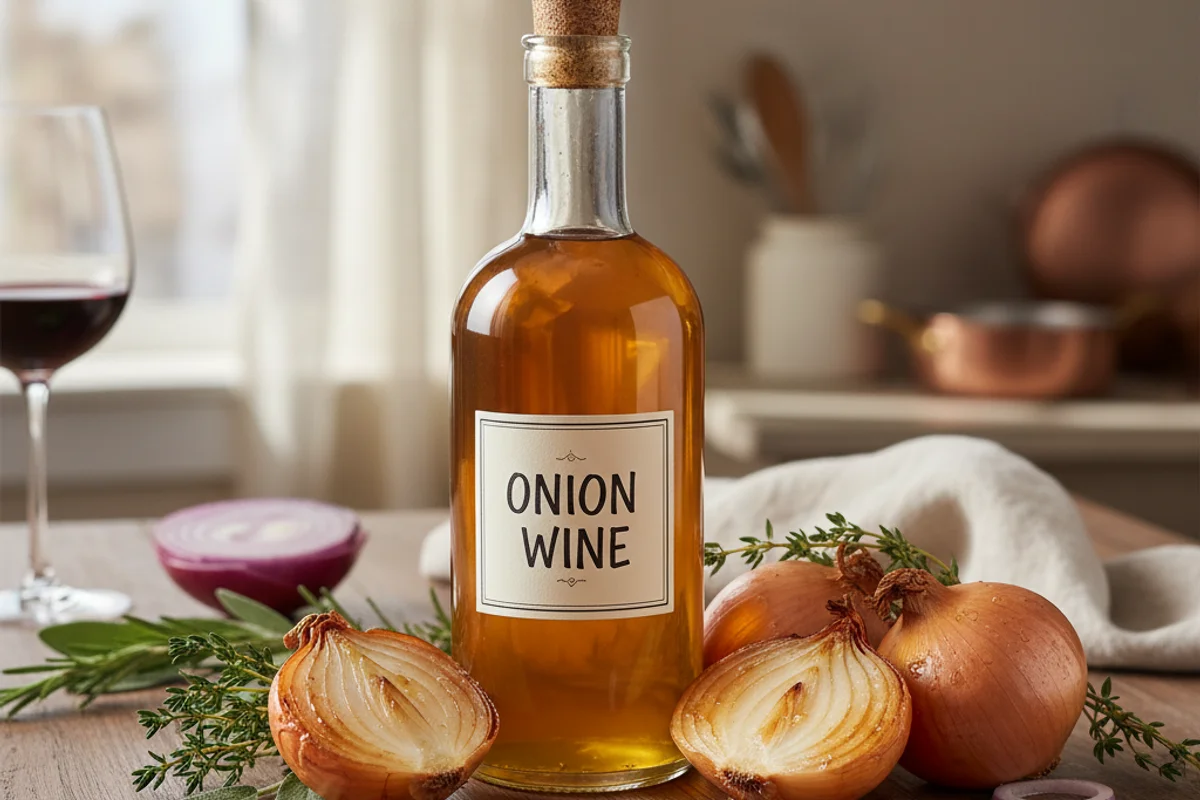
Onions in a wine glass sound like a dare, but hear this out. Sweet onions — Vidalias, Walla Wallas, or any mild variety — are loaded with natural sugars and delicate floral compounds that disappear almost entirely during fermentation, leaving behind a dry, pale, subtly savory wine with surprising finesse. A small amount of potato adds body without flavor, and golden raisins bring the fruity backbone this wine would otherwise lack. Age it properly and most people won’t guess what’s in it.
The beginner trap: Using standard yellow or white onions — their sharp, sulfurous bite survives fermentation and will ruin the finished wine; you must use a genuinely sweet variety.
Ingredients
- 2 lbs sweet Vidalia onions (or Walla Walla, Maui, or any sweet onion), thinly sliced
- ½ lb russet potato, thinly sliced
- 1 lb golden raisins, chopped or minced
- 2 lemons, zest and juice
- 2 lbs granulated white sugar
- 7½ pts water, divided
- 1 Campden tablet, crushed
- ¼ tsp pectic enzyme
- 1 tsp yeast nutrient
- 1 packet Champagne wine yeast (or other dry white wine yeast)
Method
- Soak the chopped raisins overnight in 1 pint of warm water. Grate the lemon zest and add it to the raisin soak.
- Slice the onions and potato into the remaining water in a large pot. Bring to a gentle simmer and hold there for 45 minutes.
- Place the raisin-and-zest mixture into a nylon straining bag and set it in your primary fermenter. Pour the sugar on top of the bag.
- Strain the hot onion-and-potato liquid directly over the sugar, discarding the solids. Add the lemon juice and yeast nutrient, then stir until the sugar is fully dissolved.
- Cover the fermenter with a clean cloth and let it cool to room temperature. Stir in the crushed Campden tablet, re-cover, and wait 12 hours.
- Add the pectic enzyme, stir, re-cover, and wait another 12 hours.
- Activate your yeast according to the packet instructions and add it to the fermenter. Stir the must daily for 14 days.
- On day 14, lift the straining bag and let it drip drain over the fermenter — do not squeeze it. Re-cover and let the liquid settle overnight.
- Rack the cleared liquid into a glass secondary fermenter, top up with water if needed, and fit an airlock.
- Rack every 30 days, topping up and refitting the airlock each time, until the wine is clear and produces no new sediment over a full 30-day period.
- Stabilize with potassium sorbate and potassium metabisulfite, sweeten to taste if desired, wait 10 days, then rack into bottles. Age at least 6 months before opening.
Why this works
Sweet onions get their mildness from low levels of pyruvic acid, which means fewer of the harsh sulfur compounds that make standard onions so pungent. Simmering extracts sugars, flavor precursors, and body-building compounds while driving off the most volatile sulfur molecules as steam. The potato starch adds mouthfeel — it gelatinizes during the simmer and partially dissolves into the must, giving the finished wine a rounder texture. Golden raisins contribute natural fruit sugars, wild yeast nutrients, and a faint muscatel character that reads as “wine-like” in the final glass. Pectic enzyme breaks down any residual plant cell walls so the wine clears properly instead of staying hazy.
Notes
Any genuine sweet onion works here — Vidalias are easiest to find in most U.S. grocery stores spring through summer, but Walla Walla or Maui onions are equally good. If you cannot find a nylon straining bag, a clean pillowcase tied at the top works in a pinch. If your finished wine clears slowly, a second dose of pectic enzyme during secondary can help.