ORANGE WINES
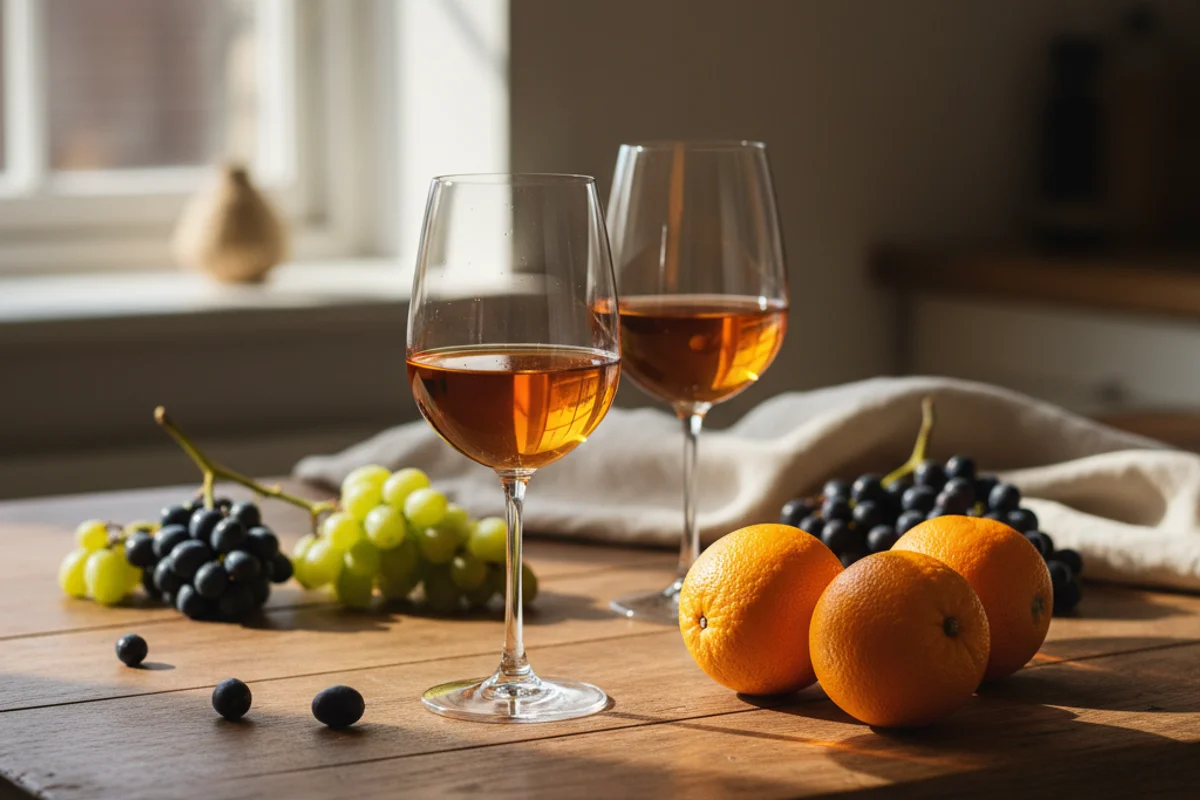
Think of an orange as a little pressurized flavor bomb — citrus oil in the peel, tartness in the pith, and a rush of sweet, floral juice hiding just underneath. When you ferment that juice, something shifts. The sharp brightness mellows, a soft body develops, and you end up with a wine that tastes like a sunny afternoon in a glass. Valencia oranges make this especially well, bringing enough natural sugar and perfume to carry the whole thing. This is a fruit wine that actually tastes like the fruit it came from.
The beginner trap: Leaving white pith on the orange segments will load your wine with bitter compounds that no amount of aging will fix — peel aggressively and remove every trace of it.
Two Recipes
Orange Wine No. 1 — Simple & Clean
Ingredients
- 4 lbs over-ripe oranges (Valencia or navel work great)
- 1 lb 14 oz granulated sugar
- Water to reach 1 gallon total
- ¼ tsp grape tannin (or 1 cold-brewed black tea bag, steeped and cooled)
- 1 tsp yeast nutrient
- 1 packet wine yeast (Lalvin EC-1118 or Red Star Côte des Blancs)
Method
- Bring 2 quarts of water to a boil.
- Peel the oranges, stripping off all white pith. Break into sections and remove every seed.
- Blend or juice the sections into a smooth liquid, adding a splash of water if the blender needs help.
- Combine the orange liquid, sugar, tannin, and yeast nutrient in your primary fermenter. Pour the boiling water over the top and stir until the sugar fully dissolves.
- Add cool water to bring the total volume to 1 gallon. Cover and let the must cool to 70–75 °F.
- Pitch the yeast, cover loosely, and ferment for 7–10 days.
- Strain the must through a fine mesh straining bag, squeezing the pulp firmly to recover juice. Transfer the liquid to a 1-gallon secondary fermenter and fit an airlock.
- Rack every 30 days for 3 months.
- Stabilize with potassium sorbate and potassium metabisulfite, then sweeten to taste if desired.
- Wait 10 days, rack into bottles, and age at least 1 year before opening.
Orange Wine No. 2 — Body & Depth
This version adds bananas and raisins. Bananas contribute a silky mouthfeel. Raisins add weight and a hint of dried-fruit complexity. The result is a rounder, more structured wine.
Ingredients
- 8 medium oranges, over-ripe if possible
- 1 lb golden raisins, chopped or minced (regular raisins work fine)
- 1 lb 7 oz ripe bananas (the spottier the better)
- 3 lbs granulated sugar, divided
- Water to reach 1 gallon total
- ¼ tsp grape tannin (or 1 cold-brewed black tea bag)
- 1 tsp pectic enzyme
- 1 tsp yeast nutrient
- 1 packet wine yeast
Method
- Bring 2 quarts of water to a boil.
- Peel and completely de-pith the oranges. Break into sections, remove all seeds, then blend or juice until smooth.
- Peel and slice the bananas. Simmer them in 1 pint of water for 20 minutes.
- In your primary fermenter, combine the raisins, 2½ lbs of the sugar, the orange liquid, and the 2 quarts of boiling water. Stir until the sugar dissolves.
- Pour the hot banana slices into a nylon straining bag held over the fermenter. Let it drip until cool enough to handle, then squeeze gently and discard the banana solids.
- Stir in the tannin and yeast nutrient. Add enough cool water to bring the total to 1 gallon. Cover with a clean cloth and let cool to room temperature.
- Once cooled, stir in the pectic enzyme. Re-cover and wait 12 hours.
- Pitch the yeast. Ferment for 7 days, then dissolve the remaining ½ lb of sugar into the must and ferment for 3 more days.
- Rack off the sediment into a 1-gallon secondary fermenter and fit an airlock.
- Rack every 30 days for 3 months.
- Stabilize and sweeten to taste if desired.
- Wait 10 days, rack into bottles, and age 1 year before tasting.
Why This Works
Oranges are high in citric acid and pectin. Pectin is the same stuff that makes jam gel, and in a wine it clouds the finished product stubbornly. Recipe No. 2 calls for pectic enzyme, which breaks pectin chains apart so they fall out of suspension during fermentation. That’s what gives you a clear, bright wine instead of a hazy one. The bananas bring something useful too — they’re loaded with starch and soluble sugars that yeast convert into body-building compounds, giving the wine weight without extra sweetness. Raisins add unfermentable flavor compounds and a touch of natural tannin that helps the wine age gracefully. Together, these three fruits act like a three-part flavor architecture, each doing a different structural job.
Notes
- Over-ripe oranges are ideal — the sugars are more concentrated and the flavor is stronger. Ask your grocery store’s produce department; they often sell marked-down citrus that’s perfect for this.
- Grape tannin is sold at homebrew shops, but a single bag of plain black tea brewed strong and cooled makes a solid everyday substitute.
- If your finished wine tastes flat or thin, a small addition of acid blend (¼ tsp at a time) can sharpen it up before bottling.