PAPAYA WINE
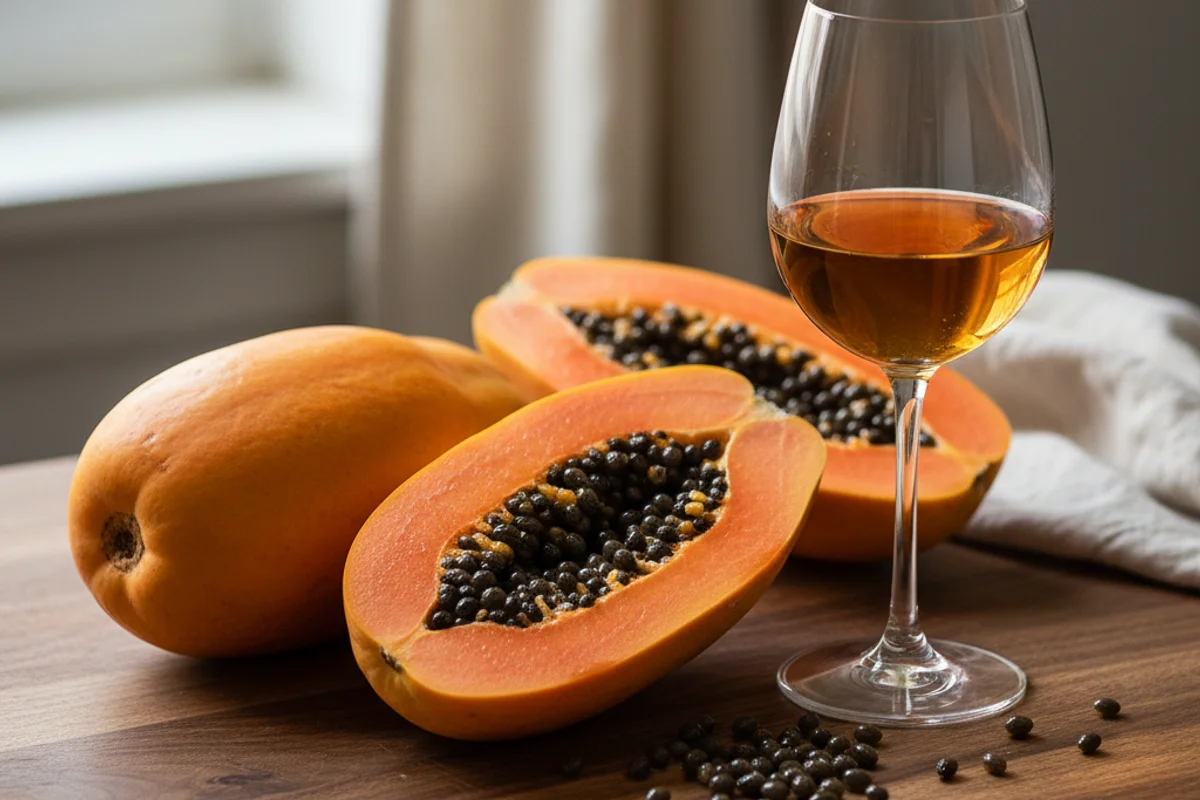
Papaya brings something genuinely strange to a fermentation vessel — a musky, tropical sweetness somewhere between mango and cantaloupe, with a faint floral edge that survives fermentation surprisingly well. The finished wine pours a soft golden-amber and smells like a fruit stand in a warm climate. It’s light, a little exotic, and pairs well with spicy food or a hot afternoon. Best of all, ripe papayas are widely available at most grocery stores year-round, and their natural chemistry does some of the heavy lifting for you.
The beginner trap: Skipping the outer peel — it carries aromatic compounds that give this wine its depth, so don’t throw it away.
Ingredients
- 6–8 lbs fresh papaya (ripe, fresh or frozen)
- 1¾ lbs granulated white sugar
- 7¼ pts (about 3.6 quarts) water
- 1½ tsp acid blend
- 1 tsp yeast nutrient
- ¼ tsp wine tannin (or 1 cup strong unsweetened black tea)
- 1 packet Montrachet or Champagne wine yeast
Method
- Bring the water to a boil, then set it aside to use shortly.
- Peel the papayas thinly — just the outermost layer — so the green inner skin stays on the fruit flesh; save both the outer peel and the flesh.
- Halve each papaya lengthwise, scoop out the seeds with a spoon, then dice the flesh into rough chunks.
- Place the diced flesh and the outer peel together into a nylon straining bag, tie it shut, and set it in your primary fermenter.
- Mash the bag’s contents thoroughly with clean hands, a sanitized potato masher, or a smooth piece of hardwood.
- Dissolve the sugar completely in the hot water, then pour it over the mashed fruit.
- Stir in the acid blend, tannin, and yeast nutrient; cover the fermenter and let everything cool to room temperature.
- Pitch the yeast, cover loosely, and squeeze the bag 2–3 times daily for 10 days.
- After 10 days, lift the bag and let it drip drain; give it a gentle squeeze, then let the liquid settle overnight.
- Rack the cleared liquid into a clean secondary fermenter (carboy), top up to minimize headspace, and fit an airlock.
- Rack again after 30 days, then once every two months for six months total.
- Stabilize the wine, sweeten to taste with a simple sugar-water solution if desired, wait 10 days, then rack into bottles.
- Age at least 6–12 months in a dark place before drinking; serve chilled or over ice.
Why this works
Papaya is one of the few fruits that contains significant amounts of papain — a protein-digesting enzyme naturally concentrated in the peel and seeds. Papain also acts like a mild pectic enzyme, breaking down the fruit’s cell walls and releasing juice without you adding a commercial pectic enzyme product. That’s why this recipe keeps the green inner peel in contact with the must during primary fermentation: it’s doing enzymatic work. The result is good juice extraction and a must that clears reasonably well on its own. Montrachet or Champagne yeast is a smart match here because both strains ferment cleanly at a wide range of temperatures without throwing off heavy flavors that would bury papaya’s delicate aromatics.
Notes
Frozen papaya chunks work well if fresh fruit is out of season or too expensive — thaw completely and drain before mashing. If acid blend isn’t available at your local homebrew shop, you can order it online or substitute 1 tsp of fresh-squeezed lemon juice per ¼ tsp of acid blend as a rough stand-in. If your finished wine smells faintly sulfurous after stabilizing, rack it once into a clean vessel and let it breathe briefly — this is common with Montrachet yeast and usually clears on its own.