PAWPAW WINE (1)
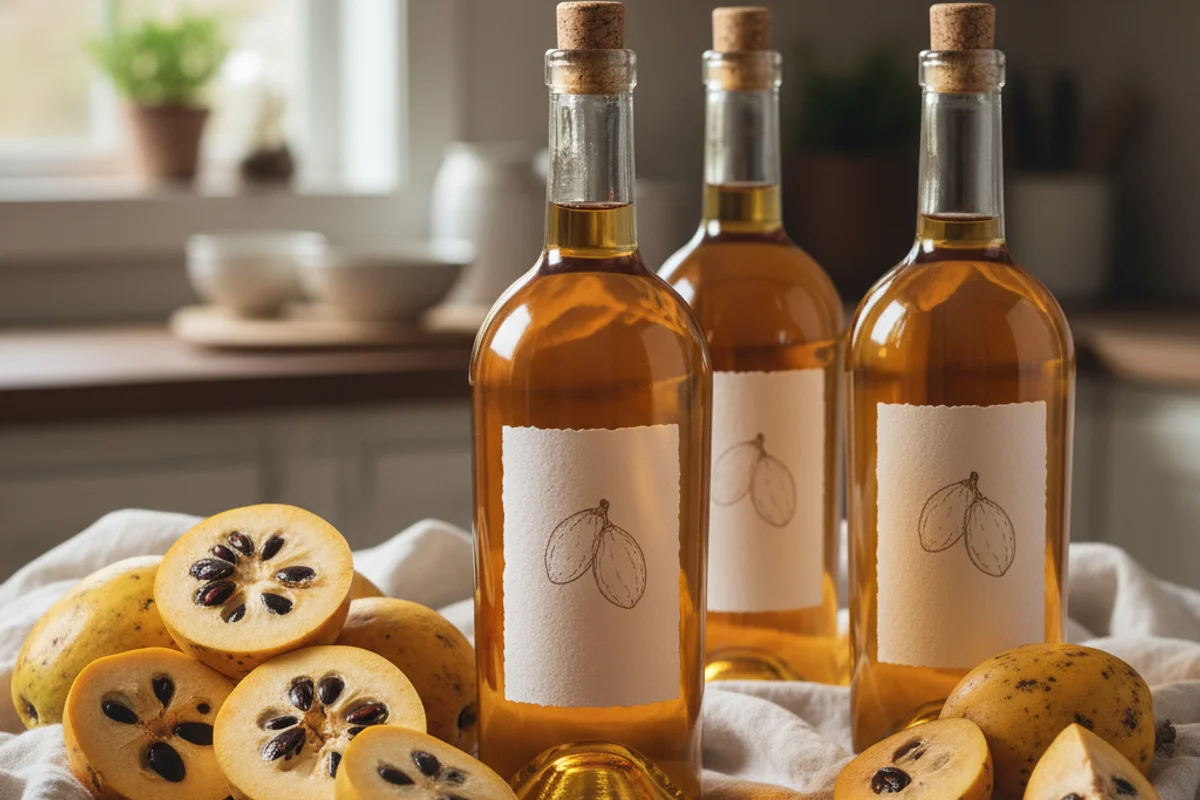
Pawpaw is North America’s largest native fruit, and it tastes like a mango and a banana decided to collaborate somewhere deep in the eastern woodlands. The flesh is soft, rich, and almost custard-like, with a tropical sweetness that doesn’t fit anyone’s idea of “local fruit.” Fermented properly, pawpaw becomes a pale, fragrant wine with enough body to stand on its own — something genuinely surprising in the glass. If you’ve never tried one fresh, find one before you make wine from it. You’ll understand immediately why people go looking for pawpaw patches every September.
The beginner trap: Pawpaw flesh is loaded with pectin, so skipping the pectic enzyme will leave you with a hazy wine that refuses to clear no matter how long you wait.
Ingredients
- 2–3 lbs ripe pawpaws, fresh or frozen (peeled and cut into chunks)
- 2 lbs granulated white sugar
- 7 pts (3.5 quarts) water
- 1½ tsp citric acid (or the juice of 2 lemons as a substitute)
- 1 tsp pectic enzyme
- ½ tsp grape tannin (or 1 cooled cup of strong black tea as a substitute)
- 1 tsp yeast nutrient
- 1 packet wine yeast (Lalvin 71B or EC-1118 work well)
Method
- Bring the water to a full boil on the stove.
- While the water heats, peel the pawpaws, remove seeds, and cut the flesh into rough chunks.
- Place the fruit chunks into a nylon straining bag, tie it shut, and set the bag inside your primary fermenter.
- Mash the fruit through the bag with your hands or a potato masher, then pour the sugar directly over the mashed fruit.
- Carefully pour the boiling water over the sugar and fruit, stir briefly to help the sugar dissolve, then cover the fermenter and let it cool to room temperature.
- Once cool, add the citric acid, pectic enzyme, grape tannin, and yeast nutrient — everything except the yeast. Cover and wait 12 hours.
- Add the yeast, cover loosely, and wait for active fermentation to begin (usually 24–48 hours).
- Once fermentation is vigorous, stir the must twice daily for 7 days.
- After 7 days, lift out the straining bag and squeeze it gently to recover the juice and flavor, then discard the pulp.
- Transfer the liquid to a glass secondary fermenter, fit an airlock, and leave it undisturbed for 2 months.
- Rack the wine into a clean, sanitized secondary fermenter, top up to minimize headspace, and refit the airlock.
- Rack again after 3 more months, topping up and refitting the airlock.
- After another 3 months, check the wine for clarity. If it’s still hazy, fine it with a gelatin solution, wait two weeks, then rack it clear.
- Bottle the wine and age it an additional 6–12 months before drinking.
Why this works
Pawpaw flesh is high in pectin — the same compound that makes jam gel. Heat breaks pectin loose from the fruit cells, which is why the boiling water step actually makes the clarity problem worse before pectic enzyme makes it better. Pectic enzyme (pectinase) cuts those long pectin chains into smaller pieces that yeast and gravity can handle, allowing the wine to drop clear over time. The 12-hour wait after adding pectic enzyme — before pitching yeast — matters because alcohol inhibits the enzyme. You want it working in a low- or no-alcohol environment first. Lalvin 71B is a good yeast choice here because it metabolizes some malic acid, softening the finished wine’s edge without stripping the tropical fruit character.
Notes
Frozen pawpaws work well in this recipe and are easier to find outside of the September harvest window; thaw them fully before mashing. If you can’t find grape tannin at a homebrew shop, a cup of strong, cooled black tea adds structure in the same way. Gelatin fining powder is available at most grocery stores in the baking aisle (unflavored Knox works fine).