PAWPAW WINE (2)
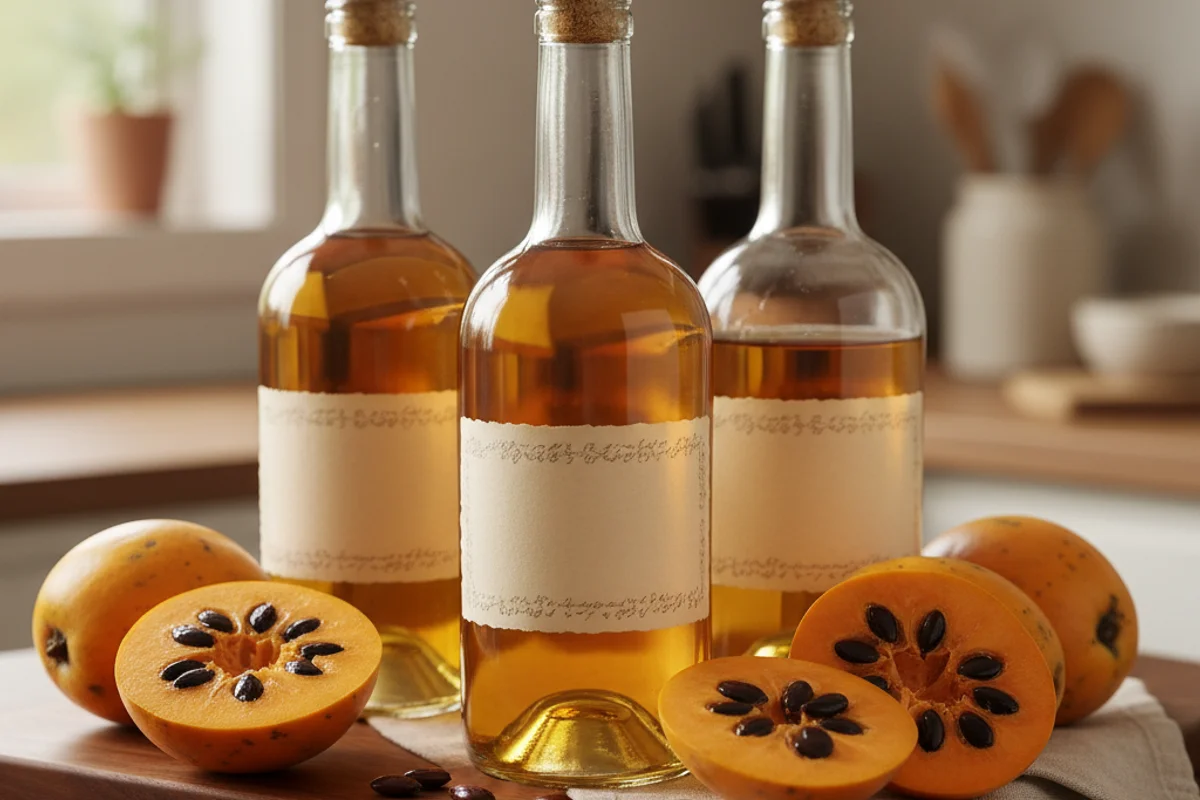
Pawpaw is the largest fruit native to North America, and it tastes like a banana and a mango decided to collaborate. Custardy, tropical, and faintly floral — it’s genuinely strange in the best possible way. The canned version used here makes this recipe approachable year-round, delivering consistent sugar content and texture without the brief, frantic fresh-pawpaw season. What comes out of the bottle after aging is a soft, medium-bodied wine with a honeyed tropical character that tends to surprise people who expected something rustic.
The beginner trap: Skipping the full aging period — pawpaw wine tastes flat and one-dimensional at six months, but genuinely transforms between months eight and twelve.
Ingredients
- 2 lbs canned pawpaw cubes (fresh or frozen pawpaw pulp works too)
- 2 lbs granulated sugar
- 7 pints (3.5 quarts) water
- ½ oz citric acid (about 4 tsp; bottled lemon juice is a loose substitute but less precise)
- 1 tsp pectic enzyme
- ½ tsp grape tannin (a cooled cup of strong black tea works in a pinch)
- 1 tsp yeast nutrient
- 1 packet wine yeast (Lalvin 71B or EC-1118 both work well here)
Method
- Bring the water to a full boil on the stovetop while you prep your fruit.
- Place the pawpaw cubes in a nylon straining bag, tie it closed, and set the bag in your primary fermenter.
- Use your hands or a sanitized masher to crush the fruit inside the bag, then pour the sugar directly over the mashed fruit.
- Pour the boiling water over the sugar and fruit, then cover the fermenter and let everything cool to room temperature.
- Once cooled, add the citric acid, pectic enzyme, grape tannin, and yeast nutrient — everything except the yeast. Cover and wait 12 hours.
- Add the yeast, re-cover, and once fermentation is visibly active, stir the must twice daily for 5 days.
- Pull the straining bag out, squeeze it gently to recover most of the juice, then transfer the liquid to a clean secondary fermenter (a 1-gallon glass jug works well).
- Fit an airlock and leave undisturbed for 2 months.
- Rack into a clean, sanitized secondary, top up with water or similar wine to minimize headspace, and refit the airlock.
- Rack again after 3 more months, top up, and refit the airlock.
- After another 3 months, check for clarity. If the wine is still hazy, stir in a gelatin fining agent, wait two weeks, then rack into bottles.
- Age in bottles an additional 6–12 months before drinking.
Why this works
Pawpaw is loaded with pectin, which is great in jam but terrible in wine — it creates a stubborn, protein-based haze that won’t drop out on its own. Pectic enzyme (pectinase) breaks those long pectin chains into smaller fragments that can actually settle, giving you a clear finished wine. The citric acid does double duty: it drops the pH into a range where yeast performs well and where spoilage bacteria struggle to survive. Grape tannin adds just enough structure to keep the wine from tasting flat and formless. The long aging schedule isn’t optional ceremony — the aromatic compounds in pawpaw are volatile and need time to bind and stabilize before they express themselves properly in the glass.
Notes
Frozen pawpaw pulp (available online or at specialty grocers) is an excellent substitute and often produces a more aromatic wine than canned. If you can only find fresh pawpaws, use the same weight but expect to peel, seed, and mash them yourself. Gelatin fining agent is sold at homebrew shops; plain, unflavored Knox gelatin from the grocery store dissolved in warm water will also do the job.