PEA POD WINE
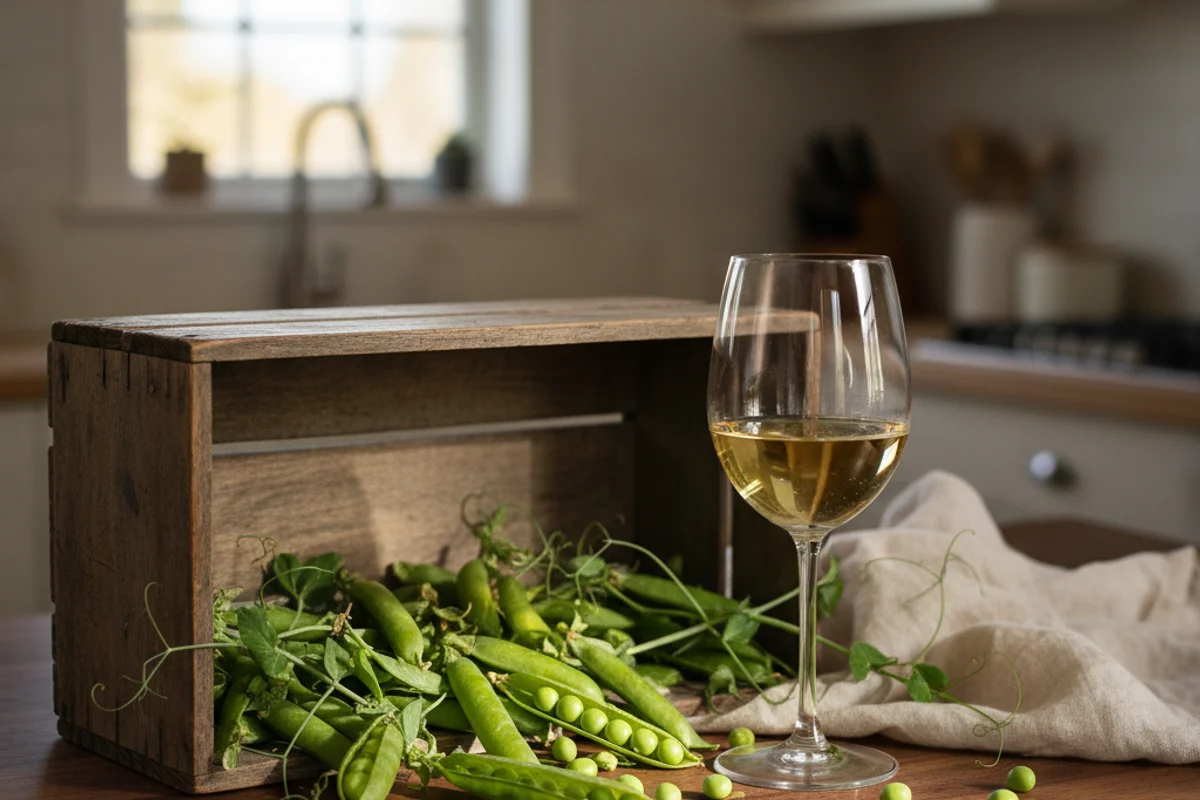
Think of pea pods as a blank canvas — they bring a mild vegetal sweetness, a whisper of green, and just enough structure to hold a wine together. On their own, they’re quiet. But boil them with citrus peel, squeeze in some lemon and orange juice, and something genuinely interesting happens. The result is a pale, delicate wine with a dry, almost Germanic quality — crisp, light, and surprisingly elegant for something that started life as kitchen scraps. Snow peas, snap peas, string beans — almost any fresh green pod works here. Don’t overthink it. Just don’t waste those shells.
The beginner trap: Skipping the full 6-month aging period — this wine tastes flat and a little grassy young, but it genuinely improves with time.
Ingredients
- 4 lbs empty pea pods (fresh or frozen; snow pea, snap pea, or bean pods all work)
- 2 lbs granulated sugar
- 2 lemons
- 2 oranges
- 3½ qts water
- ¼ tsp wine tannin (or 1 cup strong-brewed black tea as a substitute)
- 1 tsp yeast nutrient
- 1 packet wine yeast (a dry German-style yeast like Lalvin 71B works well)
Method
- Use the freshest pods you can find; freeze them between shelling sessions if you need to collect enough over time.
- Bring the water to a boil. Use a vegetable peeler to remove only the thin outer zest from the lemons and oranges — avoid the white pith.
- Add the zest strips and pea pods to the boiling water. Hold at a gentle boil for 30 minutes, then remove from heat and let cool completely.
- Strain the liquid through a fine mesh strainer or cheesecloth into your primary fermenter. Discard the pods and peels.
- Add the sugar, tannin, and yeast nutrient to the warm liquid. Stir until fully dissolved.
- Squeeze the juice from both lemons and both oranges into the fermenter and stir to combine.
- Sprinkle or pitch the yeast according to the packet instructions. Cover loosely and leave at room temperature.
- Once active fermentation is visible — typically within 24 to 48 hours — transfer to a sealed secondary fermenter and fit with an airlock.
- When fermentation is complete (specific gravity at 0.990 or below), rack the wine into bottles and age for at least 6 months before opening.
Why this works
Pea pods contain small amounts of sugar and a range of amino acids that give yeast something to work with — but not a lot. That’s why the granulated sugar does most of the heavy lifting here. The citrus zest adds aromatic compounds (limonene, linalool) and natural pectin, which help round out the body. Citrus juice brings acid, which keeps the wine bright and prevents it from tasting flat. Tannin — normally supplied by grape skins — gives the wine a slight backbone and helps it clarify and age. Without it, a pod wine can feel thin and short on the palate. Together, these additions compensate for what pea pods can’t provide on their own.
Notes
Frozen pea pods work perfectly well here — thaw them before boiling. If you’re using bean pods (green beans, string beans), the method is identical; flavor will be slightly earthier but still pleasant. If you can’t find wine tannin at a homebrew shop, steep 2 black tea bags in a cup of hot water for 5 minutes and add that liquid to the fermenter instead.