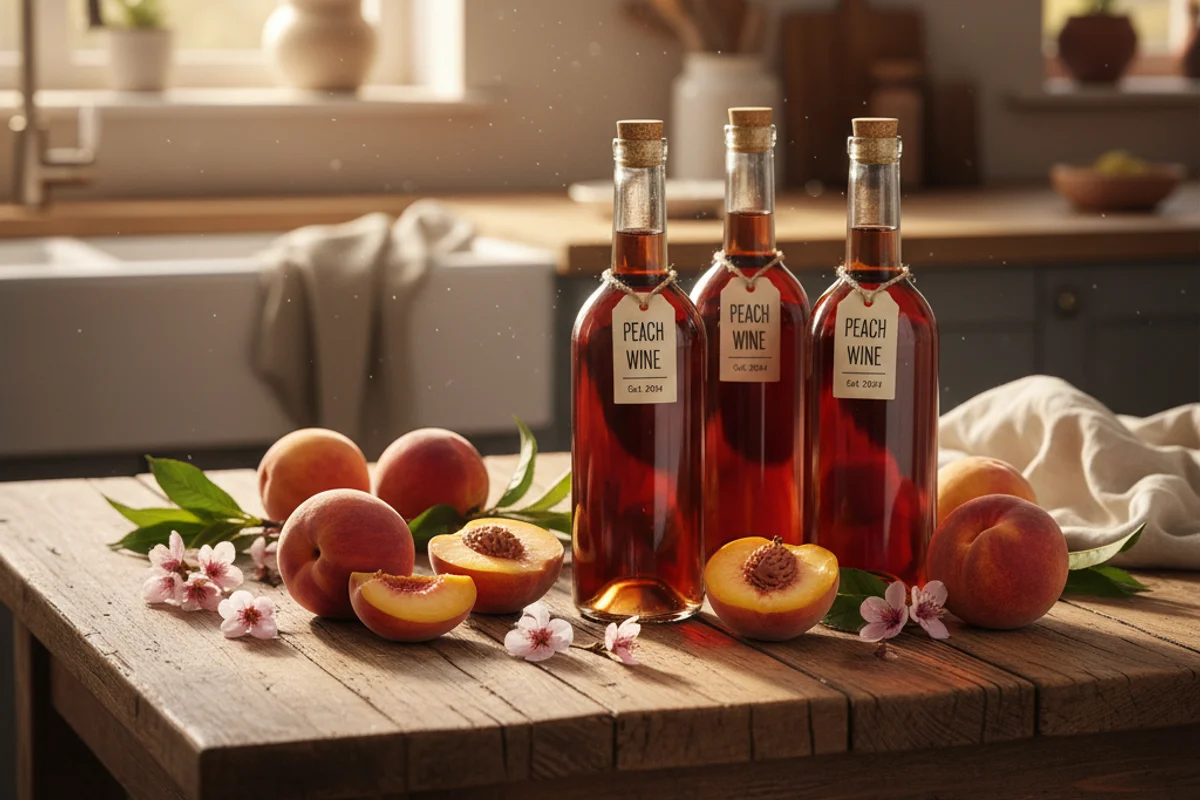
Peach Wines
Peaches smell like summer and taste like a promise — but turn them into wine and you’ll quickly discover the fruit has a secret: almost no body on its own. Fresh peaches are mostly water and sugar, which makes for a thin, pale wine that disappears on the palate before you can enjoy it. The fix is a body-builder: raisins, banana, or white grape concentrate. Each one takes the wine somewhere different — dried fruit warmth, golden richness, or clean crisp brightness. Pick your partner and let’s get started.
The beginner trap: Skipping pectic enzyme (or adding it too early, before the Campden tablet has done its job) leaves you with a stubbornly cloudy wine that won’t clear no matter how long you wait.
Three Recipes
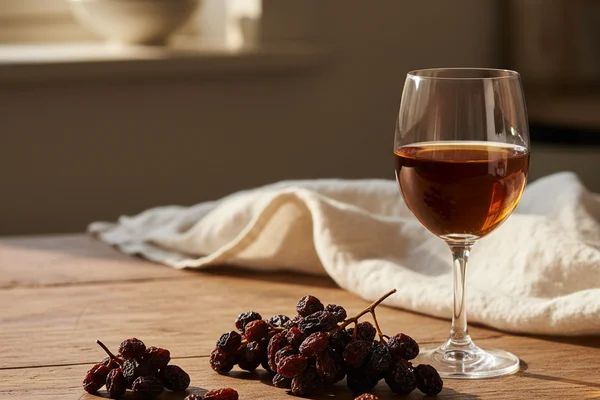
Recipe 1 — Peach & Raisin Wine
Ingredients
- 3 lbs ripe peaches, fresh or frozen, unpeeled, pitted and thinly sliced
- ½ cup raisins, chopped (golden or dark both work)
- 1¾ lbs granulated white sugar, divided
- Juice of 1 large lemon (about 3–4 tbsp)
- 1 qt boiling water, plus cool water to reach 1 gallon total
- 1 Campden tablet, crushed
- ½ tsp pectic enzyme
- 1 tsp yeast nutrient
- 1 packet Sauterne or other white wine yeast (Lalvin 71B is a good grocery-store-area homebrew substitute)
Method
- Place sliced peaches in your primary fermenter and mash them well. Add the chopped raisins and half the sugar, then pour in the boiling water and stir until the sugar dissolves.
- Let the must cool to room temperature, then add cool water until you reach 1 gallon total. Stir in the lemon juice and the crushed Campden tablet.
- Cover the fermenter with a clean cloth and wait 12 hours. Add the pectic enzyme, re-cover, and wait another 12 hours.
- Stir in the yeast nutrient, then sprinkle the yeast over the surface of the must. Cover and ferment for 5 days, stirring twice each day.
- Pour the must through a nylon straining bag into a clean vessel, squeezing the bag firmly to get all the juice out. Discard the solids.
- Add the remaining sugar to the strained juice and stir well until fully dissolved. Transfer to your secondary fermenter (carboy) without topping it up yet, and fit an airlock.
- Once active fermentation slows down, top the carboy up to the shoulder with cool water and refit the airlock.
- Rack into a clean carboy every three weeks until the wine is clear and fully dry. Wait two more weeks, rack one final time, and bottle.
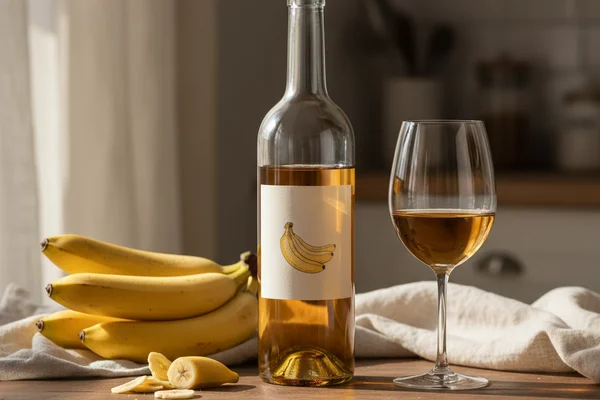
Recipe 2 — Peach & Banana Wine
Ingredients
- 3 lbs ripe peaches, fresh or frozen, pitted and sliced (no need to peel)
- 1 lb ripe bananas (the spottier the better), peeled and sliced
- 1¾ lbs granulated white sugar, divided
- ½ tsp citric acid (find it in homebrew shops or the canning aisle; lemon juice works in a pinch — use 2 tbsp)
- 5 pts boiling water (that’s 2½ quarts), plus water to reach 1 gallon total
- 1 Campden tablet, crushed
- ½ tsp pectic enzyme
- 1 tsp yeast nutrient
- 1 packet Sauterne or Champagne wine yeast (Lalvin EC-1118 is widely available)
Method
- Put the banana slices in a small saucepan with 1 pint of the boiling water. Simmer for 20 minutes, then strain the liquid into a bowl — don’t squeeze the bananas. Discard the cooked banana solids.
- While the bananas simmer, put the peach slices in your primary fermenter. Add half the sugar and pour in the remaining 4 pints of boiling water. Stir until the sugar dissolves.
- Once the peach mixture cools, add the banana liquid, citric acid, and crushed Campden tablet. Add cool water if needed to bring the total volume to 1 gallon. Cover and wait 12 hours.
- Add the pectic enzyme, re-cover, and wait another 12 hours. Then stir in the yeast nutrient and sprinkle the yeast over the surface. Cover and ferment for 3–4 days, stirring twice daily.
- Pour through a nylon straining bag, squeezing well to extract as much juice as possible. Stir half of the remaining sugar into the strained juice until dissolved.
- Transfer to your secondary fermenter without topping up, and fit an airlock. After 5 days, stir in the last portion of sugar and refit the airlock.
- When vigorous fermentation slows, top up to the shoulder of the carboy and refit the airlock. Rack every three weeks until the wine is clear and fermentation is done.
- Wait three more weeks, then rack into bottles. Age at least 3–6 months before opening.
Recipe 3 — Peach & White Grape Wine
Ingredients
- 3 lbs ripe peaches, fresh or frozen, pitted and halved (no need to peel)
- 12 oz can frozen white grape juice concentrate, thawed (Welch’s white grape works fine)
- 1¾ lbs granulated white sugar
- 1½ tsp acid blend (available at homebrew shops; substitute 3 tbsp lemon juice if needed)
- ¼ tsp wine tannin (grape tannin powder; substitute 1 cooled cup of strong brewed black tea)
- ½ tsp pectic enzyme
- 1 tsp yeast nutrient
- 1 Campden tablet, crushed
- Water to bring total to 1 gallon
- 1 packet Champagne wine yeast (Lalvin EC-1118)
Method
- Wash the peaches, cut them in half, and remove the pits. Place them in a nylon straining bag, tie it closed, and put the bag in your primary fermenter. Mash and squeeze the bag by hand until the fruit is thoroughly crushed.
- Dissolve the sugar in boiling water, then pour it over the bagged peaches. Add the thawed grape concentrate and stir.
- Once the must cools to room temperature, add the acid blend, yeast nutrient, tannin, and crushed Campden tablet. Cover and set aside for 12 hours.
- Stir in the pectic enzyme, re-cover, and wait another 12 hours. Sprinkle the yeast over the surface, cover, and stir the must (including squeezing the bag) once daily for 10 days.
- After 10 days, lift the bag and let it drip drain into the fermenter — do not squeeze. Remove and discard the bag.
- Siphon the liquid off any sediment into your secondary fermenter (carboy) and fit an airlock. Rack every 30 days until fermentation is fully complete and the wine is clear.
- Wait two more months, then rack into bottles. The wine is ready to taste after three months, but improves with more time.
Why this works
Peaches are high in pectin — the same stuff that makes jam gel. In wine, pectin turns into a haze that stubbornly refuses to settle out. Pectic enzyme (also called pectinase) breaks those long pectin chains apart, which lets the particles clump together and fall to the bottom. The catch: Campden tablets (potassium or sodium metabisulfite) temporarily knock out wild yeast and bacteria, but they also slow enzyme activity. That’s why you wait a full 12 hours after adding the Campden tablet before adding the pectic enzyme — you want the sulfite to do its sanitation job first, then get out of the way so the enzyme can work. Skip this sequence and you may end up with a hazy wine that no amount of racking will fix.
The body-builder ingredients each bring something chemical to the table too. Raisins add tannin and extra fermentable sugars. Bananas contribute potassium and a starchy body that gives the finished wine a silky texture. White grape concentrate supplies both sugar and natural grape acids, which helps the wine age more like a traditional white.
Notes
Frozen peaches are an excellent substitute for fresh — they’re often picked at peak ripeness and frozen immediately, so the flavor can actually be better than out-of-season grocery store fruit. Thaw completely and drain before use, but include all the juice. If your peaches are on the underripe side, add an extra tablespoon of lemon juice to compensate for lower natural acidity. All three wines benefit from at least six months of bottle aging — the peach aroma fades quickly in the first few months, then comes back rounder and more complex once the wine settles.