PINEAPPLE WINE
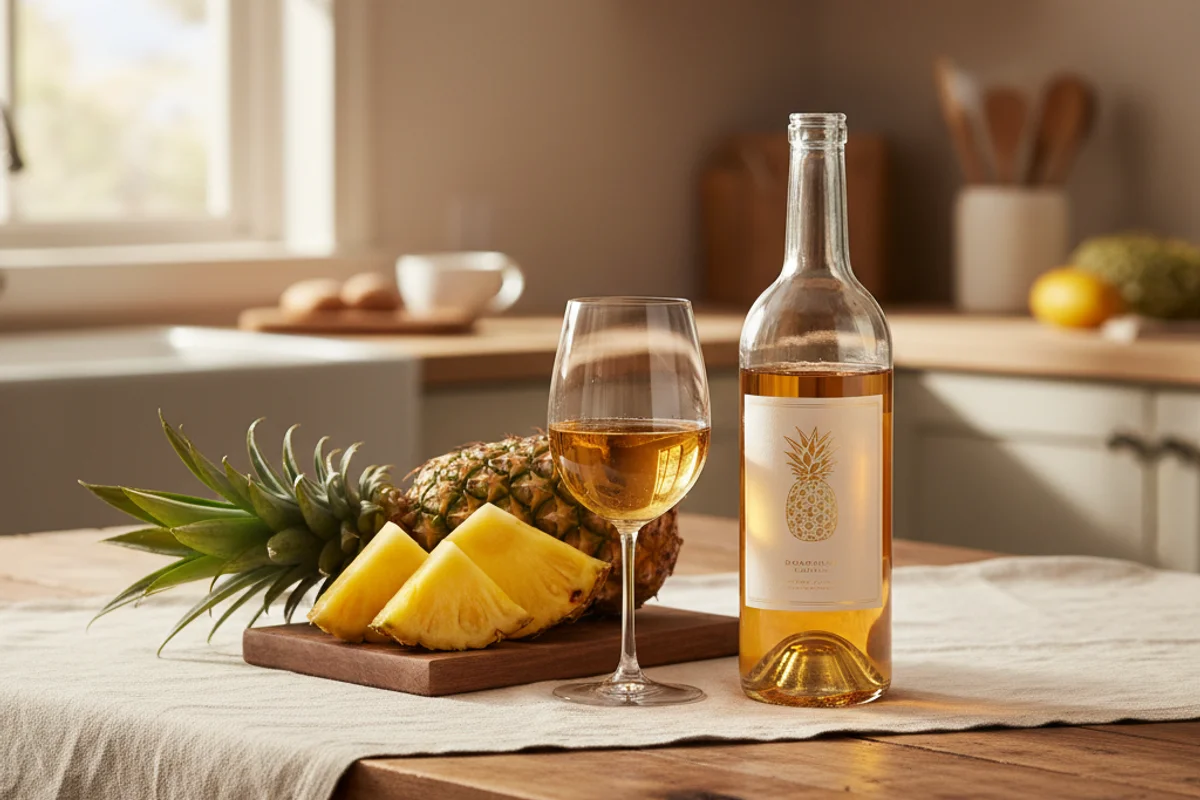
Pineapple is a fruit that peaks fast and fades faster. From the moment it’s harvested, those bright, tropical aromatics start their slow exit — which means the pineapple sitting in your grocery store may already be past its prime. The good news: that works in your favor as a winemaker. Fresh, canned, or juice — all three paths can produce a clean, crisp white wine with a floral nose and a dry, refreshing finish that punches well above its ingredient cost. Think dry Riesling vibes with a sun-soaked twist.
The beginner trap: Skipping the pectic enzyme step — pineapple is loaded with pectin, and without enzyme treatment you’ll end up with a hazy wine that refuses to clear no matter how long you wait.
Ingredients
(This is the fresh pineapple version — see Notes for canned and juice alternatives)
- 4 lbs fresh pineapple flesh, core removed, chopped small (fresh or frozen works)
- 1½ to 2 lbs granulated white sugar
- 7 pts (3.5 quarts) water
- ½ tsp acid blend (or 2 tsp lemon juice as a substitute)
- 1 Campden tablet, crushed
- ¼ tsp pectic enzyme (find it at any homebrew shop or online)
- ¼ tsp wine tannin (or 1 cup strong plain black tea as a substitute)
- 1 tsp yeast nutrient
- 1 packet Champagne wine yeast (or any dry white wine yeast)
Method
- Bring the water to a boil and stir in the sugar until fully dissolved. Remove from heat.
- Peel and core the pineapple, saving all juice from the cutting process. Chop the flesh into small pieces and place them in a nylon straining bag; tie it closed.
- Put the bag in your primary fermenter and use a potato masher to crush the fruit inside the bag.
- Pour the hot sugar water over the bag of fruit, cover the fermenter, and let it cool to room temperature.
- Once cool, stir in the crushed Campden tablet. Cover and wait 12 hours.
- Stir in the pectic enzyme, tannin, acid blend, and yeast nutrient. Cover and wait another 12 hours.
- Activate your yeast according to packet directions, then add it to the fermenter. Stir twice daily for 7 days.
- Lift the straining bag out and let it drip-drain into the fermenter — do not squeeze it. Discard the pulp.
- Continue fermenting until the specific gravity drops to 1.025, then rack the wine into a glass secondary fermenter and fit an airlock.
- After two weeks, rack again, top up to minimize headspace, and refit the airlock.
- Repeat racking every 30 days until the wine is clear and produces no new sediment over a full 30-day period.
- Stabilize (potassium sorbate + another Campden tablet), then sweeten to taste if desired. Wait 10 days to confirm stability, then bottle.
- Age at least 6 months before opening — a year will reward you further.
Why this works
Pineapple contains bromelain, a powerful protein-digesting enzyme, along with significant pectin. Pectin is a structural carbohydrate in plant cell walls, and when you ferment fruit that’s full of it, those long-chain molecules scatter light and cloud your wine permanently. Pectic enzyme breaks those chains apart before fermentation gets rolling, letting the particles clump together and settle out later. The 12-hour wait before adding yeast is critical — pectic enzyme works best at room temperature without alcohol present. Once fermentation starts, the rising alcohol slows the enzyme down. Think of it as prep work the enzyme has to finish before the yeast shows up to the party.
Notes
Canned pineapple: Two 16-oz cans of crushed pineapple packed in juice work beautifully and often produce results equal to mediocre fresh fruit. Drain and reserve the juice, add it to your water, then proceed with the same method — reducing primary fermentation to 5 days. Frozen pineapple chunks (thawed) are another excellent option; the freeze-thaw cycle breaks down cell walls and actually improves juice extraction.
Pineapple juice shortcut: Replace the fruit entirely with 2 pints of 100% pineapple juice (no preservatives — check the label). Skip the straining bag entirely, dissolve sugar in water, stir in juice and all additives except yeast, wait 12 hours, then ferment 7–10 days until SG hits 1.010 before racking to secondary. Much less work, still very good wine.
Preservatives are a silent fermentation killer — always check canned juice labels for sodium benzoate or potassium sorbate before buying.