Pomegranate Wine
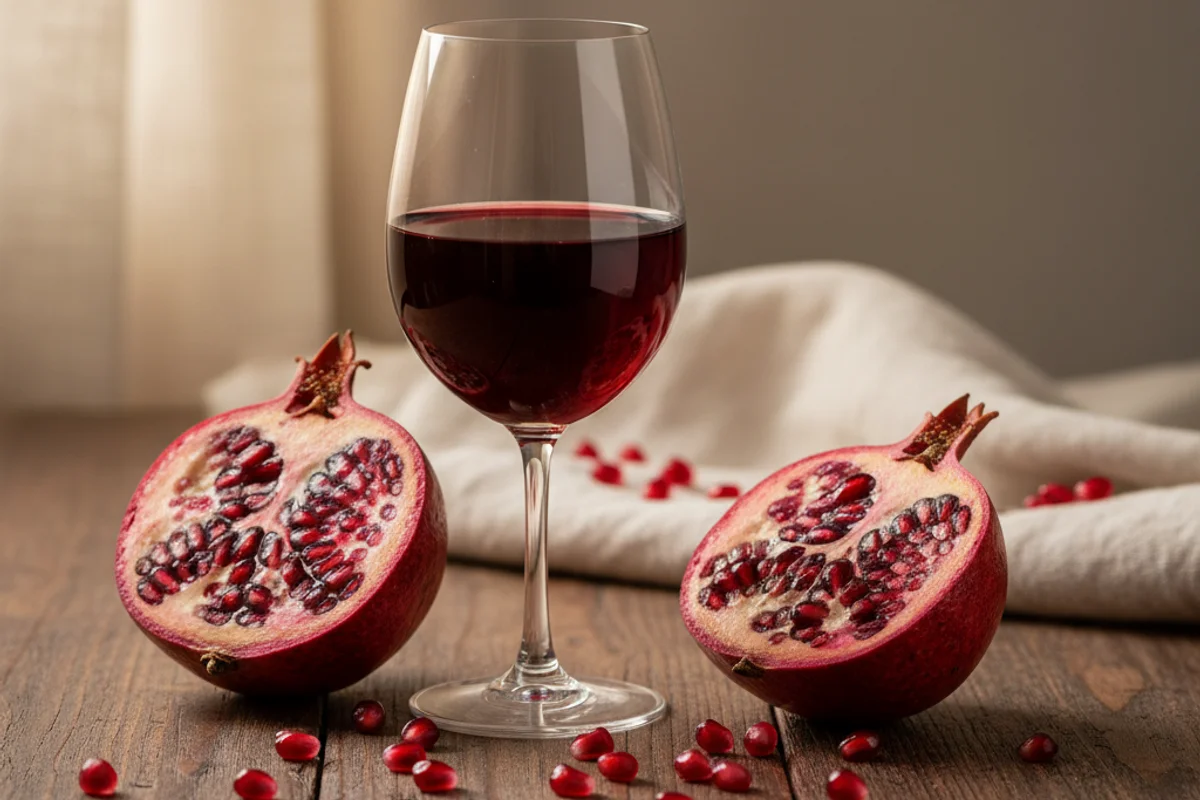
Crack open a pomegranate and you’ll find hundreds of jewel-red arils packed with tart, tannic juice that sits somewhere between cranberry and cherry. That juice is loaded with polyphenols and enough natural acidity to make a wine with real backbone. Add a handful of barley to the boil and you pull out light starch compounds that give the finished wine a subtle body you won’t get from fruit alone. The result is a medium-bodied, garnet-colored wine that rewards patience — it’s drinkable at six months but genuinely good at one year.
The beginner trap: Rushing the seed separation — squeezing or crushing the bitter white membrane releases pith compounds that make the wine taste harsh and unpleasantly astringent.
Ingredients
- 10–15 ripe pomegranates (fresh or frozen arils work; see Notes)
- ½ lb. (225 g) pearl barley
- 1¾ lb. (795 g) granulated sugar
- 1 lemon, juiced
- 1 gallon (3.8 L) water
- 1 packet wine yeast (Lalvin EC-1118 or Red Star Côte des Blancs)
- 1 tsp. yeast nutrient
Method
- Wearing latex or nitrile gloves, peel each pomegranate and carefully separate the seed sacs (arils) from the white pithy membrane. Discard every scrap of membrane — it is the enemy of a clean-tasting wine.
- Combine the water and barley in a large pot and bring to a boil. Reduce heat and simmer for 5 minutes, then strain the hot barley water directly over the arils, sugar, and lemon juice in your primary fermentation vessel.
- Stir thoroughly until all the sugar dissolves. Let the must cool to 70–75 °F (21–24 °C).
- Activate your yeast according to the packet instructions, then stir it into the cooled must along with the yeast nutrient. Cover the vessel with a cloth or loose lid.
- Ferment at room temperature for 5 days, stirring once daily to keep the arils submerged and to release CO₂.
- Strain the must through a fine-mesh strainer or cheesecloth into a 1-gallon glass secondary fermentation jug. Press the arils gently to extract remaining juice — do not mash.
- Fit the jug with an airlock and let fermentation finish, usually 3–4 more weeks.
- Once the wine clears and bubbling stops, rack into a clean jug, leaving sediment behind. Repeat racking if sediment builds up again.
- Bottle when clear and stable. Wait at least 6 months before opening; 12 months is better.
Why this works
Pomegranate arils are high in tannins and anthocyanins — the same pigment compounds that give red wine its color and age-worthy structure. That’s good news for flavor complexity, but tannins also bind to yeast nutrients, which can slow fermentation. The lemon juice keeps the pH low enough to protect color and inhibit spoilage bacteria. Barley contributes beta-glucans, long-chain carbohydrates that break down slowly in the heat of the boil and contribute a subtle mouthfeel without adding a grain flavor you’d notice. The 5-day primary on the fruit extracts maximum color and flavor compounds before you remove the solids and let the yeast finish cleanly in secondary.
Notes
Frozen pomegranate arils (sold at Trader Joe’s, Whole Foods, and many warehouse stores) work well and skip the tedious peeling step entirely — thaw fully before use. If pearl barley is hard to find, flaked barley from a homebrew shop is a direct swap. For a cleaner, faster-clearing wine, add ½ tsp. of pectic enzyme at Step 3, about 12 hours before pitching the yeast.