PRALINE DESSERT WINE
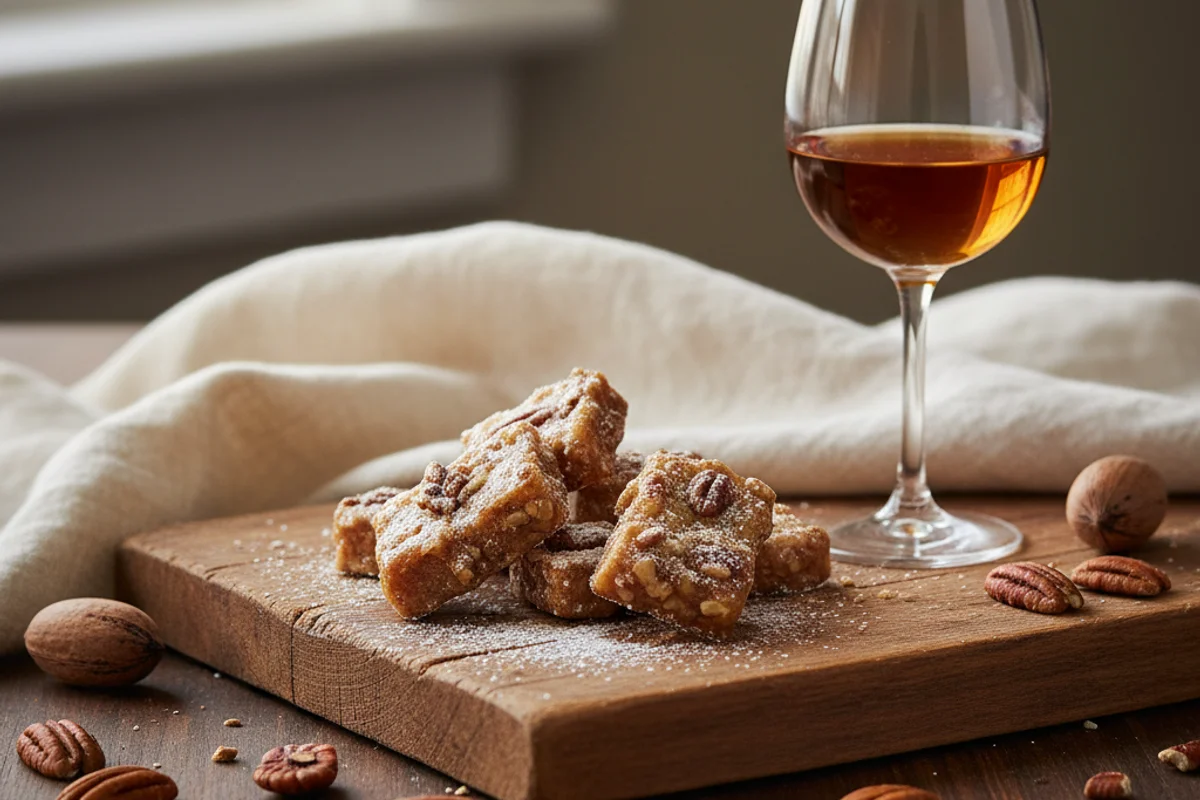
Think about the last time you ate a praline — that sticky, caramel-brown candy with toasted pecans locked in sugary amber. Now imagine that flavor stretched across a glass of wine: warm, nutty, sweet, with a deep golden-brown color that looks like liquid toffee. That’s exactly what this dessert wine delivers. It targets around 14.5% alcohol and finishes with real sweetness, making it the kind of slow-sipping wine you pour after dinner, not during. The color will raise eyebrows — but that’s the point.
The beginner trap: New winemakers panic when they see how brown this wine looks and assume something went wrong — it’s supposed to look that way, because pralines are brown.
Ingredients
- 25 oz Southern Praline Mix (Savannah Mixes brand; check online if your grocery store doesn’t carry it)
- 2⅜ lbs granulated white sugar
- 1¼ tsp acid blend
- 1 tsp yeast nutrient
- 1 Campden tablet, crushed and dissolved in a splash of water
- 6 pints water, divided
- 1 packet Sauternes wine yeast (White Labs WLP727 or Lalvin 71B work as everyday substitutes)
Method
- Bring 1 quart of the water to a boil, add the sugar, and stir until fully dissolved. Remove from heat.
- Pour the sugar water into your primary fermenter and stir in the praline mix.
- Add the remaining water and let the must cool to room temperature.
- Stir in the acid blend, yeast nutrient, and dissolved Campden tablet. Mix well, cover, and wait 10–12 hours.
- Prepare your yeast according to the packet instructions, then add it to the must and recover the fermenter.
- Stir the must once daily for 10 days, then transfer it to a glass secondary fermenter and fit an airlock.
- After 2 months, rack into a clean secondary, top up to reduce headspace, and refit the airlock.
- Wait one more month, then rack again, add stabilizer (potassium sorbate plus one more Campden tablet), top up, and refit the airlock.
- After a final month, sweeten to taste with simple syrup, then rack into bottles.
Why this works
The praline mix brings two powerful flavor-builders to the ferment: caramelized sugar and toasted nut oils. Yeast will happily eat the fermentable sugars in the mix, but the Maillard reaction compounds — the ones responsible for that deep brown color and roasted flavor — survive fermentation intact because they aren’t sugars at all. They’re stable aromatic molecules. Sauternes-style yeast is chosen here because it tends to slow down before eating every last gram of sugar, leaving a naturally sweeter base. The final back-sweetening step just dials in the exact balance you want, since fermentation results vary batch to batch.
Notes
If you can’t find Southern Praline Mix locally, check Amazon or specialty Southern food retailers — it ships easily. Lalvin 71B yeast is a widely available substitute that also handles residual sweetness well. If your finished wine tastes flat, bump the acid blend slightly at the sweetening stage, half a teaspoon at a time, until it brightens up.