PRUNE WINE
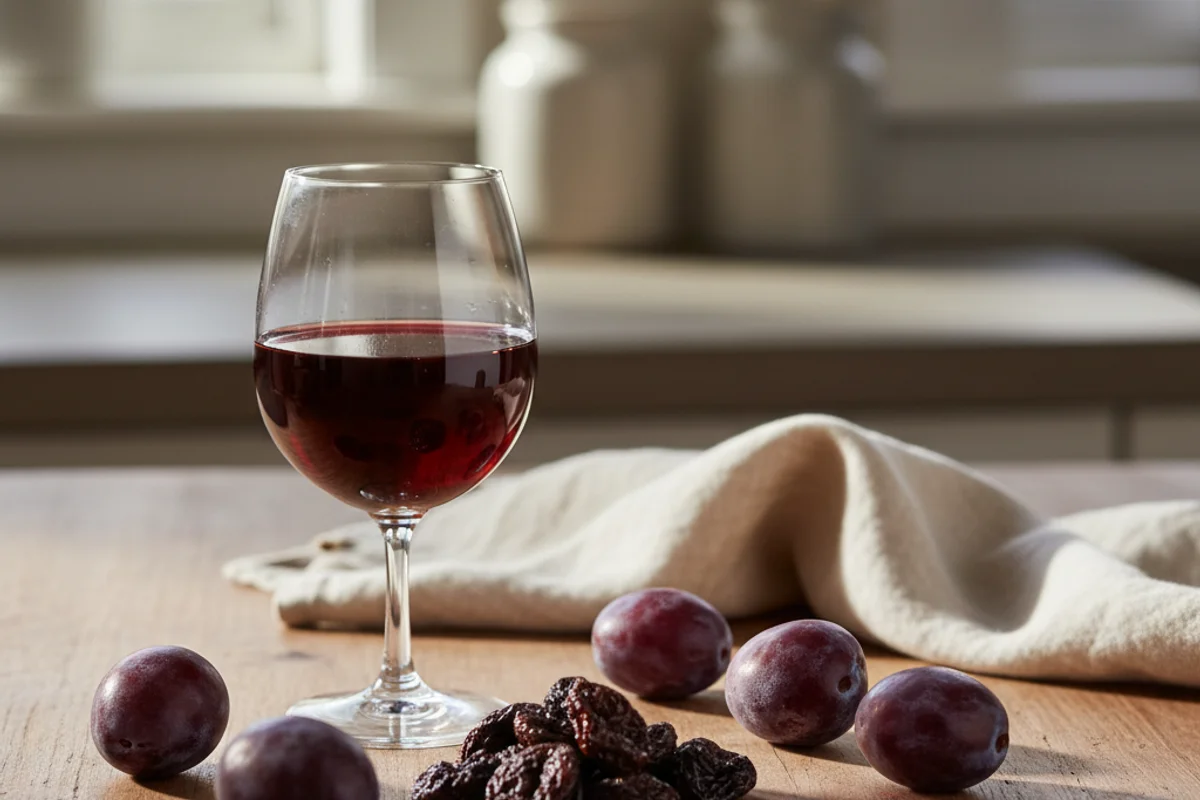
Think of a prune as a plum that went through an identity crisis and came out the other side as something completely different. The drying process concentrates sugars, deepens flavor, and creates a dark, almost molasses-like intensity that fresh plums simply don’t have. The wine you’ll get from this recipe is full-bodied and rich — closer to a rustic dinner wine than anything light and fruity. Serve it dry alongside red meat, or sweeten it up and sip it as a dessert wine. Either way, it earns its place at the table.
The beginner trap: Skipping or shortchanging the pectic enzyme will leave your wine permanently cloudy, because dried fruit is loaded with pectin that won’t break down on its own.
Ingredients
- 4 lbs prunes, pitted and chopped or minced (standard grocery-store dried prunes work perfectly)
- 1¾ lbs granulated white sugar
- 2 tsp citric acid (or the juice of 2 large lemons as a substitute)
- 3 tsp pectic enzyme
- ¼ tsp wine tannin (or 1 strong, cooled black tea bag steeped in ¼ cup water)
- 1 tsp yeast nutrient
- 7 pts (3.5 quarts) water
- 1 packet red wine yeast (Lalvin 71B or RC212 are solid choices)
Method
- Chop or mince the prunes, then bring the water to a full boil.
- Place the prunes, sugar, citric acid, and tannin in your primary fermenter, then pour the boiling water over everything and stir until the sugar fully dissolves.
- Cover the fermenter with a clean cloth and let the must cool to room temperature (around 70°F).
- Once cooled, stir in the pectic enzyme, re-cover, and leave it alone for 12 hours.
- After 12 hours, add the yeast nutrient and your activated yeast, stir well, and re-cover.
- Stir the must once daily for 7–10 days, until the specific gravity drops to around 1.010.
- Strain out the solids through a fine mesh bag or cheesecloth, press lightly to recover the juice, and transfer the liquid to a 1-gallon secondary fermenter (glass carboy or jug).
- Fit an airlock and let fermentation finish until the specific gravity holds steady near 1.000 or below.
- Rack the wine off the sediment, top up to minimize headspace, and refit the airlock.
- Once the wine clears, wait 45 days, then rack again, top up, and refit the airlock.
- Wait another 45 days, rack once more, top up, and refit the airlock.
- Age for 3 months, then stabilize with potassium sorbate and potassium metabisulfite, sweeten to taste if desired, wait 10 days, and rack into bottles.
- Age bottled wine for at least 3 more months before opening — longer aging rewards patience here.
Why this works
Dried prunes carry a heavy load of pectin — the same substance that makes jam gel. When you add pectic enzyme early in the process, it breaks those long pectin chains apart, which lets your wine clear properly and also frees up more flavor compounds locked inside the fruit’s cell walls. The boiling water at the start serves two purposes: it dissolves the sugar completely and softens the fruit so it releases juice during primary fermentation. Tannin adds structure and a slight grip to the finished wine, which balances the natural sweetness of the prunes. The long racking schedule — three rounds over several months — gives the wine time to drop all its sediment in stages rather than leaving it sitting on dead yeast cells, which can cause off-flavors.
Notes
Any variety of dried prune from the grocery store works here — no specialty sourcing needed. If you want a port-style result, fortify the finished wine with a neutral brandy and sweeten to taste. Citric acid is available online or at homebrew shops; lemon juice is a workable everyday substitute but adds a faint lemon note to the flavor.