QUINCE-BASED WHITE WINES
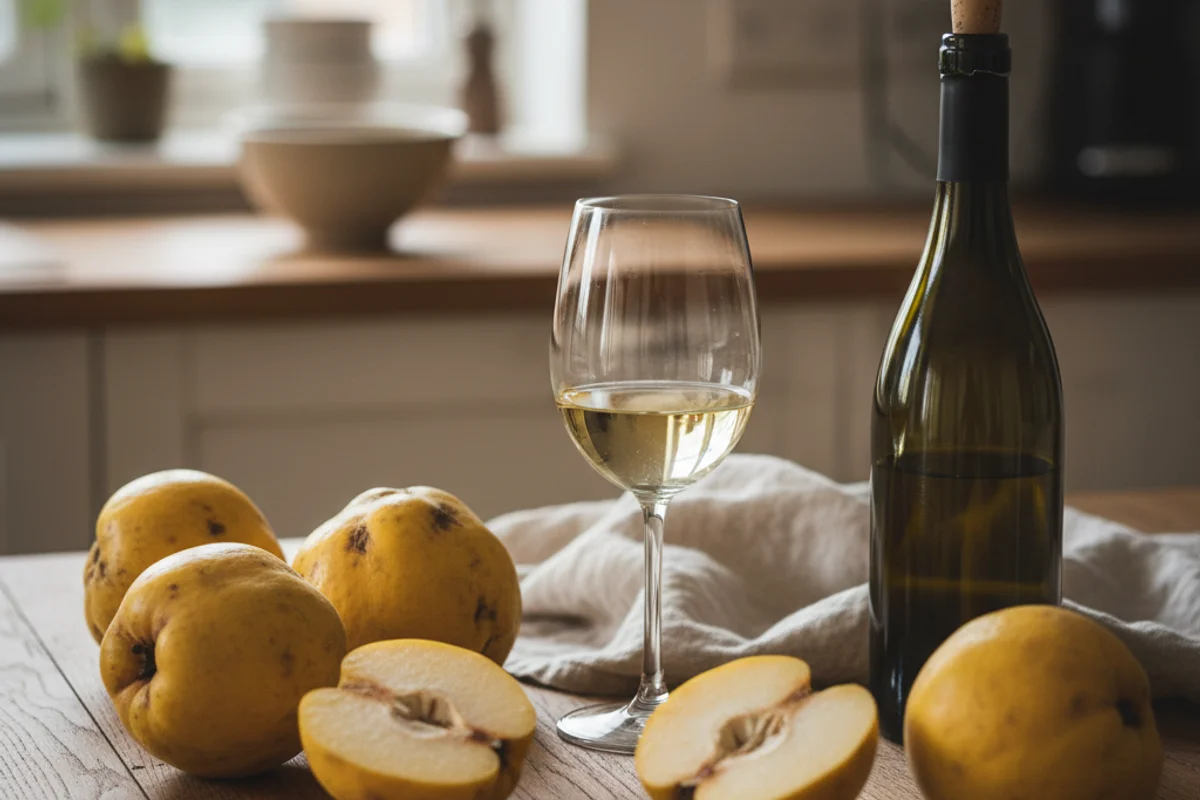
Quince is the fruit world’s enigma — beautiful, golden, and completely inedible raw. But cook it down and something remarkable happens: harsh tannins soften, floral aromas bloom, and a honey-like complexity emerges that most winemakers never expect from a backyard oddity. Pair it with earthy parsnips (or swap half for carrots), and you get a white wine with real depth — not a simple fruit bomb, but something structured and interesting. Fair warning: this one rewards patience. A full year of aging turns “promising” into “genuinely good.”
The beginner trap: Skipping the full year of aging and bottling too early — this wine tastes flat and harsh at six months but transforms completely by twelve.
Ingredients
Version 1 — Parsnip & Quince
- 5 lbs parsnips, washed, trimmed, and thinly sliced or grated
- 3 lbs quinces, peeled, cored, and thinly sliced or grated
- 1 lb golden raisins, chopped or minced (fresh or from grocery store bulk bins)
- 2 lemons, zest and juice
- 1 orange, zest and juice
- 1¾ lbs granulated white sugar (about 3¾ cups)
- 7½ pints water (about 15 cups)
- 1 tsp pectic enzyme
- ⅛ tsp wine tannin (or substitute 2 oz strong-brewed black tea, cooled)
- 1 tsp yeast nutrient
- 1 packet Champagne wine yeast (EC-1118 or similar dry yeast works fine)
Version 2 — Parsnip, Carrot & Quince
Replace the 5 lbs of parsnips above with:
- 2½ lbs parsnips, washed, trimmed, and thinly sliced or grated
- 2½ lbs carrots, washed, trimmed, and thinly sliced or grated
All other ingredients remain the same.
Method
- Slice or grate your parsnips, carrots (if using), and quinces to about ⅛-inch thickness — thin enough that the boil can pull out their flavor quickly.
- Combine the prepared vegetables and fruit in a large pot with the water, then bring to a full boil.
- Hold the boil for 45 minutes, adding water as needed to keep the level steady.
- Remove from heat and let the mixture cool to room temperature.
- Strain the liquid through a fine mesh bag or cheesecloth into your primary fermenter, squeezing gently to pull out the juice without forcing through cloudy pulp.
- Add the sugar to the warm liquid and stir until fully dissolved.
- Stir in the lemon juice, orange juice, tannin, pectic enzyme, and yeast nutrient.
- Place the raisins and all citrus zest inside a fine mesh bag, tie it shut, and drop it into the primary fermenter.
- Cover the primary loosely and let everything rest for 12 hours.
- Activate your yeast according to the packet instructions, then stir it into the must and re-cover the primary.
- Stir the must once daily until the specific gravity (SG) drops to 1.010 — this usually takes 12 to 14 days.
- Squeeze out and discard the raisin and zest bag, then let the wine settle overnight.
- Rack the wine off the sediment into a glass secondary fermenter (carboy), top up to minimize headspace, and fit an airlock.
- Every 60 days, rack the wine again, top up, and refit the airlock — repeat until fermentation is completely finished and the wine runs clear.
- Stabilize with potassium sorbate and potassium metabisulfite, wait 10 to 14 days, then rack into bottles.
- Age for a full year before opening.
Why this works
Quinces are loaded with pectin and polyphenols — that’s why they’re hard and astringent off the tree. Boiling them breaks down cell walls and pulls soluble flavor compounds into the water. That’s also why pectic enzyme is non-negotiable here: residual pectin left in the must will cause the finished wine to stay stubbornly hazy no matter how long you wait. The enzyme cuts those long pectin chains into smaller pieces, which then drop out of solution and let the wine clear properly. Parsnips bring a mild earthiness and body-building starches; the long boil converts some of those starches into fermentable sugars. Raisins contribute body, a light oxidative complexity, and background sweetness that balances the tart citrus.
Notes
Quinces can be hard to find outside of fall farmers’ markets — check Middle Eastern or Eastern European grocery stores, which often carry them seasonally. If you find them and want to make this wine later, quinces freeze well after peeling and slicing; frozen quince works fine here. Parsnips and carrots are year-round grocery staples, so no substitution needed there. If you cannot source wine tannin, two ounces of strong black tea (brewed and cooled) is a reliable everyday substitute.