RED CURRANT WINE
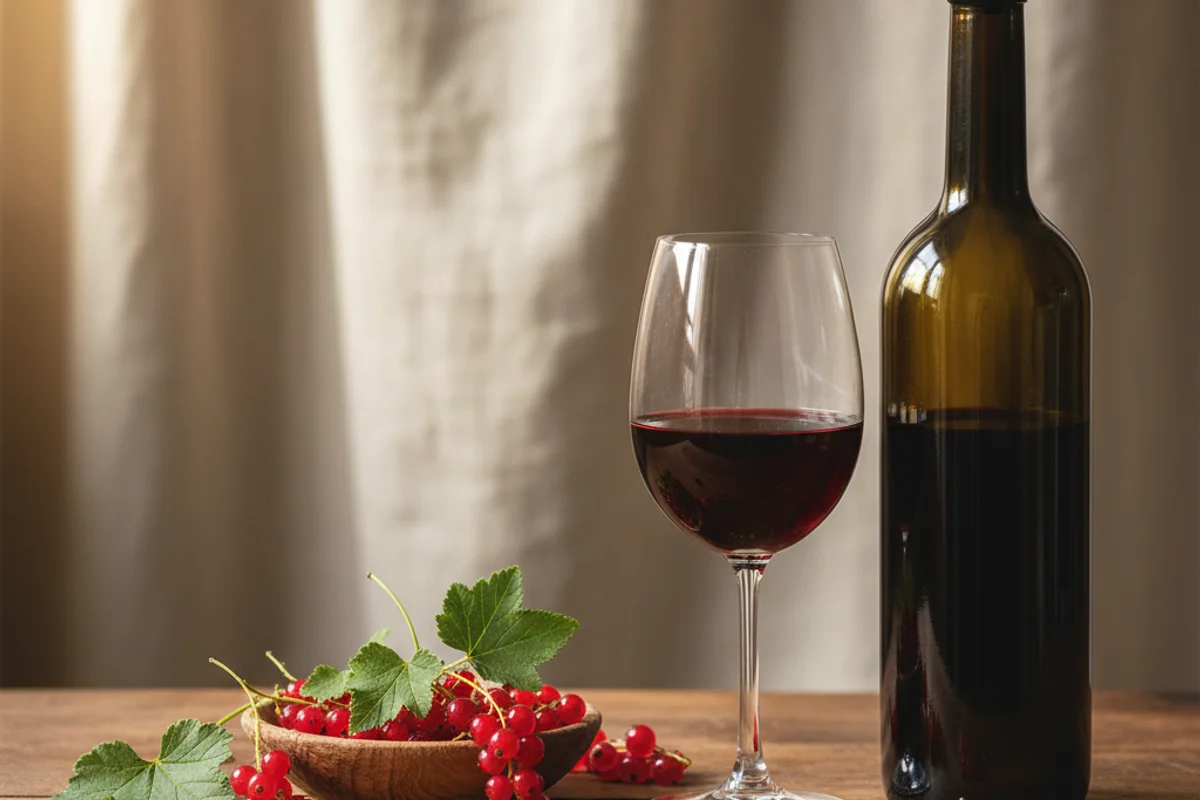
Red currants are the sharp-tongued cousin nobody talks about at the fruit bowl. They bring a punchy, almost cranberry-like tartness backed by floral notes that soften — slowly — into something genuinely elegant. This is a wine that rewards patience. Fresh off the vine it bites; two years later it hums. Think of it less like baking a cake and more like seasoning a cast iron pan: time is the actual ingredient doing the heavy lifting here.
The beginner trap: Bottling too early — red currant wine needs a full two years in the bottle to shed its harsh edges, and cracking one open at six months will convince you the whole batch is ruined (it isn’t).
Ingredients
- 3 lbs red currants, fresh or frozen, stems removed
- 1¾ lbs granulated white sugar
- 6½ pts (about 13 cups) water
- ½ tsp pectic enzyme
- 1 tsp yeast nutrient (available at homebrew shops or online)
- 1 packet wine yeast (Lalvin EC-1118 or Red Star Côte des Blancs work well)
Method
- Bring the water to a full boil. While it heats, strip any remaining stems from the currants, rinse them well, and crush them thoroughly in your primary fermentation bucket.
- Pour the boiling water over the crushed fruit, cover the bucket, and let it steep overnight — at least 12 hours.
- Strain the liquid through a fine mesh straining bag, pressing the pulp firmly to extract every drop of juice. Discard the spent pulp.
- Stir in the sugar until it fully dissolves, then add the pectic enzyme and yeast nutrient. Cover and wait 12 hours.
- Add your activated wine yeast, re-cover the bucket, and leave it undisturbed until you see clear signs of active fermentation — bubbling, foam, or a rising cap.
- Transfer the wine to a sealed secondary fermentation vessel (a glass carboy works great) and fit it with an airlock.
- Once fermentation has completely stopped and the wine has cleared, rack it into a clean vessel, top it up to minimize headspace, and refit the airlock. Check the airlock water level monthly.
- Rack again at the 6-month mark, then once more 3 months after that.
- Bottle the wine and store it somewhere dark and cool for at least 2 years before drinking.
Why this works
Red currants are loaded with pectin — the same stuff that makes jam gel. Left alone, that pectin keeps your finished wine hazy no matter how long you wait. Pectic enzyme (pectinase) breaks those long pectin chains into smaller pieces that can drop out of suspension, giving you a clear, bright wine. The 12-hour wait after adding the enzyme matters: the enzyme needs time to work before yeast activity starts, because a lower pH and rising alcohol will eventually slow it down. Getting this step right early saves you months of frustrated racking later.
Notes
Frozen red currants work just as well as fresh — freezing actually ruptures the cell walls and can improve juice extraction. If you can’t find wine yeast locally, it’s widely available online; a general-purpose bread yeast will ferment the sugar but won’t give you the same clean flavor. If your finished wine still tastes harsh after 12 months in the bottle, give it more time — this one genuinely gets better with age.