RED RASPBERRY WINE (2)
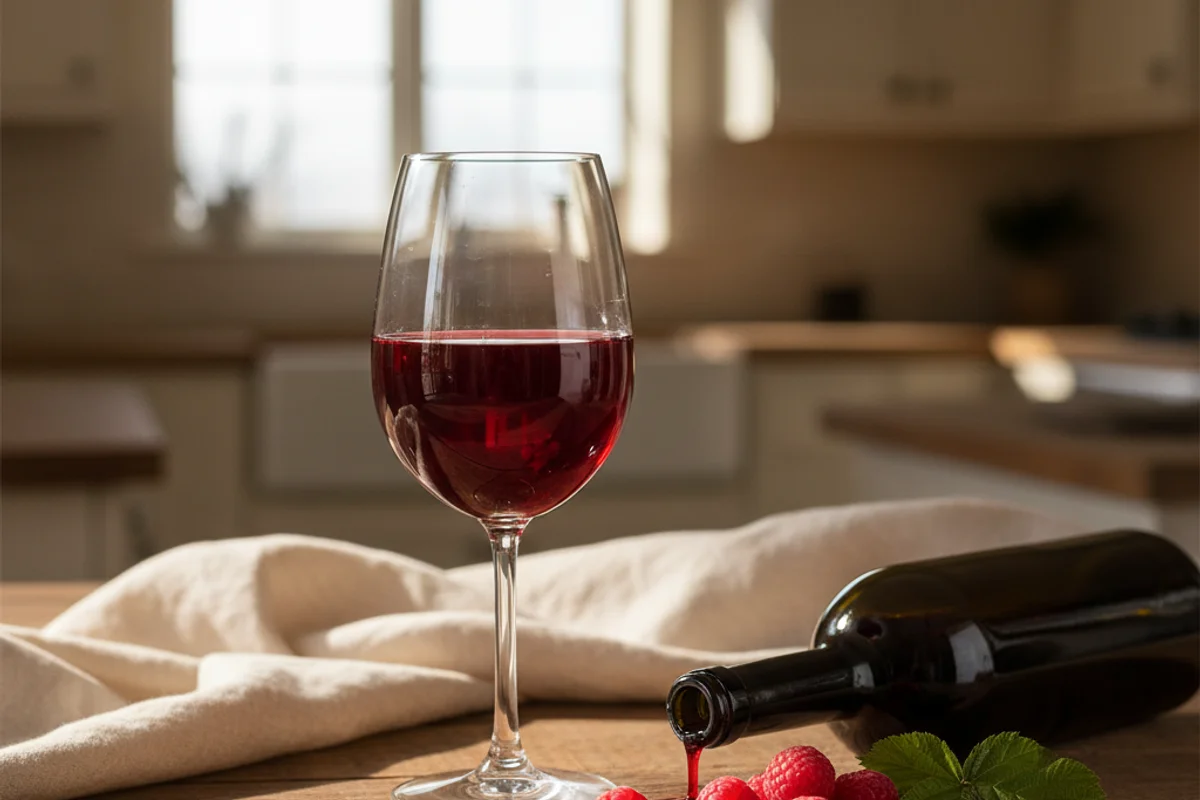
Red raspberries sit in a narrow window between tart and jammy, and that window is exactly where great fruit wine lives. Get the timing right and you end up with something bright, floral, and deeply colored — a wine that smells like a summer hedgerow and finishes clean. This recipe coaxes every bit of flavor out of about two and a half pounds of berries, runs a short primary fermentation, then rewards your patience with a full year of bottle aging that rounds out the edges and deepens the color.
The beginner trap: Skipping the pectic enzyme — without it, raspberry pectin clouds your wine and no amount of racking will fix it.
Ingredients
- 2½ lbs red raspberries, fresh or frozen
- 2½ lbs granulated white sugar
- 7⅔ pints (about 1 gallon minus a cup) water
- 1 tsp acid blend (find it at homebrew shops or online; citric acid from the grocery store is a rough substitute)
- 1 tsp yeast nutrient
- ½ tsp pectic enzyme
- ¼ tsp grape tannin (or the contents of one plain black tea bag, steeped and cooled)
- 1 Campden tablet, crushed
- 1 packet wine yeast (Lalvin 71B or EC-1118 both work well)
Method
- Sort through the berries and discard any soft, moldy, or underripe ones. Wash them well and remove any stems.
- Crush the berries by hand or with a potato masher and put them in your primary fermenter (a food-safe bucket works fine).
- Add the sugar, acid blend, yeast nutrient, tannin, pectic enzyme, and crushed Campden tablet directly to the bucket.
- Bring the water to a full boil, pour it over everything, and stir until the sugar fully dissolves.
- Lay a sheet of plastic wrap directly over the surface, then cover the bucket. Let it cool to 70–75°F before moving on.
- Once cooled, pitch the yeast, re-cover, and stir the must once a day for 5–6 days, or until the specific gravity (SG) drops to around 1.040.
- Strain the pulp through a mesh bag or cheesecloth and press it firmly to squeeze out all the juice. Discard the pulp (or save it — see Notes).
- Siphon the liquid off any sediment into a clean secondary fermenter (a glass carboy is ideal). Top it up, fit an airlock, and move it to a dark spot kept at 60–65°F.
- Rack the wine after 3 weeks, then again at 3 months.
- Once the wine is completely clear, rack one final time and bottle it. Store bottles in a dark place and age for at least one year.
Why this works
Raspberries are loaded with pectin — the same stuff that makes jam gel. Heat breaks pectin loose from the fruit cells, but it doesn’t destroy it. Left alone, pectin forms a stubborn protein-pectin haze that scatters light and makes your wine look cloudy forever. Pectic enzyme (pectinase) is a protein that literally chops pectin chains into smaller pieces that can’t form that haze. You add it before fermentation so it has time to work before alcohol levels rise — high alcohol slows enzyme activity. The Campden tablet (potassium or sodium metabisulfite) knocks back wild yeast and bacteria so your chosen wine yeast can take over cleanly and without competition.
Notes
Frozen raspberries work just as well as fresh here — freezing ruptures the cell walls and actually makes juice extraction easier. If you saved pulp from a double batch, you can combine the spent pulp from two batches and run it through this same recipe (minus the Campden tablet and pectic enzyme) to produce about one gallon of a lighter “second wine” — just make sure your sugar water has fully cooled before you pour it over the pulp, or you’ll kill the yeast still living in it. That second wine also benefits from a full year of aging.