RICE WINE
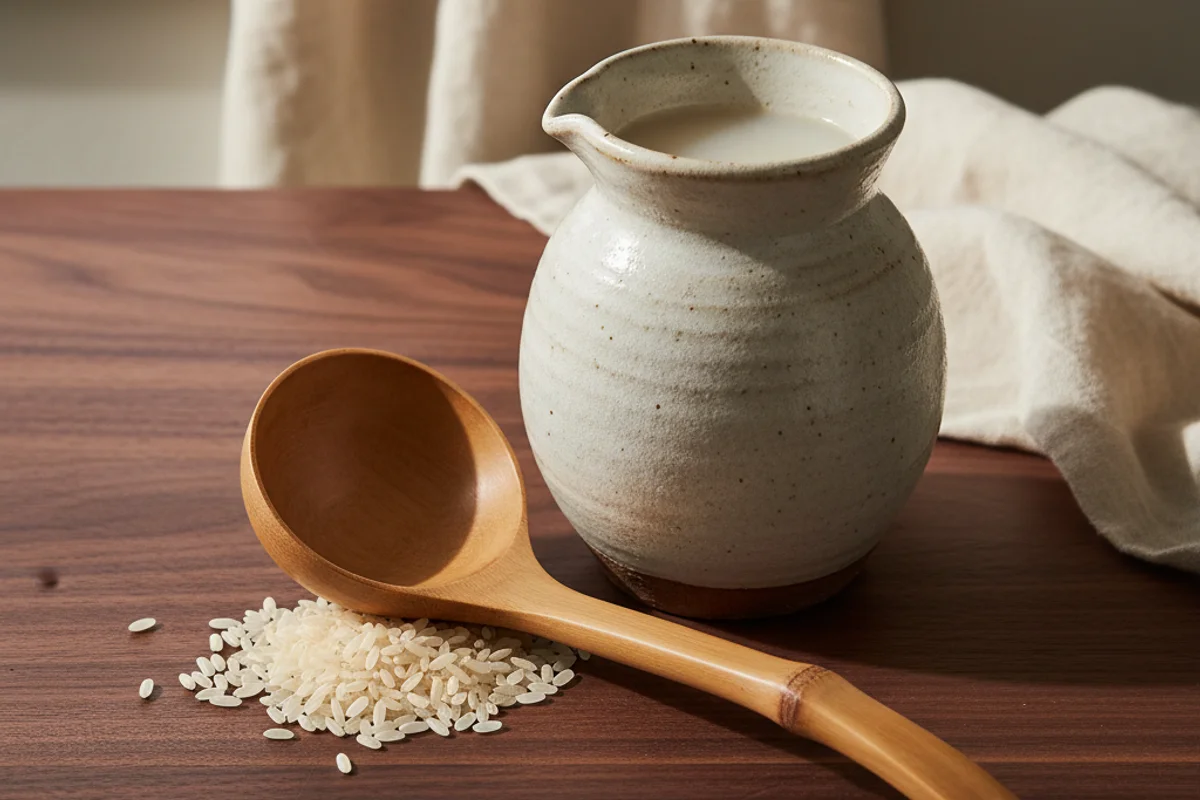
Think of this as grain wine with a mild, clean flavor profile — closer to a dry white wine than anything you’d pour over sushi. Long grain brown rice brings starch and body, golden raisins add fermentable sugar and a touch of fruit character, and the whole thing ferments into something pale, crisp, and quietly complex. Patience is the main ingredient here: this wine needs a full six months of aging before it finds its voice. Serve it well chilled and you might surprise a few guests who thought rice was just for dinner.
The beginner trap: Squeezing the straining bag when you remove it — that forces starch and sediment back into your must and clouds the wine for months.
Ingredients
- 2 lbs long grain brown rice
- 2 lbs granulated sugar
- 1 lb golden raisins, chopped
- 7½ pts (roughly 1 gallon minus 1 cup) water
- 4 tsp acid blend (found at homebrew shops; lemon juice is not a reliable substitute here)
- 1 tsp pectic enzyme
- 1 tsp yeast nutrient
- ½ tsp wine tannin (or 1 cup strongly brewed black tea, cooled)
- 1 Campden tablet, crushed
- 1 packet Champagne or Sherry wine yeast
Method
- Rinse the rice thoroughly under cold water until the water runs mostly clear, then place it in a large glass or food-safe bowl.
- Add the chopped raisins to the bowl and pour in enough water to cover everything — about 1 quart total. Let the mixture soak for 12 hours or overnight.
- Transfer the rice and raisins into a nylon straining bag and place the bag in your primary fermenter (a food-grade bucket works perfectly). Pour the reserved soaking water into the fermenter.
- Combine the remaining water and sugar in a large pot, bring to a boil, then remove from heat and stir until the sugar fully dissolves.
- Add the acid blend, yeast nutrient, and tannin to the fermenter, then pour the hot sugar water over the bag and stir well.
- Cover the fermenter with a clean cloth and let it cool to room temperature — this usually takes a few hours.
- Once cool, stir in the crushed Campden tablet, re-cover, and wait 24 hours.
- Add the pectic enzyme and yeast, stir, and cover again.
- Stir the must once daily for two weeks.
- Lift the straining bag out and let it drip-drain into the fermenter on its own — do not squeeze it. Discard the solids.
- Re-cover the fermenter and let the wine settle overnight, then rack it into a glass carboy and fit an airlock.
- Rack again after 3 months, top up to minimize headspace, and refit the airlock; repeat at the 6-month mark.
- Once the wine is fully clear, stabilize it, wait 10 days, then rack into bottles. Serve chilled.
Why this works
Brown rice is packed with complex starches, but wine yeast can’t eat starch directly — it can only ferment simple sugars. So why does this work without a koji mold (the enzyme source used in sake)? Because the recipe sidesteps the starch problem almost entirely: the overnight soak pulls out soluble sugars and flavor compounds, while the bulk of the fermentable sugar comes from the added granulated sugar and raisins. The pectic enzyme helps break down cell walls in the raisins and any soft grain material, improving juice yield and clarity. The result is a sugar-driven fermentation with rice contributing body and a subtle grainy character rather than serving as the primary fuel source.
Notes
Golden raisins are preferred here for their lighter color and milder flavor, but regular dark raisins will work — expect a slightly deeper hue and a hint more grape character in the finished wine. If you can’t find acid blend at a homebrew shop, check online retailers; it’s worth ordering rather than substituting. This wine keeps well once bottled and actually improves noticeably after 9–12 months total aging.