ROSE HIP WINE (3)
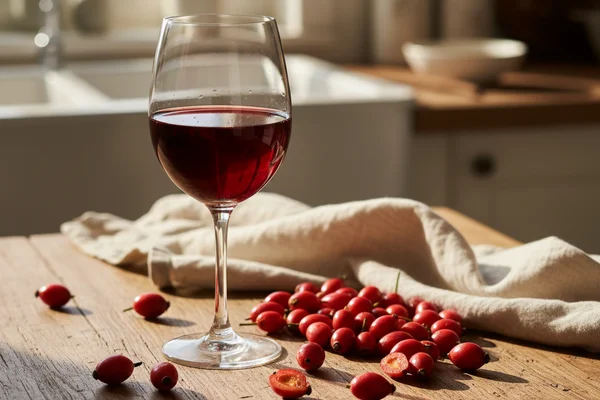
Rose hips are the fruit left behind after a rose flower drops its petals — small, ruby-red pods packed with more vitamin C than an orange and a tart, floral tang that sits somewhere between hibiscus tea and dried cranberry. Dried rose hips concentrate all of that flavor into a lightweight ingredient you can store in your pantry year-round. The wine they produce is pale amber-pink, gently acidic, and complex enough to reward a full two years of patience. This is a slow build, but the payoff is a genuinely unique wine you won’t find on any store shelf.
The beginner trap: Skipping the full two-year aging period — rose hip wine tastes thin and harsh young, and most people who rush it write the recipe off as a failure before the wine ever gets a chance to show what it can do.
Ingredients
- ½ lb dried rose hips (find them at health food stores, herb shops, or online)
- 2½ lbs granulated white sugar
- 7¼ pts (about 3.6 quarts) water
- 1 tsp acid blend (or 1½ tsp citric acid in a pinch)
- ½ tsp pectic enzyme
- 1 tsp yeast nutrient
- 1 packet Montrachet wine yeast (or any dry wine yeast such as EC-1118)
Method
- Crush the dried rose hips lightly with a rolling pin or the bottom of a heavy pan, then rinse them well and soak overnight in a portion of the water.
- The next day, drain the rose hips, place them inside a nylon straining bag, and tie the bag shut.
- Combine the sugar and water in a pot and bring to a boil, stirring until the sugar fully dissolves.
- Set the bag of rose hips in your primary fermenter, then pour the hot sugar-water directly over the bag.
- Cover the fermenter and let it cool to room temperature — this takes a few hours, so be patient.
- Once cooled, stir in the pectic enzyme, acid blend, and yeast nutrient; cover again and wait 12 hours.
- Sprinkle in the yeast, stir well, and cover loosely to allow gas to escape.
- Squeeze and stir the bag twice a day for 8 to 10 days to pull color and flavor from the hips.
- Remove the bag, squeeze it firmly to extract every last drop, then discard the spent hips.
- Transfer the liquid to a clean secondary fermenter (a glass carboy works great), fit an airlock, and move to a dark spot for 2 months.
- Rack into a sanitized secondary, top up with a little water or similar wine to minimize headspace, refit the airlock, and return to the dark for another 2 months.
- Rack once more the same way, then wait for the wine to clear completely.
- Once clear, stabilize with potassium sorbate and potassium metabisulfite, then sweeten to taste if desired.
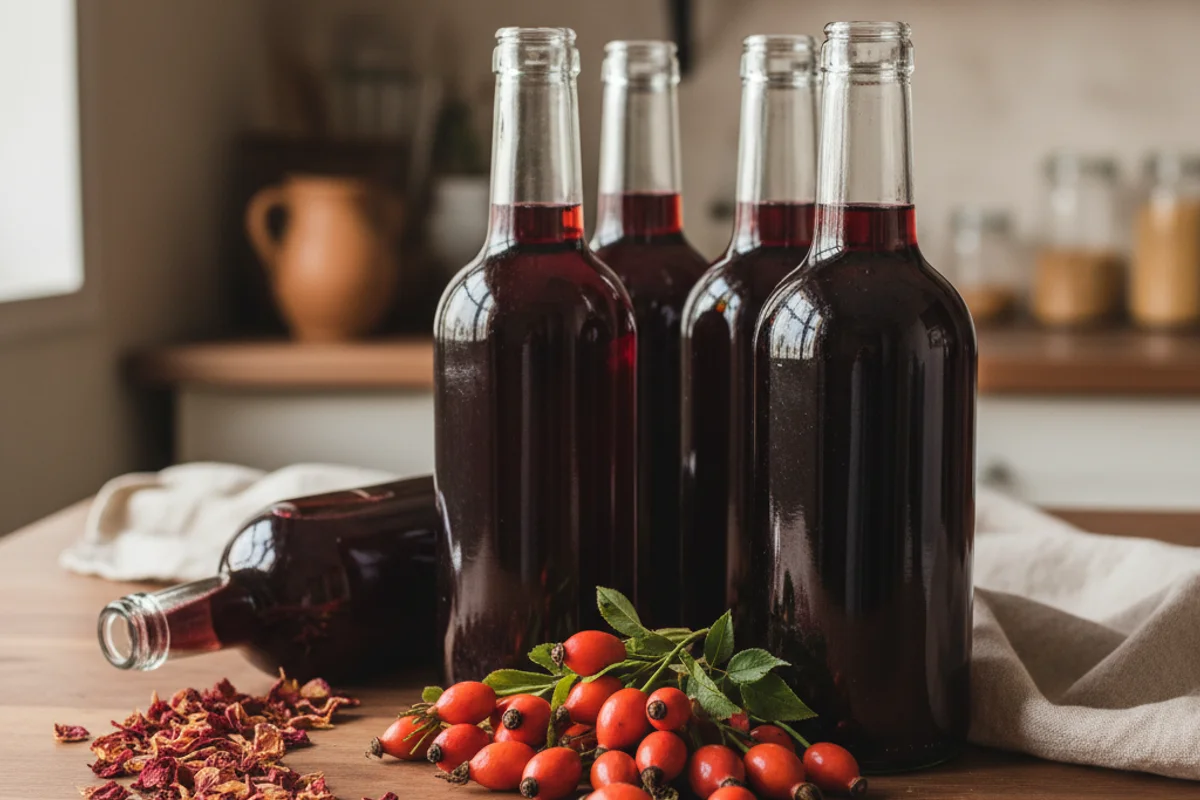
- Wait 10 days, then rack into bottles and age in a dark place for at least two years before drinking.
Why this works
Dried rose hips are high in pectin — the same stuff that makes jam gel — and pectin in a wine makes it stubbornly cloudy. That’s exactly why pectic enzyme is non-negotiable here. It breaks the pectin chains apart so the wine can eventually clear on its own. The two-round racking schedule (month 2 and month 4) removes dead yeast cells and other solids that would otherwise off-flavor the wine over time. Long aging then allows harsh tannins and raw acids to mellow and integrate. Montrachet yeast is a good fit because it’s a reliable, steady fermenter that doesn’t produce much sulfur, keeping those delicate floral notes front and center.
Notes
If you can’t find acid blend at a homebrew shop, citric acid from the grocery store baking aisle works as a stand-in — use about 1½ teaspoons. Dried rose hips are widely available online and keep well in a sealed jar, making this a recipe you can start any time of year regardless of season.