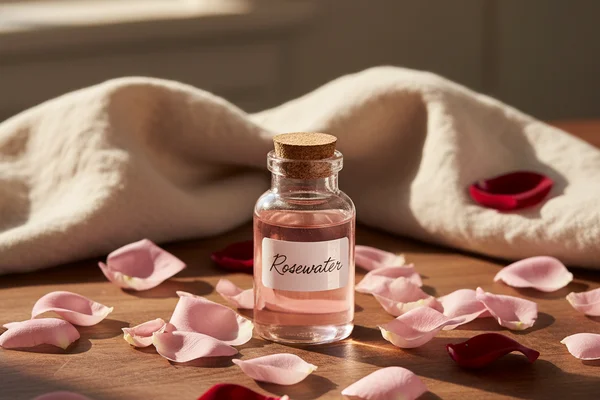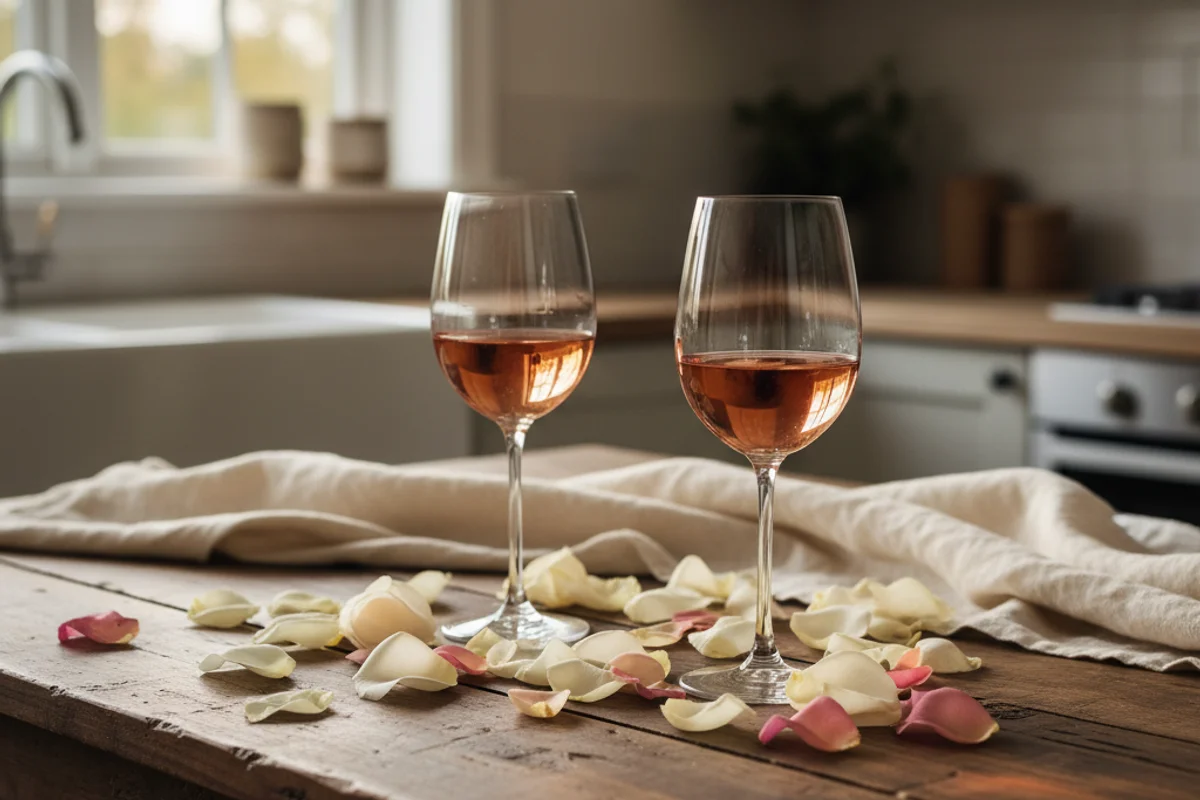
Rose Petal Wines
Roses are one of the few flowers that can actually deliver on their promise in a wine glass. The same volatile compounds that make a garden rose stop you in your tracks — geraniol, citronellol, rose oxide — are soluble enough to survive fermentation and land in your finished wine. The result is floral without being perfumy, delicate without being thin. Two recipes follow: one built around raisins for body, one leaning on fresh pea pods. Yes, pea pods. Trust the process.
The beginner trap: Using roses that look beautiful but smell like nothing — if the flower doesn’t knock you out in the garden, it won’t do anything useful in your wine.
Recipe 1 — Raisin-Bodied Rose Petal Wine
Ingredients
- 6 cups fresh, fragrant rose petals
- ¼ lb (about ¾ cup) white raisins, chopped — golden raisins from the grocery store work perfectly
- 2 lbs granulated sugar
- 2 tsp acid blend — or substitute 2 tsp fresh lemon juice as a rough stand-in
- 1 tsp pectic enzyme
- 1 Campden tablet, crushed
- 1 tsp yeast nutrient
- 1 packet wine yeast — a Montrachet or Lalvin 71B is easy to find; Rhine-style if available
- Water to make 1 gallon
Method
- Pick petals just before you start — the shorter the gap between garden and fermenter, the better. Remove all green parts (hip, stem, white petal base) and set petals aside.
- Bring 6 pints of water to a boil and pour it over the petals, chopped raisins, sugar, acid blend, and crushed Campden tablet. Stir gently until the sugar fully dissolves.
- Cover the vessel with a clean cloth or plastic wrap and move it to a warm spot (68–75°F). Let it sit undisturbed for 24 hours.
- After 24 hours, stir in the pectic enzyme and sprinkle in the yeast. Add half of the remaining water.
- Stir once daily for 7–10 days. Stop at 10 days regardless of activity level — extended skin contact past this point can pull harsh tannins and off-flavors.
- Strain the must through a fine-mesh strainer or muslin bag into your secondary fermentation vessel. Top up with remaining water to bring the total to 1 gallon, filling to the neck of the vessel.
- Fit an airlock and let fermentation finish quietly. Rack after 30 days, then rack again 30 days after that.
- Bottle once the wine is clear. Store in a cool, dark place and wait at least 6 months before opening — one year is better.
Recipe 2 — Pea Pod and Rose Petal Wine
Ingredients
- 4–6 cups fresh or recently frozen rose petals (more petals = more fragrance)
- 2 lbs fresh green pea pods — use them as soon after shelling as possible
- 2½ lbs granulated sugar
- Juice of 2 lemons
- Juice of 1 orange
- 2 tsp pectic enzyme
- 1 used tea bag — adds a small amount of tannin for structure
- 1 Campden tablet, crushed
- 1 tsp yeast nutrient
- 1 packet wine yeast — Champagne yeast (widely available at homebrew shops or online) works well here
- Water to make 1 gallon
Method
- Combine rose petals, pea pods, lemon juice, orange juice, sugar, tea bag, and crushed Campden tablet in a large crock or primary fermenter. Do not add water, pectic enzyme, or yeast yet.
- Bring 1 gallon of water to a boil and pour it over the ingredients. Stir well to dissolve the sugar completely.
- Cover and let the mixture rest for 24 hours at room temperature.
- Stir in the pectic enzyme and yeast nutrient, then pitch the yeast. Cover again.
- Stir once daily for 7 days.
- Strain through a muslin cloth or fine bag into your secondary fermentation vessel, pressing gently to extract liquid. Top up to the neck with water if needed.
- Fit an airlock and allow fermentation to run to completion — this typically takes 45–60 days.
- Rack once the wine clears, then bottle. Age at least 6 months before tasting; this wine rewards patience.
Why this works
Rose petals contribute aroma compounds but very little sugar, acid, or body on their own — they’re essentially perfume in petal form. That’s why both recipes bring in a supporting ingredient. Raisins (Recipe 1) add fermentable sugar, a bit of body, and mild tannin from their skins. Pea pods (Recipe 2) are surprisingly high in natural sugars and contribute a soft, almost silky mouthfeel with neutral flavor — they bulk up the wine without competing with the floral top notes. Pectic enzyme is non-negotiable in both: it breaks down pectin from the fruit and plant material, which would otherwise leave the wine permanently hazy no matter how long you wait.
Notes
For the deepest color and fragrance, use strongly scented varieties like damask, old garden roses, or any rose where the scent hits you before you even lean in. Hybrid teas sold at grocery stores are often bred for looks, not scent — smell before you pick. Rose petals can be frozen up to two days ahead in a zip-top bag with no meaningful loss of aroma. To adjust sweetness, reduce sugar by ¼ lb for a drier wine or increase by ¼ lb for a sweeter one — Champagne yeast will ferment more of that sugar out than a Montrachet-style yeast, so factor that in when choosing.