SASKATOON SERVICEBERRY WINE (1)
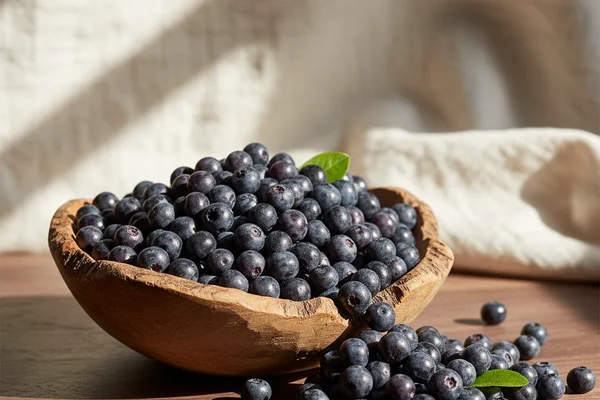
Saskatoon berries look like blueberries but taste like a cross between an almond and a cherry — a combination that sounds strange until you taste it. Native to the Canadian prairies and the northern US, these small purple berries pack enough natural sugar and body to produce a genuinely impressive dry wine. The finished product has a subtle nuttiness underneath dark fruit notes, and it ages surprisingly well. If you can’t find Saskatoons at a farmers market or berry farm, check the freezer section — frozen works beautifully here.
The beginner trap: Skipping the 12-hour wait before adding pectic enzyme will leave you with a permanently hazy wine, because the enzyme needs time free of sulfites before it can break down the fruit’s pectin.
Ingredients
- 3–4 lbs Saskatoon berries, fresh or frozen, washed and destemmed
- 2 lbs granulated sugar
- Juice of 2 lemons (about ¼ cup)
- 1 tsp pectic enzyme (found at homebrew shops or online)
- 5 pints (10 cups) water
- 1 Campden tablet, crushed (a sulfite sanitizer — available at homebrew shops)
- 1 packet wine yeast plus yeast nutrient (Lalvin EC-1118 or Red Star Côte des Blancs work well)
Method
- Crush the berries by hand or with a potato masher and place them in your primary fermenter (a food-grade bucket works fine).
- Add the sugar, lemon juice, water, and crushed Campden tablet. Stir thoroughly until the sugar fully dissolves, then cover the bucket with a clean cloth and move it somewhere warm.
- After 12 hours, stir in the pectic enzyme. Wait another 12 hours, then add the wine yeast and yeast nutrient.
- Stir the must twice daily for 5 days to keep the fruit cap submerged and encourage even fermentation.
- Strain the liquid through a fine-mesh nylon bag or sieve, pressing the pulp gently to extract juice. Return the strained liquid to the primary fermenter.
- Cover and wait 24 hours, then siphon the liquid off any settled sediment into a glass carboy or secondary fermenter. Fit an airlock and leave about 3 inches of headspace for foam.
- Move the carboy to a cooler spot. Once the vigorous bubbling slows (usually 10–14 days), top up with water or reserved juice to minimize headspace.
- Ferment for 2 more weeks, then rack into a clean secondary fermenter. Refit the airlock.
- Rack again after 30 days, then once more after another 30 days. Bottle after this final racking.
- Wait at least 6 months before opening a bottle — and know that another 6 months will make it even better.
Why this works
The staggered addition schedule in this recipe is doing real work. The Campden tablet goes in first to knock out wild yeast and bacteria on the fruit skins. Pectic enzyme added too soon would be neutralized by those sulfites, so the 12-hour gap lets the SO₂ off-gas enough for the enzyme to function. That enzyme then breaks down pectin — the structural glue in fruit cell walls — releasing more juice and, critically, preventing a permanent pectin haze in the finished wine. Once the enzyme has had its 12-hour window, the cultured yeast goes in and takes over, outcompeting anything wild that survived. Each step sets up the next one.
Notes
Frozen Saskatoon berries are an excellent choice — the freezing and thawing process ruptures cell walls and actually improves juice extraction. If you can’t find Saskatoons at all, aronia (chokeberry) or huckleberries make the closest substitute. Yeast nutrient is usually sold right next to the yeast packets at any homebrew shop; don’t skip it, as Saskatoons are not especially high in the nitrogen that yeast need to stay healthy through fermentation.