SASKATOON SERVICEBERRY WINE (2)
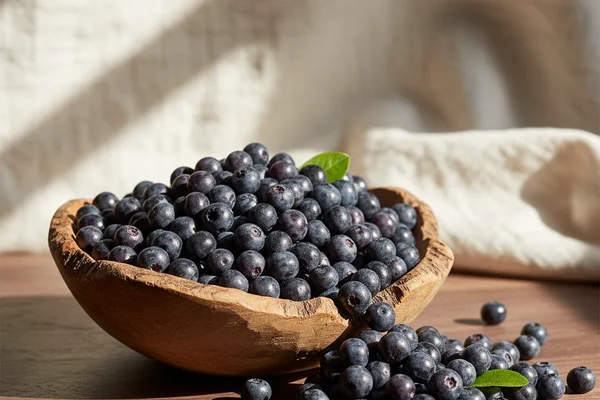
Saskatoon berries look like blueberries but taste like something else entirely — a cross between an almond and a cherry, with just enough tartness to keep things interesting. Native to the northern prairies of North America, these little purple powerhouses pack serious anthocyanin pigment, which translates to a deep, jewel-toned wine that holds its color beautifully over time. The two-stage simmer method here pulls every drop of flavor and color from the fruit before fermentation even begins. Give this wine a year in the bottle and it rewards you like a patient investor.
The beginner trap: Skipping the 10-hour wait after adding the pectic enzyme — if you pitch the yeast too soon, the enzyme can’t break down the fruit’s pectin properly, and you’ll end up with a hazy wine that refuses to clear.
Ingredients
- 2–3 lbs Saskatoon berries, fresh or frozen, ripe, washed and destemmed
- 2½ lbs granulated white sugar
- Juice of 2 lemons (about ¼ cup fresh lemon juice)
- 1 tsp pectic enzyme (found at homebrew shops or online)
- 5–7 pints water
- 1 packet wine yeast (Lalvin 71B or EC-1118 work well)
- 1 tsp yeast nutrient
Method
- Crush the washed, destemmed berries and place them in a large pot. Bring to a low boil, then reduce heat and simmer covered for 10 minutes.
- Fold the top layer of berries down into the liquid, replace the lid, and simmer for another 10 minutes.
- Pour the berry mixture into a nylon mesh straining bag (a jelly bag works perfectly) and let it drip into your primary fermenter until the pulp is cool — don’t squeeze yet.
- While the berries drip, dissolve the sugar into 3 cups of boiling water and let that syrup cool to room temperature.
- Add the cooled sugar syrup, the lemon juice, yeast nutrient, and pectic enzyme to the primary fermenter alongside the dripping bag.
- Wait at least 10 hours before adding the yeast — this gives the pectic enzyme time to work.
- Pitch the yeast, cover the fermenter loosely, and move it to a warm spot (70–75°F). Stir the must twice a day.
- When the specific gravity drops to 1.040 (roughly 5 days), gently press the straining bag to extract the remaining clear juice, then discard the pulp and seeds.
- Siphon the wine off its sediment into a secondary fermenter (carboy), top it up with water to minimize headspace, and fit an airlock. Move it to a cooler location (60–65°F).
- Rack after 30 days, then rack again 30 days after that.
- Bottle once the wine is fully clear, racking one more time only if new sediment has formed. Store bottles in a dark place.
- Taste after 6 months, but expect it to hit its stride closer to a year or beyond.
Why this works
The two-stage simmering is doing real extraction work here. Heat ruptures the berry cell walls, releasing pigment, flavor compounds, and natural sugars that a cold crush alone would leave behind. Anthocyanins — the red-blue pigments in Saskatoon berries — are water-soluble and heat-stable, so the simmer loads the liquid with color that will survive fermentation. Lemon juice drops the pH, which protects those pigments from browning and creates an environment where yeast thrives but spoilage bacteria struggle. The pectic enzyme then dismantles the remaining pectin chains that would otherwise create a permanent haze — but it needs that enzyme-only window before the yeast arrives, because active fermentation raises temperatures and generates CO₂ that can interfere with enzymatic activity.
Notes
Frozen Saskatoon berries work just as well as fresh and are often easier to find outside of Canada and the northern U.S. — the freeze-thaw cycle actually helps break down cell walls, giving you better extraction. If you can’t find Saskatoon berries at all, huckleberries or blueberries are the closest substitutes, though the almond-cherry note will be milder. Pectic enzyme is sold at any homebrew supply store under names like “Pectinase” or “Pectic Enzyme Powder.”