SASSAFRAS WINE
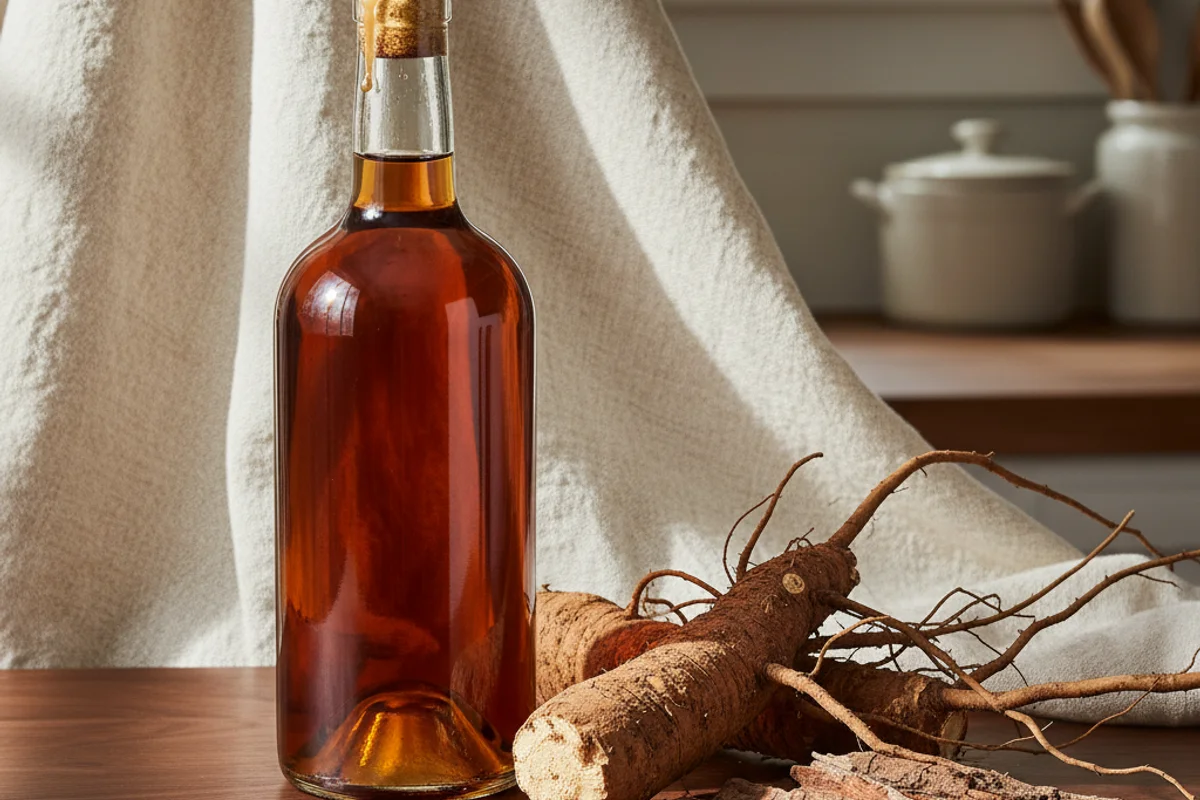
Close your eyes and crack open a cold root beer. That warm, sweet, spicy smell — slightly medicinal, slightly earthy — is sassafras. Native to the eastern United States, sassafras root bark has flavored everything from old-school root beer to Southern gumbo. Fermented, it produces a wine that smells like a forest crossed with a soda fountain: amber-colored, lightly tannic, and genuinely unlike anything you’ve poured from a bottle before. This is a conversation-starter wine, full stop.
The beginner trap: Skimping on the infusion — weak, under-simmered root bark tea produces a flat, flavorless wine with nothing to distinguish it from sugar water.
Ingredients
Makes 3 gallons
- 1 gallon sassafras root infusion (see Method, Step 1)
- 4½ lbs granulated white sugar
- 2 gallons water
- 2¼ tsp acid blend (available at homebrew shops; citric acid from the grocery store works in a pinch)
- ½ tsp powdered wine tannin (or 1 cup strong-brewed black tea, unsweetened)
- 1½ tsp yeast nutrient
- 6 Campden tablets, crushed and dissolved (divided: 3 now, 3 later)
- 1 packet Champagne wine yeast (or any dry white wine yeast)
Method
-
Make the infusion. Rinse the bark from 20–25 five-inch pieces of fresh sassafras root (thinner roots, about ½ inch diameter, give more flavor). Place bark in a pot with 1 gallon plus 1 pint of water, bring to a boil, then reduce to a simmer for 15 minutes. Remove from heat, cover, and let cool completely. Strain through a fine cloth or cheesecloth into a clean gallon jug — you should end up with a reddish-brown, slightly cloudy liquid.
-
Build your must. Combine the sassafras infusion, 2 gallons of water, sugar, acid blend, tannin, yeast nutrient, and 3 crushed Campden tablets in your primary fermenter. Stir thoroughly until all the sugar dissolves.
-
Rest the must. Cover the fermenter and leave it alone for 10–12 hours to let the sulfite do its job protecting the must from wild microbes.
-
Pitch the yeast. Add your yeast packet, recover the fermenter, and stir the must once daily until the specific gravity drops to 1.020 or below (typically 5–10 days).
-
Move to secondary. Siphon the wine off its sediment into a 3-gallon carboy. Top up with a little water if needed to minimize headspace, then fit an airlock. Move it somewhere cool and dark — 60–65°F is ideal.
-
First rack. After 3 weeks, rack the wine into a clean carboy, top up, and refit the airlock.
-
Second rack. Three months later, rack again and add your remaining 3 crushed, dissolved Campden tablets to protect the wine from oxidation.
-
Third rack and bottle. Rack one final time 3 months after that. When the wine is clear and stable, bottle it. Store bottles in the dark to protect the color.
-
Age. Wait at least 3 months before opening a bottle — longer is better for letting the flavor settle and mellow.
Why this works
Sassafras root bark is loaded with aromatic compounds, most notably safrole, which gives it that distinctive root beer character. Simmering — not boiling hard — extracts these volatile aromatics without cooking them off entirely or pulling harsh, bitter compounds from the wood itself. The Campden tablets (sodium or potassium metabisulfite) added at the start knock out wild yeast and bacteria that would compete with your wine yeast and muddy the flavor. The second dose added at the 3-month rack acts as an antioxidant, keeping the wine’s color and delicate aromatics intact during the long clearing phase. Champagne yeast handles the relatively high sugar load cleanly and tends to drop clear more reliably than bread yeast — which should never be used here.
Notes
Fresh sassafras root is a seasonal ingredient; look for it at farmers markets or herb suppliers in early spring when the sap is up. Dried sassafras root bark sold at herbal retailers works as an off-season substitute but may produce a milder infusion — consider using a slightly larger amount. Note that safrole, a compound in sassafras, was banned by the FDA as a food additive in 1960 based on high-dose animal studies; consume this wine in the same moderation you’d apply to any homemade ferment.