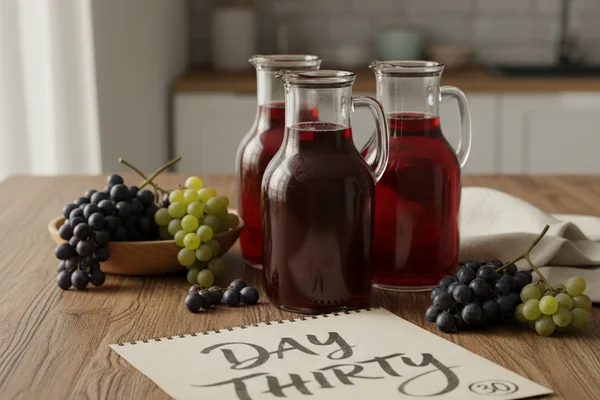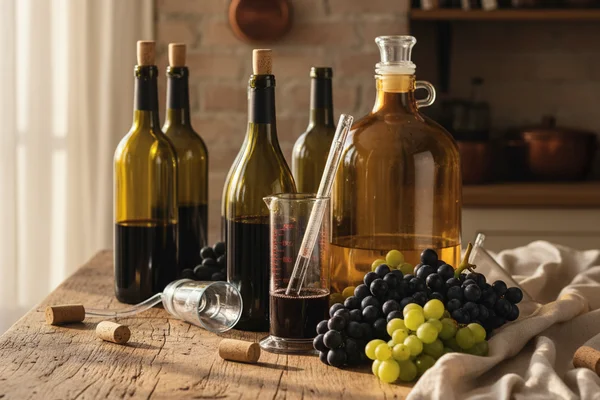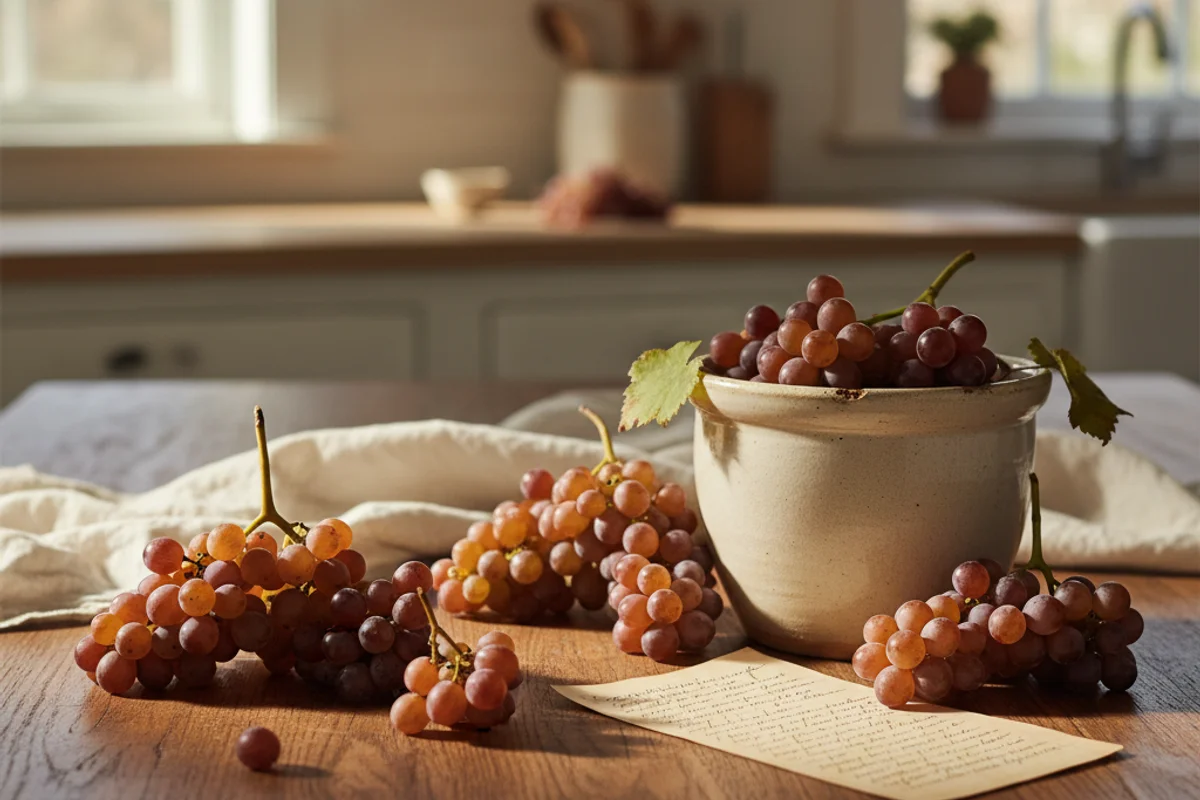
SCUPPERNONG GRAPE WINE (19th Century Recipe)
Scuppernong grapes are the South’s open secret — thick-skinned, musky, and almost tropically sweet in a way no other grape quite matches. This recipe comes straight from an 1880 household kitchen, where wild yeast did all the heavy lifting and a linen cloth stood in for an airlock. The result is a low-alcohol, bronze-hued wine with a flavor profile that tastes less like a Chardonnay and more like the American South itself: honeyed, earthy, and unapologetically bold. It’s as close to original American winemaking as you’re going to get in your own home.
The beginner trap: Bottling before fermentation is fully done — even a few remaining sugar molecules will turn your corked bottles into slow-motion grenades.
Ingredients
- 3–4 gallons fresh Scuppernong grapes (see Notes for substitutes)
- 3 lbs granulated white sugar per gallon of juice extracted
- 1 packet champagne or Sauternes wine yeast (recommended over wild yeast for reliability)
Method
- Strip the grapes from their stems, rinse them well under cold water, and crush them thoroughly by hand or with a potato masher — you want juice, not just bruised skins.
- Combine the crushed grapes and their juice in a large, clean bucket and let the mixture sit uncovered at room temperature for 48 hours to pull color, flavor, and tannin from the skins.
- Strain the mixture through a fine mesh strainer or cheesecloth, pressing the solids firmly to extract every drop of juice; discard the solids.
- Measure the juice you’ve collected, then stir in 3 lbs of sugar per gallon until fully dissolved.
- Sprinkle your wine yeast over the surface of the juice, stir gently, and transfer the must to a clean fermentation vessel fitted with an airlock.
- Ferment at room temperature (65–75°F) until visible bubbling slows to nearly nothing — expect three to five weeks.
- Rack the wine into a clean vessel, leaving the sediment behind; repeat this racking every three weeks for at least nine weeks total.
- Confirm fermentation has completely stopped — no bubbles through the airlock for at least two weeks — before bottling into clean, sanitized bottles with secure corks.
- Lay the bottles on their sides and wait at least one to two months before opening; the wine will smooth out considerably with time.
Why this works
Wild yeast lives on grape skins, which is exactly what the original 1880 recipe relied on. The 48-hour skin contact isn’t just about flavor — it’s waking up and concentrating those native yeast populations so fermentation can start on its own. The problem is that wild yeast strains are unpredictable: they can stall, produce off-flavors, or max out at low alcohol levels (think 6–8% ABV) and leave behind residual sugar that ferments inside the bottle. A cultured champagne or Sauternes yeast works the same biological magic — consuming sugar and producing CO₂ and ethanol — but it’s been selected for reliability, clean flavor, and the ability to ferment more completely, giving you a more stable, better-balanced finished wine.
Notes
Scuppernong grapes are a variety of Muscadine; if you can’t find Scuppernong specifically, any Muscadine grape works here and delivers a similar flavor. Fresh Muscadines appear in Southern grocery stores and farm stands in late summer (August–September), and some specialty stores carry frozen Muscadines year-round — frozen fruit works fine and actually breaks down more easily during crushing. If your finished wine tastes too sweet, your fermentation likely stalled early; pitch a fresh packet of yeast and give it more time before bottling.