SCUPPERNONG GRAPE WINE (Adison Martin’s Recipe)
Makes 3 Gallons
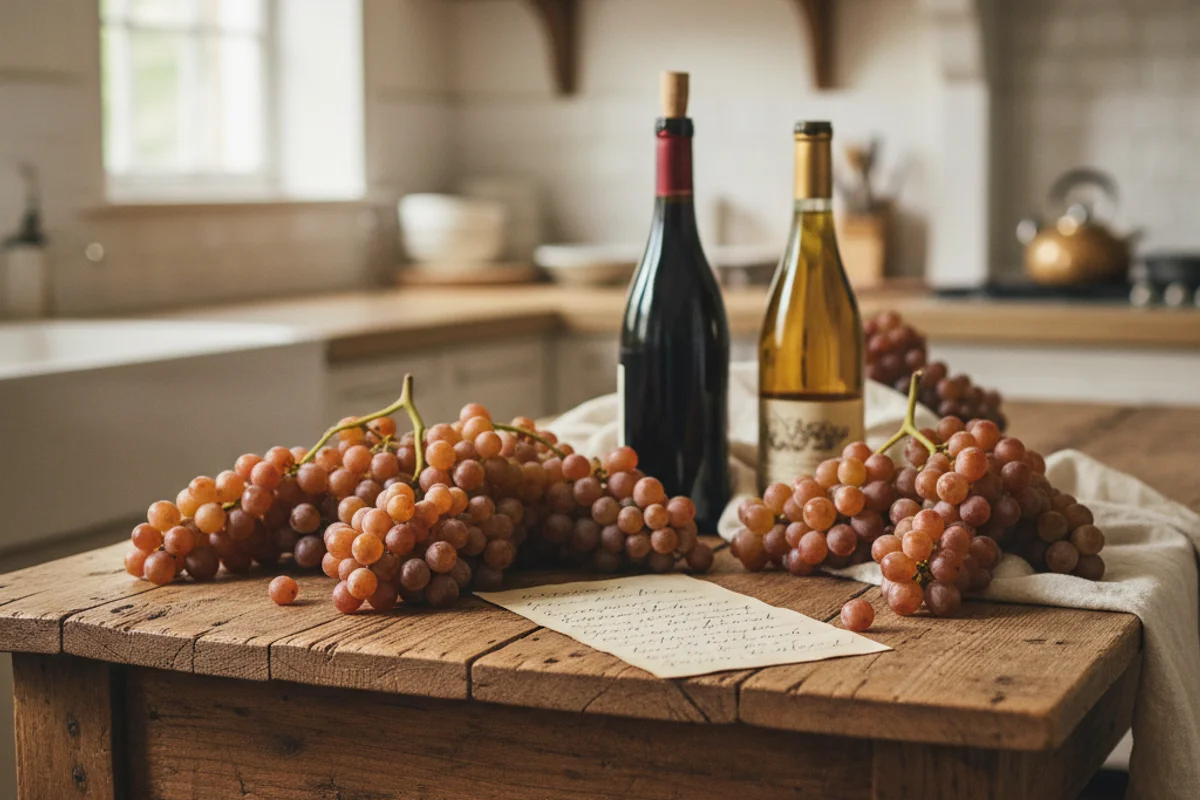
Scuppernong grapes are the original Southern bronze beauty — a muscadine variety that smells like a warm afternoon in the Carolina foothills and tastes like something between honey and ripe melon. These thick-skinned natives ripen in early fall, and because they carry so much sugar and so much personality, they make a wine that doesn’t need much help to taste like somewhere. This recipe keeps it simple: let the fruit do the talking, give it time, and what you get is a golden, fragrant wine that will surprise anyone who thinks “homemade” means inferior.
The beginner trap: Skipping the hydrometer check before pitching yeast means you could end up with a wine that’s too weak or too sweet — always verify your starting gravity hits 1.095–1.100 before moving forward.
Ingredients
- 18 lb. scuppernong grapes (fresh or frozen; other muscadine varieties work fine)
- 6 lb. granulated white sugar
- 9 quarts water (filtered or unchlorinated tap)
- 2 tsp. pectic enzyme
- 1 tbsp. yeast nutrient
- 3 Campden tablets, crushed (sold at homebrew shops; 1/4 tsp. potassium metabisulfite can substitute)
- 1 packet champagne yeast (Lalvin EC-1118 is a reliable grocery-store-adjacent option)
Method
- Destem the grapes, discard any soft or moldy ones, and rinse well. Crush the grapes by hand or with a potato masher, then load the pulp into a nylon straining bag.
- Pour the sugar into your primary fermentation bucket. Add the water and stir until the sugar fully dissolves.
- Squeeze the straining bag gently over the bucket to release juice, then drop the whole bag into the must.
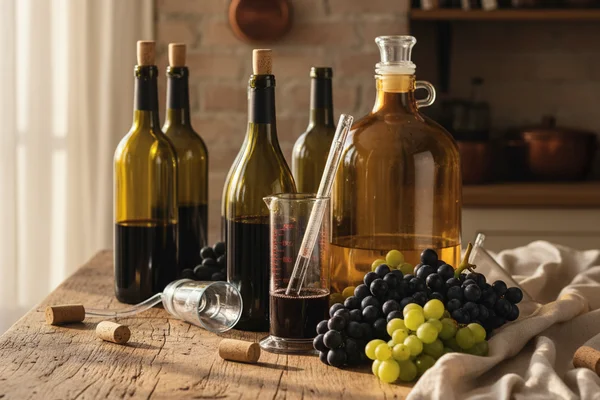
- Check the specific gravity with a hydrometer — you’re aiming for 1.095–1.100. If it reads low, dissolve a little more sugar in warm water and stir it in.
- Add the crushed Campden tablets and yeast nutrient; stir well. Cover the bucket loosely and wait 12 hours.
- After 12 hours, stir in the pectic enzyme. Cover again and wait another 12 hours before adding yeast.
- Activate your yeast according to packet directions, then pitch it into the must. Stir everything together.
- Stir the must once a day, gently squeezing the pulp bag each time to coax out more juice. Continue until the specific gravity drops to around 1.030 — this usually takes 5–7 days.
- Pull out the straining bag and squeeze it firmly to capture every last drop of juice. Discard the spent pulp.
- Let the liquid settle overnight, then rack (siphon) it off the sediment into a glass carboy. Seal with an airlock.
- Fermentation is complete when the specific gravity reaches 1.000 or below — expect this in about 3–4 weeks. Rack the wine into a clean carboy and reattach the airlock.
- Let the wine clear for 2–3 months, then rack into bottles and cork them.
Why this works
Scuppernong skins are thick and packed with pectin, which is great for flavor but terrible for clarity — pectin turns your wine cloudy and keeps it that way. Pectic enzyme is a targeted solution: it’s a naturally occurring enzyme that breaks those long pectin chains apart, letting the haze-forming particles clump together and fall out of suspension. That’s why the recipe adds it after the Campden tablet phase. Campden (sulfite) would deactivate the enzyme on contact, so you let the sulfite do its antimicrobial job first, give it 12 hours to off-gas, and then bring in the enzyme. Sequence matters here. The champagne yeast earns its place too — it’s a high-alcohol-tolerant strain that ferments clean and dry, which balances the grape’s natural sweetness beautifully.
Notes
Frozen scuppernongs work very well here — freezing ruptures the thick skins and actually makes juice extraction easier than working with fresh fruit. If your grapes taste more tart than sweet before crushing, hold off on adjusting acid; taste the finished wine first. Potassium metabisulfite powder (1/4 tsp. ≈ 3 Campden tablets) is a fine substitute if tablets aren’t available locally.