SQUASH WINE
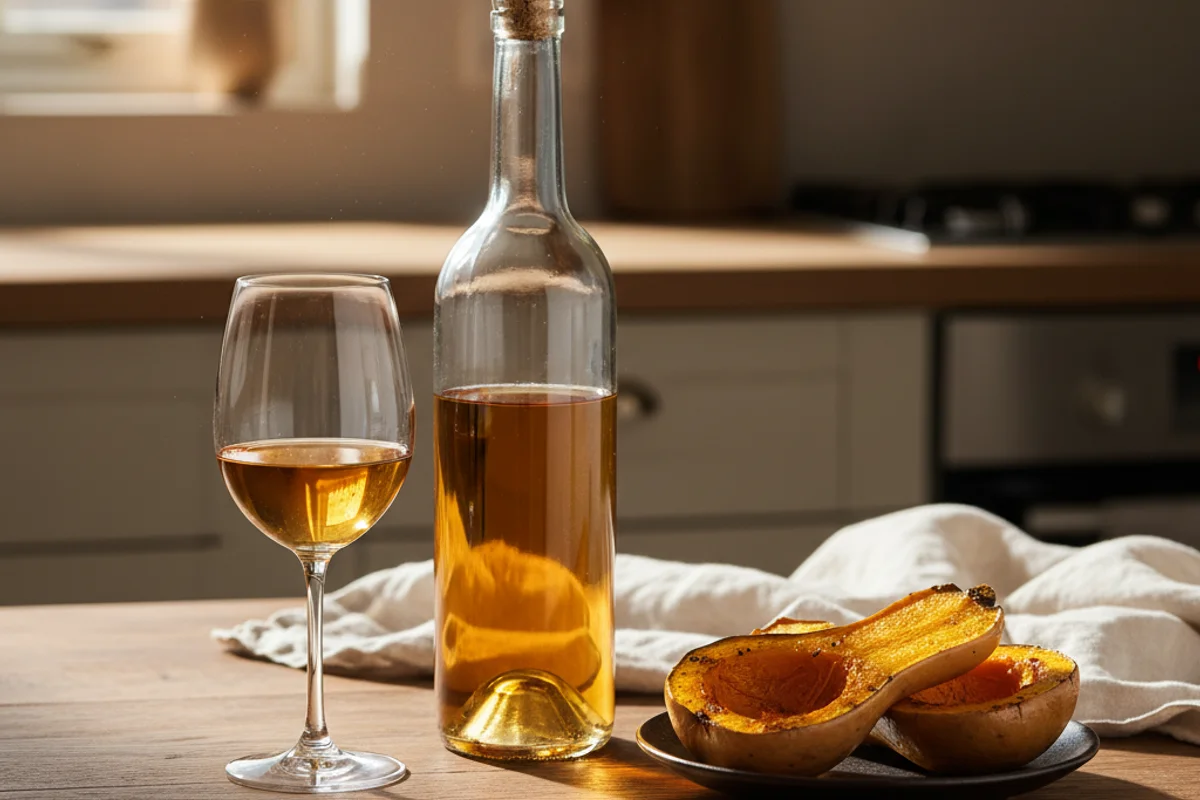
Butternut squash sits in the produce aisle looking humble — a cheap, starchy winter vegetable nobody associates with a wine glass. But ferment it right and you get something quietly surprising: a pale, lightly earthy country wine with a faint sweetness and enough body to hold your attention. Think of it as the vegetable kingdom’s answer to a dry Sherry. It takes patience — plan on two full years of aging before this one is ready to drink — but the hands-on time is minimal and the ingredients cost almost nothing.
The beginner trap: Rushing the aging; squash wine tastes flat and odd at six months, but genuinely transforms with two years in the bottle.
Ingredients
- 5 lbs butternut or other winter squash flesh, peeled, seeded, and cubed
- 2 lbs granulated white sugar
- 2 tsp citric acid (or the juice of 2 lemons as a substitute)
- 1½ tsp pectic enzyme
- 1 tsp yeast nutrient
- ⅛ tsp wine tannin (or the contents of one plain black-tea bag)
- Water to make 1 gallon total volume
- 1 packet Sherry or Montrachet wine yeast (or any dry white wine yeast)
Method
- Bring about 3 quarts of water to a boil. Place the cubed squash and sugar together in your primary fermenter (a food-grade bucket works fine).
- Pour the boiling water over the squash and sugar. Stir until the sugar fully dissolves.
- Cover the bucket loosely and let it cool to room temperature — around 70°F. This matters; hot liquid kills yeast.
- Add the citric acid, pectic enzyme, yeast nutrient, and tannin. Stir well, cover, and leave it alone for 12 hours.
- Activate your yeast according to the packet instructions, then stir it into the must. Cover the fermenter.
- Once fermentation picks up — you’ll see bubbling and foam — stir daily for 3 days.
- Strain the liquid off the squash solids and transfer it into a 1-gallon glass jug (secondary fermenter). Fit an airlock and let it ferment for 30 days.
- Rack the wine off the sediment into a clean jug. Top up to the shoulder with water or a similar wine to minimize headspace. Refit the airlock.
- After 60 more days, add potassium sorbate and potassium metabisulfite (follow packet dosing for 1 gallon) to stabilize. Rack again, top up, and refit the airlock.
- After a final 60 days, rack the wine into bottles and cork them. Store the bottles on their sides somewhere cool and dark for at least two years before opening.
Why this works
Squash is mostly water and starch with very little natural sugar, almost no acid, and no tannin — three things wine needs to ferment cleanly and age well. That’s why this recipe adds all three from the outside. Citric acid drops the pH into a range where yeast thrive and spoilage bacteria struggle. Tannin gives the wine some grip and helps it clarify over time. Pectic enzyme breaks down the pectin in the squash flesh; skip it and you’ll likely end up with a permanently hazy wine no matter how long you wait. The long aging requirement isn’t arbitrary either — the starchy, vegetal compounds that make young squash wine taste odd slowly break down and integrate, leaving behind something much more neutral and pleasant.
Notes
Butternut and acorn squash both work well here. Avoid zucchini — it produces a noticeably poor result. If your squash wine still tastes flat after aging, a small addition of grated fresh ginger (about ½ oz) stirred in before final bottling can add welcome brightness. Citric acid is available at homebrew shops and online; lemon juice is a workable everyday substitute at roughly 3 tablespoons per teaspoon of citric acid.