Staghorn Sumac
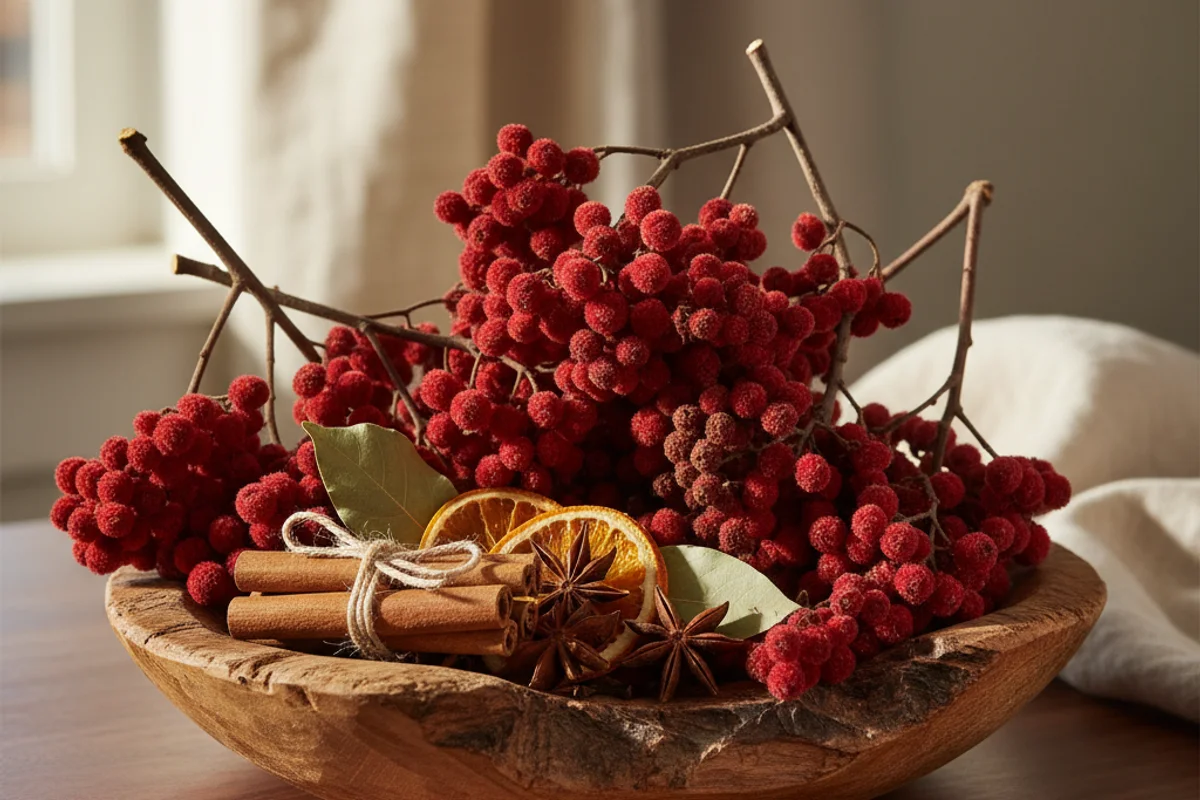
If you’ve ever hiked past a cluster of deep-red, velvety berry cones in late summer and wondered what they tasted like — they taste like lemonade. Staghorn sumac (Rhus typhina) packs its small, hair-covered berries with malic acid and tannin, producing a juice that’s tart, earthy, and surprisingly complex. That combination makes it a serious winemaking ingredient. The resulting wine is dry, tannic, and bracingly sour in its youth, but it mellows beautifully with age into something worth opening for company.
The beginner trap: Using hot or boiling water to extract the juice — it pulls way too much tannin from the berries and leaves you with a wine that tastes bitter and drying no matter how long you age it.
Ingredients
- 5 lbs ripe staghorn sumac berry clusters (fresh; harvest when fully red and sour-tasting)
- 3 lbs white granulated sugar
- 1 gallon cool water
- 1 Campden tablet, crushed
- 1 tsp yeast nutrient
- 1 packet wine yeast (Lalvin 71B or RC212 recommended)
Method
- Rinse the berry clusters under cool running water to remove dust and any insects hiding in the cones.
- Place the clusters in your primary fermenter, cover with the cool water, and crush the berries by pressing and mashing them with a clean blunt object — a piece of hardwood or a sanitized potato masher works well.
- Strain the juice through a clean muslin cloth or fine-mesh straining bag into your primary fermenter, squeezing out as much liquid as possible while leaving behind the plant hairs and pulp.
- Add the sugar, crushed Campden tablet, and yeast nutrient to the strained juice. Stir thoroughly until the sugar fully dissolves.
- Cover the fermenter and let it rest for 12 hours to allow the Campden tablet to do its sanitation work.
- Prepare your yeast according to packet directions, then add the activated yeast to the must. Cover and stir the must once daily.
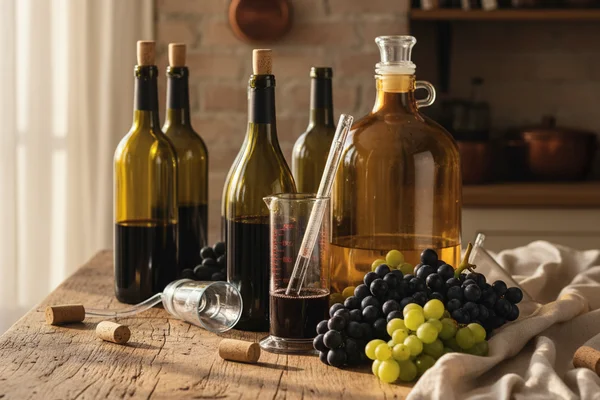
- After 14 days of active fermentation, transfer the wine to a 1-gallon glass secondary fermenter and fit an airlock. Fill a sanitized 1.5-liter wine bottle with the overflow wine, stopper it with a #2 bung, and attach a second airlock — this is your topping wine.
- Every 30 days, rack the wine into a clean vessel, top it up using the reserve bottle, and refit the airlock. Continue until the wine runs clear and produces no new sediment over a full 30-day period.
- Stabilize the wine with a fresh Campden tablet (and potassium sorbate if you plan to sweeten), sweeten to taste if desired, refit the airlock, and wait 10 days.
- Rack into clean bottles and age for at least one year before opening.
Why this works
Staghorn sumac berries are loaded with malic acid — the same sharp acid found in green apples — and that acidity is what gives this wine its backbone. The tannins in the berry skins and hairs act like a natural preservative and add structure, but they’re also the troublemaker here: tannins extract much faster in hot water, which is why cold-water mashing is non-negotiable. Yeast strain choice matters too. Lalvin 71B is known for softening malic acid through a partial metabolic process called malolactic-like esterification, which takes some of that sharp sourness and rounds it into a smoother, fruitier finish. RC212 preserves more of that tartness if you prefer a crisper style.
Notes
Staghorn sumac is not sold in grocery stores, so you’ll need to forage it or source it from a specialty herb supplier — the dried spice sold in Middle Eastern markets (labeled “sumac”) is a different species and won’t work here. Only harvest the red-berried varieties; white or cream-colored berries in the sumac family are a hard stop — do not use them. Berries lose flavor quickly once fully ripe, so plan to process your harvest the same day you pick it.