Sugars in Winemaking
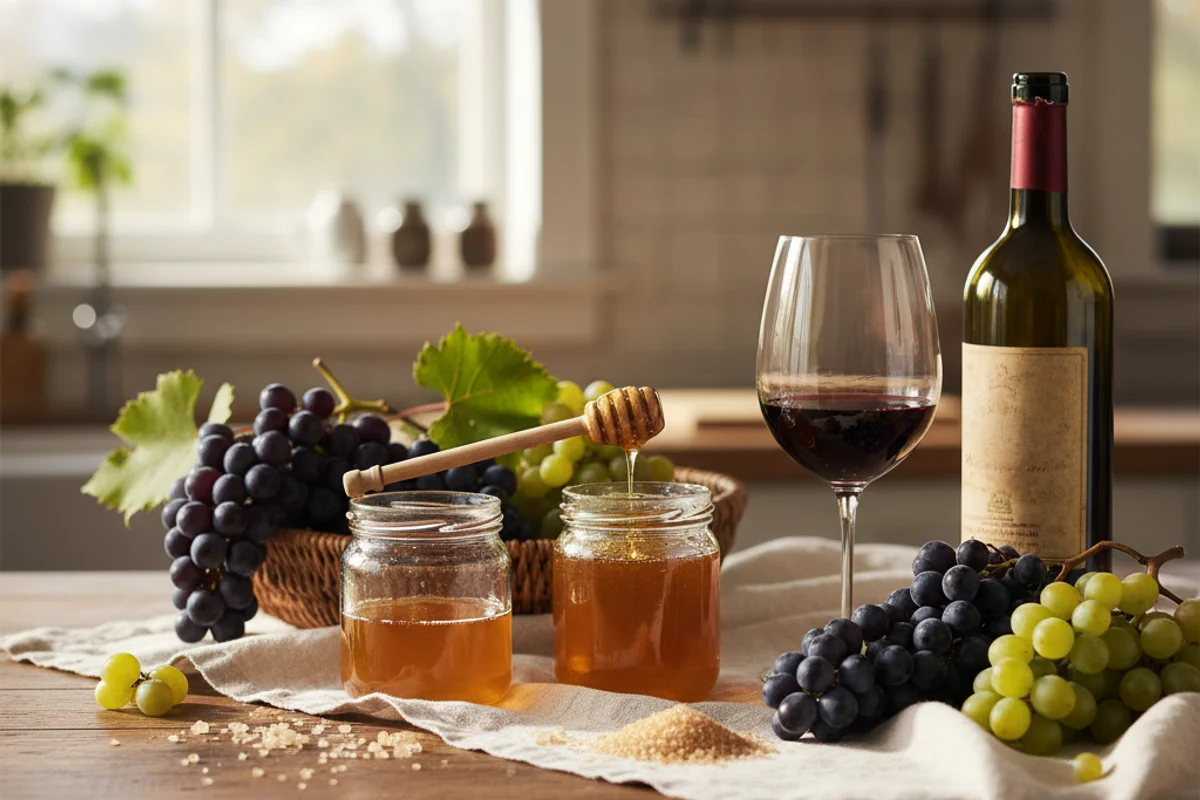
Sugar is the starting gun for every batch of wine you’ll ever make. Without it, yeast have nothing to eat, and without yeast eating it, you have no alcohol — just glorified fruit juice. But sugar does more than fuel fermentation. The type you choose, and how much of it lands in your must, shapes the body, sweetness, and even the aroma of your finished wine. From plain white granulated sugar at the grocery store to raw turbinado with its faint caramel notes, each sugar brings something different to the glass.
The beginner trap: New winemakers often add all their sugar upfront without checking the starting gravity, which can push alcohol so high that it kills the yeast before fermentation finishes.
Ingredients
This page is a reference guide, not a single recipe. No fixed ingredient list applies. Use the sections below to understand which sugar to reach for and when.
Method
Step 1 — Know your baseline gravity
- Before adding any sugar, measure the specific gravity of your juice or must with a hydrometer.
- Compare that reading to your target gravity for the style you are making.
Step 2 — Calculate your sugar addition
- Use this rule of thumb: 2 pounds of granulated white sugar dissolved in 1 gallon of water produces a specific gravity of roughly 1.088, with the potential to yield about 12% alcohol by volume (ABV).
- Add sugar gradually, re-checking gravity after each addition, rather than dumping it all in at once.
Step 3 — Choose the right sugar for the job
- For chaptalizing a must (boosting alcohol potential before fermentation), plain white granulated cane sugar or beet sugar works perfectly and costs the least.
- For back-sweetening a finished wine, use superfine sugar (sold as Baker’s Sugar or caster sugar in most grocery stores) — its small crystals dissolve without stirring up sediment.
Step 4 — Make invert sugar when you want faster fermentation
- Combine 2 parts granulated sugar with 1 part water, then stir in 2 teaspoons of fresh lemon juice per pound of sugar.
- Heat the mixture to just below a boil (do not let it boil), hold it there for 30 minutes, then cool before adding it to your must.
Step 5 — Substitute honey at the correct ratio
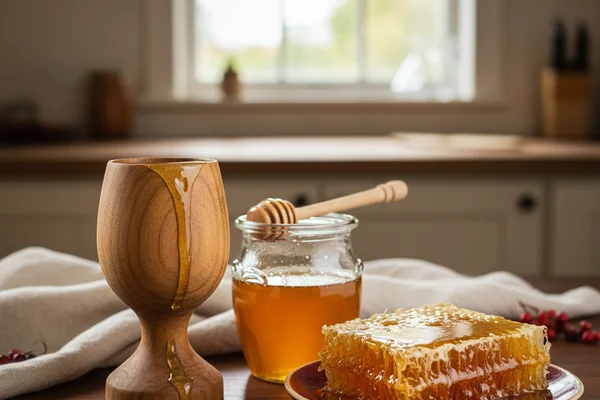
- If you want to replace all or part of the sugar with honey, use 1.25 pounds of honey for every 1 pound of sugar the recipe calls for.
- Expect a longer, slower fermentation — honey carries complex sugars that yeast must break down in multiple steps.
Step 6 — Measure your fruit sugar before adding anything
- Crush a small sample of your fruit and test the juice with a hydrometer or refractometer to estimate natural sugar content.
- Alternatively, macerate chopped fruit with pectic enzyme and your total estimated water for 8–12 hours, strain, and test the liquid — then fold the pulp back into the must so yeast can access the remaining sugars in the solids.
Why this works
Yeast cannot directly consume sucrose — the disaccharide in ordinary table sugar. They secrete an enzyme called invertase that splits each sucrose molecule into one glucose and one fructose molecule first. That is why invert sugar (pre-split sucrose) ferments faster: you have already done that chemical work for the yeast. Glucose and fructose are both monosaccharides, meaning they go straight into the yeast cell’s metabolic pathway without a warm-up lap. Inside the cell, a collection of enzymes grouped under the name zymase then converts those simple sugars into ethanol and CO₂ — the two products we actually want. Fructose is roughly twice as sweet as glucose, which is why wines with higher residual fructose taste noticeably sweeter even at the same total sugar level.
Sugar Type Quick Reference
| Sugar | Best Use in Winemaking | Grocery Store Name |
|---|---|---|
| Granulated white (sucrose) | Chaptalizing must | Plain white sugar |
| Superfine / bar sugar | Back-sweetening finished wine | Baker’s Sugar, caster sugar |
| Light brown sugar | Adding mild molasses character | Light brown sugar |
| Dark brown sugar | Strong molasses notes; specialty wines | Dark brown sugar |
| Turbinado | Gentle brown sugar flavor without heavy molasses | Sugar in the Raw |
| Honey | Flavor complexity; mead production | Any grocery store honey |
| Lactose | Adding unfermentable residual sweetness | Lactose powder (health food aisle) |
| Corn syrup | Adding body; check label for preservatives | Karo light corn syrup |
Approximate Volume Equivalents
| Sugar | 1 pound equals approximately |
|---|---|
| Granulated white sugar | 2¼ cups |
| Brown sugar, lightly packed | 3 cups |
| Brown sugar, firmly packed | 2 cups |
| Molasses | 1⅓ cups |
| Honey | 1⅓ cups |
| Corn syrup | 1½ cups |
| Maple syrup | 1½ cups |
Sugar Content of Selected Fruit (per 100 grams)
These values come from USDA research data. Use them to estimate natural sugar in your fruit before calculating how much added sugar you need. All values are grams. An asterisk (*) means no data for a sugar known to be present. A dash (—) means no data for a sugar that may be present. [0.0] means the sugar is thought not to be present. Bracketed totals are calculated rather than directly measured.
| Fruit | Moisture % | Glucose | Fructose | Sucrose | Maltose | Total Sugar |
|---|---|---|---|---|---|---|
| Apples, raw, unpeeled | 83.9 | 2.3 | 7.6 | 3.3 | 0.1 | [13.3] |
| Apple juice, unsweetened | 87.9 | 2.5 | 5.6 | 1.2 | — | 10.9 |
| Apricots, raw | 86.4 | 1.6 | 0.7 | 5.2 | 1.0 | 9.3 |
| Apricots, dried | 31.1 | 20.3 | 12.2 | 6.4 | — | 38.9 |
| Bananas, raw | 74.3 | 4.2 | 2.7 | 6.5 | 0.0 | 15.6 |
| Blackberries, raw | 85.6 | 3.1 | 4.1 | 0.4 | 0.5 | 7.9 |
| Blueberries, raw | 84.6 | 3.5 | 3.6 | 0.2 | — | [7.3] |
| Cantaloupe, raw | 89.8 | 1.2 | 1.8 | 5.4 | 0.0 | [8.7] |
| Cherries, sour, raw | 86.1 | 4.3 | 3.3 | 0.5 | 0.0 | [8.1] |
| Cherries, sweet, raw | 80.8 | 8.1 | 6.2 | 0.2 | 0.1 | [14.6] |
| Currants, raw | 82.0 | 3.3 | 3.7 | 1.0 | 0.0 | [8.0] |
| Dates, dried | 22.5 | * | * | 44.6 | — | [64.2] |
| Figs, raw | 79.1 | 3.7 | 2.8 | 0.4 | — | [6.9] |
| Figs, dried | 28.4 | 28.6 | 26.0 | 6.5 | — | [66.5] |
| Grapefruit, raw | 90.4 | 1.3 | 1.2 | 3.4 | — | [6.2] |
| Grapefruit juice, fresh | 90.0 | 2.7 | 1.8 | 1.8 | — | [6.3] |
| Grapes, American, raw | 81.3 | 6.6 | 6.9 | 1.4 | 1.5 | [16.4] |
| Grapes, European, raw | 80.6 | 6.5 | 7.6 | 0.4 | 3.1 | [18.1] |
| Grape juice, from frozen concentrate | 86.9 | [3.6] | [4.4] | * | — | 14.2 |
| Kiwifruit, raw | 83.0 | 5.0 | 4.4 | 1.1 | — | [10.5] |
| Mangos, raw | 81.7 | 0.7 | 2.9 | 9.9 | 0.0 | 14.8 |
| Nectarines, raw | 86.3 | 1.2 | 1.1 | 6.2 | — | [8.5] |
| Oranges, raw | 86.8 | 2.2 | 2.5 | 4.2 | 0.3 | 8.9 |
| Orange juice, fresh | 88.3 | 2.8 | 3.0 | 4.1 | — | 10.2 |
| Papaya, raw | 88.8 | 1.4 | 2.7 | 1.8 | 0.0 | [5.9] |
| Passion fruit, raw | 72.9 | 4.0 | 3.1 | 3.3 | — | 11.2 |
| Peaches, raw | 87.2 | 1.1 | 1.3 | 5.6 | 0.7 | [8.7] |
| Peaches, dried | 31.8 | 15.8 | 15.6 | 13.3 | — | [44.6] |
| Pears, raw | 83.8 | 1.9 | 6.4 | 1.8 | 0.4 | [10.5] |
| Pineapple, raw | 86.5 | 2.9 | 2.1 | 3.1 | 0.0 | 11.9 |
| Plums, raw | 85.2 | 2.7 | 1.8 | 3.0 | 0.0 | [7.5] |
| Pomegranates, raw | 81.0 | 5.0 | 4.7 | 0.4 | 0.0 | 8.9 |
| Prunes, dried | 32.4 | 28.7 | 14.8 | 0.5 | — | [44.0] |
| Raisins | 15.4 | 31.2 | 33.8 | 0.0 | — | [65.0] |
| Raspberries, red, raw | 86.6 | 3.5 | 3.2 | 2.8 | — | [9.5] |
| Strawberries, raw | 91.6 | 2.2 | 2.5 | 1.0 | 0.1 | [5.7] |
| Strawberries, frozen, unsweetened | 90.0 | 3.0 | 3.0 | 0.5 | — | [6.5] |
| Watermelon, raw | 91.5 | 1.6 | 3.3 | 3.6 | 0.5 | [9.0] |
Post-Fermentation Sweetening Options
If you want to sweeten a finished wine without risking refermentation, your safest options are lactose (a milk sugar yeast cannot ferment under normal conditions) or potassium sorbate combined with regular sugar to prevent renewed yeast activity. Several natural alternatives have been explored by home winemakers:
- Sucralose (Splenda): Stable across a wide pH and temperature range, no known aftertaste complaints in wine use, widely available at grocery stores.
- Stevia: About 250 times sweeter than table sugar by weight; a little goes a very long way. Start with a tiny amount and taste carefully.
- Xylitol: A plant-derived sugar alcohol that tastes and behaves like sugar in beverages and leaves no aftertaste. Available in the baking aisle or health food section.
- Isomalt: Made from sucrose; looks like table sugar; very low fermentability.
Avoid back-sweetening with invert sugar — it is readily fermentable and will restart activity in an incompletely stabilized wine.
Notes
- Molasses and treacle can introduce sulfur compounds that encourage hydrogen sulfide formation; use them only in small amounts for flavor, and read the label to confirm no sulfur preservatives were added.
- Corn syrup from the grocery store often contains vanilla flavoring or preservatives — check the label before using it in a must, as those additives can interfere with fermentation.
- Fruit sugar levels vary widely depending on ripeness and source; always measure with a hydrometer or refractometer rather than relying solely on recipe sugar amounts. Frozen fruit (thawed) works well and often releases juice more freely than fresh.