Summer Grape Wine
Makes 1 Gallon
Summer grapes are the wild cards of the wine world — small, intense, and loaded with tannin and acid that commercial grapes can only dream about. Catch them at peak ripeness in late summer and you’re holding the raw material for a wine that punches way above its weight. Done right, this is a deep, rustic red with earthy backbone and a finish that lingers. Done wrong, it tastes like grape juice that went to a bad party.
The beginner trap: Skipping the two 12-hour waiting periods after the Campden tablet and again after the pectic enzyme — rushing these steps kills beneficial timing and can wreck your clarity and fermentation.
Ingredients
- 12–16 lbs summer grapes, fresh (wild or cultivated), fully ripe, washed and destemmed
- ½–¾ lb granulated white sugar
- 1 tsp pectic enzyme
- 1 Campden tablet, crushed
- ¼ tsp acid blend (available at homebrew shops; substitute 1 tsp lemon juice as a rough stand-in)
- 1 tsp yeast nutrient
- 1 packet Montrachet wine yeast (or any dry red wine yeast)
Method
- Crush the destemmed grapes directly in your primary fermentation bucket — a sanitized potato masher works fine.
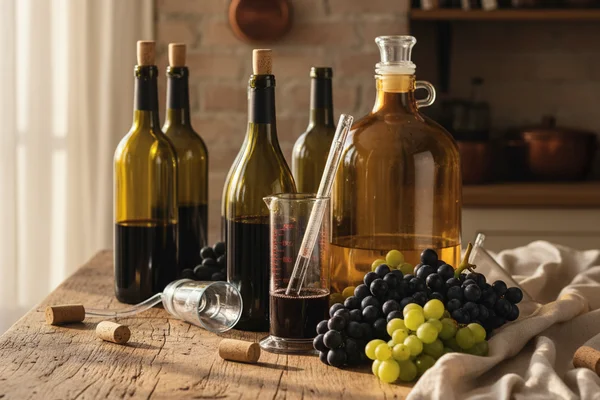
- Pull out enough juice to float your hydrometer, check the specific gravity (SG), and pour that juice back in.
- Stir in sugar a little at a time until your SG reads 1.088, then mix thoroughly.
- Add the crushed Campden tablet, stir well, cover the bucket loosely, and wait 12 hours.
- Add the pectic enzyme, acid blend, and yeast nutrient; stir, re-cover, and wait another 12 hours.
- Sprinkle the yeast over the surface, cover the bucket, and let fermentation begin.
- Twice a day for 7–10 days, push the floating grape skins (the “cap”) back down into the liquid and stir gently — stop when SG drops to 1.010.
- Strain the grape solids through a mesh bag or cheesecloth and press out as much juice as you can; pour everything into a sanitized 1-gallon glass jug (secondary).
- Top the jug up to the shoulder with water or extra grape juice to minimize headspace, then seal with an airlock.
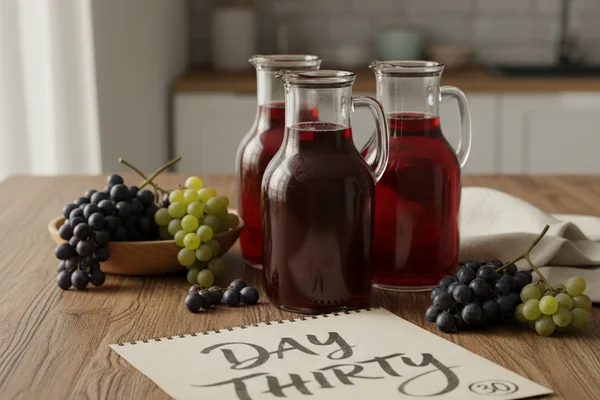
- After 30 days, rack the wine off its sediment into a freshly sanitized jug; top up and refit the airlock.
- Rack again every two months for six months total, each time leaving the sediment behind.
- Stabilize with potassium sorbate (follow package directions), sweeten to taste if desired, then wait 10 days for any remaining yeast to settle before bottling.
Why this works
Wild and native grapes carry higher natural tannin and acid than grocery-store varieties — good news for structure, tricky news for balance. The Campden tablet at the start kills off wild yeast and bacteria on the skins so your chosen yeast can run the show without competition. Pectic enzyme breaks down pectin in the grape pulp, which both improves juice yield and keeps your finished wine from going hazy. The repeated racking process isn’t busywork — each time you move the wine off its lees (dead yeast and grape solids), you’re removing compounds that can turn bitter or sulfurous over time. Patience here is the actual ingredient that separates sharp young wine from something you’d actually want to pour for a guest.
Notes
If you can’t find summer grapes locally, Concord grapes from the grocery store make a reasonable substitute — use the higher end of the weight range (16 lbs) for a bolder result. Frozen grapes work well here too; thaw completely before crushing, as freezing actually helps break down the cell walls and improves juice extraction. If acid blend isn’t available at a local homebrew store, it can be ordered online for a few dollars — the lemon juice swap works in a pinch but won’t give you the same clean tartness.