TABASCO WINE
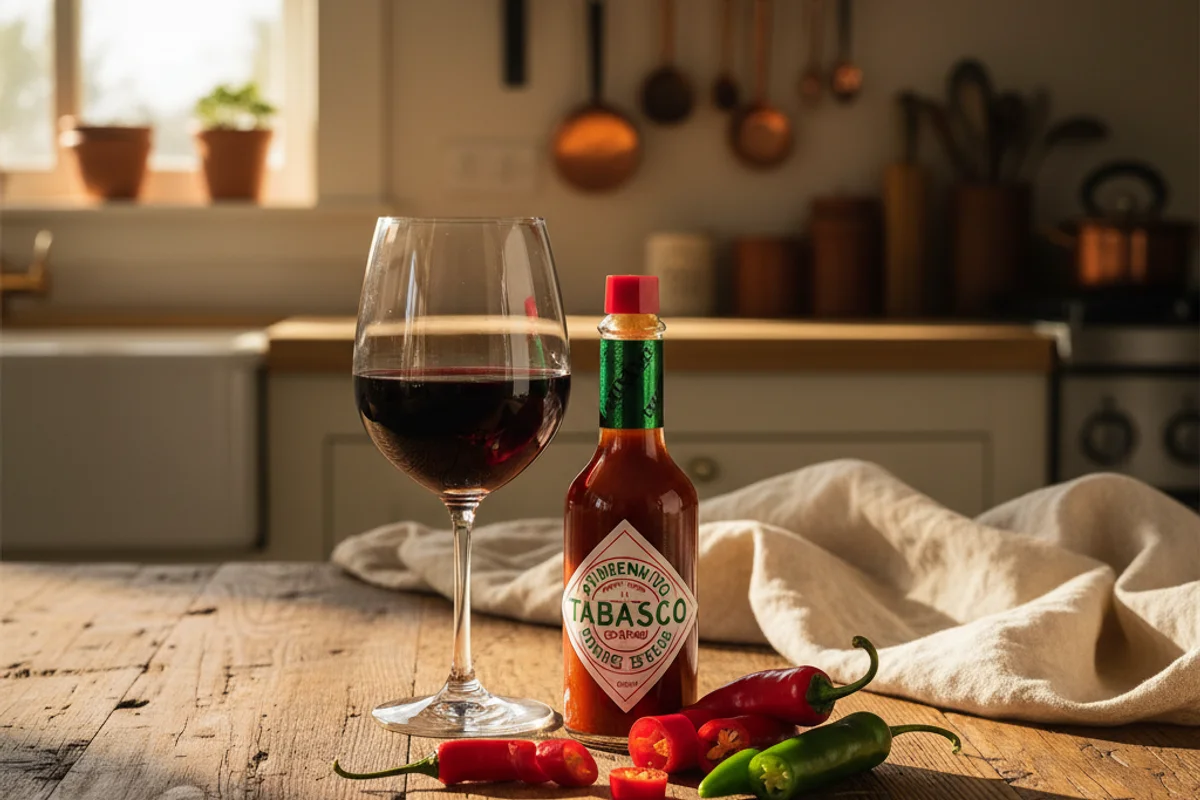
Think of this as the hot sauce you never have to refrigerate — except it’s wine. Tabasco peppers are tiny, fire-red, and loaded with capsaicin, the molecule that lights your mouth on fire. Fermented dry with golden raisins for body and a champagne yeast for clean attenuation, the finished wine sits somewhere between a bold cooking wine and a genuinely sippable curiosity. The heat level is yours to control: the base recipe is a slow burn, and doubling the pepper count turns it into something that demands respect.
The beginner trap: Handling Tabasco peppers without gloves — capsaicin binds to skin and won’t wash off easily with soap, so protect your hands every single time you touch the fruit.
Ingredients
- 8–10 ripe red Tabasco chile peppers (fresh; see Notes for substitutes)
- 1 lb golden raisins, finely chopped or minced
- 2 lbs granulated white sugar
- 1½ tsp acid blend
- ½ tsp pectic enzyme
- 1 tsp yeast nutrient
- 1 Campden tablet, crushed
- Water to make 1 gallon
- 1 packet Pasteur Champagne yeast (or any dry champagne-style yeast)
Method
- Put on rubber or nitrile gloves. Wash the peppers, cut off the stems, then pulse the peppers with 2 cups of water in a blender or food processor until coarsely chopped.
- Finely chop or mince the raisins, then place them in a nylon straining bag set inside your primary fermenter.
- Pour the chopped pepper slurry into the straining bag with the raisins, then tie the bag closed and leave it in the fermenter.
- Add the sugar, acid blend, yeast nutrient, and crushed Campden tablet. Stir well until the sugar fully dissolves.
- Cover the fermenter and let it rest for 12 hours.
- Add the pectic enzyme, re-cover, and wait another 12 hours.
- Pitch the yeast, re-cover the fermenter, and stir the must daily for 7 days.
- Wearing gloves, squeeze the straining bag firmly to extract all liquid, then discard the solids and remove the bag.
- Transfer the wine to a 1-gallon secondary fermenter (glass jug or carboy) and fit an airlock. Let it ferment to absolute dryness, roughly 45–60 days.
- Rack into a clean secondary and refit the airlock. Rack twice more at 30-day intervals.
- After a final 30-day rest, rack into bottles. The wine is ready to use immediately as a cooking wine or can be sipped right away.
Why this works
Capsaicin is an oil-soluble compound, not water-soluble, which means plain water alone would never pull the full heat out of the peppers. Alcohol, produced by the yeast as it eats the sugar, acts as a far better solvent for capsaicin — so the wine actually extracts the pepper’s heat more efficiently as fermentation progresses. Golden raisins add fermentable sugar and tannin-adjacent body without muddying the pepper character. Champagne yeast is chosen specifically because it ferments hard and clean all the way to dryness, leaving no residual sweetness to fight with the heat. The pectic enzyme breaks down plant cell walls, which improves both clarity and flavor extraction.
Notes
Fresh Tabasco peppers can be hard to find outside of specialty grocers or farmers’ markets; dried Tabasco chiles (widely available in Latin grocery stores) can substitute — use the same count and rehydrate briefly in warm water before chopping. To make a hotter wine, simply double the pepper count. If you want the wine to age gracefully beyond a year, add ⅛ tsp of wine tannin powder to the ingredient list at the start.