TANGERINE WINE
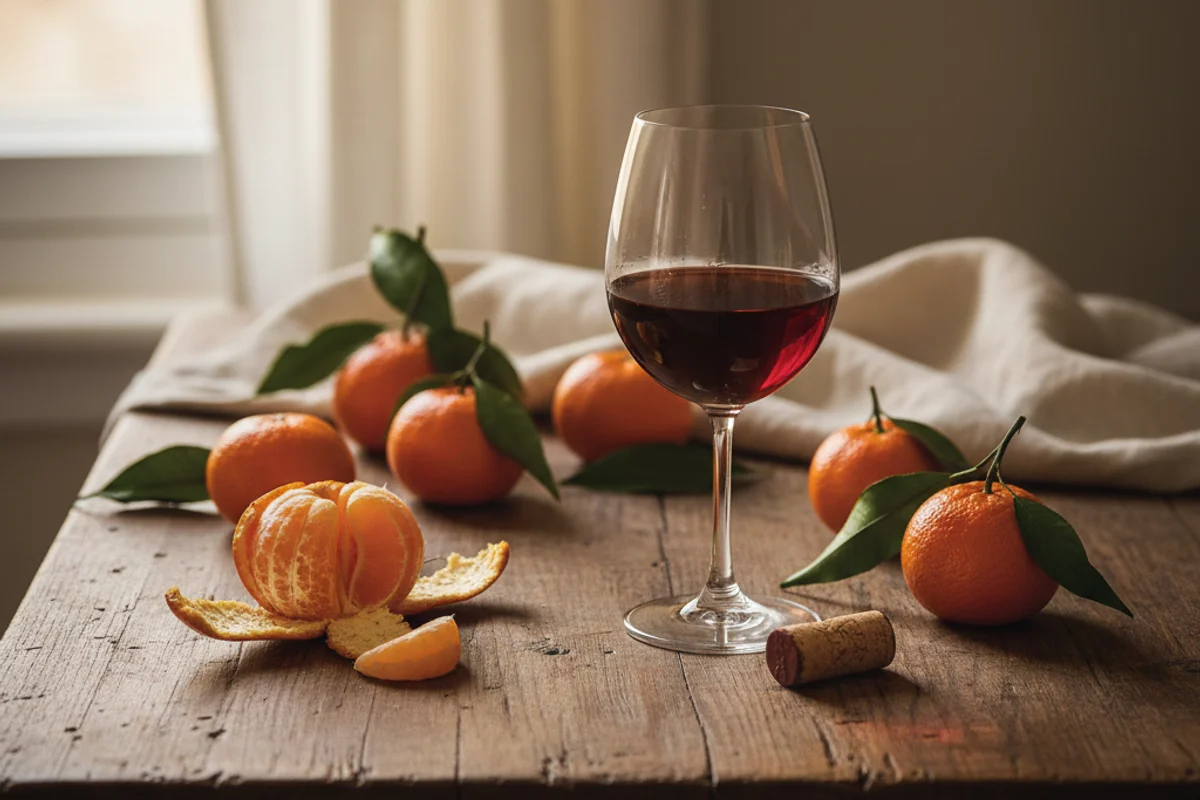
Tangerines are citrus’s overachievers — sweeter than an orange, more complex than a clementine, and loaded with floral aroma that can survive fermentation if you treat them right. This one-gallon recipe pairs sweet and tart tangerine varieties with Valencia oranges to build a wine that’s bright, lightly fragrant, and dry enough to drink with food. The zest brings aromatic oils to the party; the sections bring juice and sugar. Think of it as sunshine in a bottle — if you’re patient enough to wait for it.
The beginner trap: Leaving the white pith on the fruit will wreck your wine with harsh, mouth-coating bitterness that no amount of aging will fix — remove every scrap of it.
Ingredients
- 1¼ lbs (565 g) granulated white sugar, plus more to reach SG 1.090
- 16–24 tangerines, mixed sweet and tart varieties (clementines for tart, honey or murcott for sweet), fresh or frozen
- 8–10 small Valencia oranges, fresh or frozen
- 5 pints (2.4 L) water
- 1 tsp citric acid (or fresh lemon juice as a backup)
- 1 tsp pectic enzyme
- ¼ tsp grape tannin powder (or 1 cup strong-brewed black tea, cooled)
- 1 tsp yeast nutrient
- 1 packet Champagne wine yeast (or any dry white wine yeast)
Method
- Bring the water to a boil in a large pot and dissolve all the sugar into it completely. Set aside.
- Zest 5 of the Valencia oranges and reserve the zest. Peel and segment all the citrus — tangerines and oranges — removing every bit of white pith as you go.
- Place the reserved zest and all the fruit segments into a nylon mesh straining bag, tie it shut, and mash it down into your primary fermenter (a food-safe bucket works fine).
- Pour the hot sugar water over the bagged fruit, cover the fermenter loosely, and let it cool to room temperature.
- Once cool, stir in the citric acid, tannin, yeast nutrient, and pectic enzyme. Cover and wait 12 hours.
- Activate your yeast according to the packet instructions, then stir it into the must. Cover the fermenter and set it in a spot between 65–75°F (18–24°C).
- Stir the must once daily for 7–10 days until the specific gravity drops to about 1.010.
- Lift the straining bag and let it drip drain into the fermenter — do not squeeze it. Discard the pulp.
- Transfer the liquid to a 1-gallon glass jug (secondary fermenter), top up with water if needed to reduce headspace, and fit an airlock.
- When bubbling stops and the wine reads dry (SG at or below 1.000), rack it into a clean jug, top up, and refit the airlock.
- Rack again every 60 days for 6 months, topping up each time.
- Taste the wine. If it’s too tart, stabilize with potassium sorbate and potassium metabisulfite, sweeten gradually to your preference, then wait 3 more weeks before bottling.
- Age in the bottle for at least 6 months — a full year is better — before opening.
Why this works
Citrus fruit is naturally high in pectin, the same structural carbohydrate that makes jam thick. In wine, pectin creates a stubborn haze that refuses to settle out on its own. Pectic enzyme (pectinase) breaks those long-chain molecules apart before fermentation gets going, which is why you add it during the cold soak and not after — once alcohol is present, the enzyme works much less efficiently. The 12-hour wait before pitching yeast gives the enzyme time to do its job at the molecular level. The mix of sweet and tart tangerine varieties isn’t just about flavor balance; it also helps land the must in a workable acid range without overloading it, since citrus acids can overwhelm yeast if the pH gets too low.
Notes
Frozen tangerine segments work well here — thaw them fully before mashing, and expect more juice release than from fresh fruit. If you can only find one type of tangerine at your grocery store, use it for the sweet half and substitute the juice of 4–5 calamondin limes or an extra teaspoon of citric acid for the tart component. Eight ounces of canned mandarin orange segments (drained) can replace the sweet tangerines in a pinch.