TEABERRY AND WINTERGREEN WINES
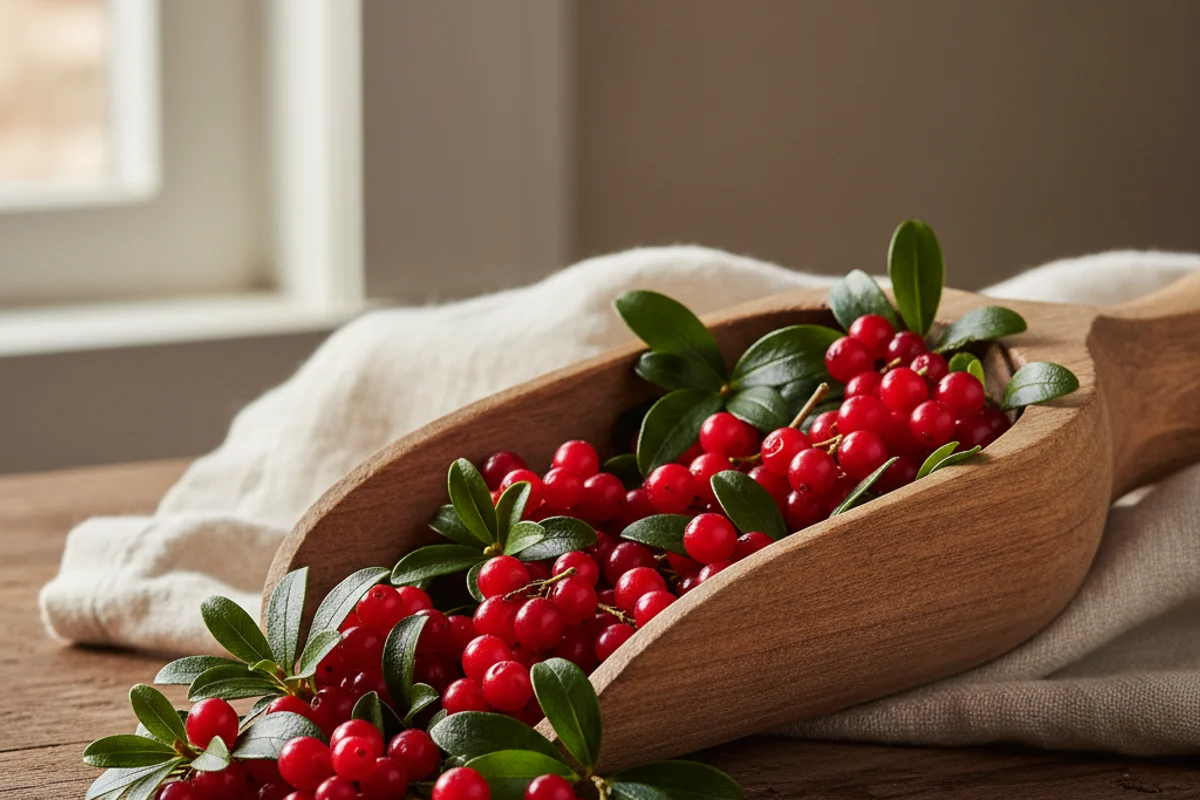
Think of teaberries as nature’s original wintergreen candy — the same cool, minty-sweet flavor you know from old-school chewing gum, but growing wild on a low creeping shrub across the eastern woods of North America. These small red berries pack real aromatic punch, and that same intensity carries straight into the glass. The wintergreen leaf version takes a different angle: a double-steep extraction that pulls flavor from the foliage itself, brightened with orange zest and raisins. Both wines reward patience, but the results are genuinely unlike anything you’ll find on a store shelf.
The beginner trap: Skipping the full aging time — these wines taste harsh and medicinal young, but mellow into something special after 3–6 months in the bottle.
Teaberry Wine
Ingredients
- 4–6 lbs ripe teaberries, fresh or frozen
- 1½–1¾ lbs granulated sugar
- 6½ pts (about 3.25 qts) water
- ½ tsp acid blend (or 1 tsp lemon juice as a substitute)
- 1 tsp pectic enzyme
- 1 Campden tablet, crushed
- 1 tsp yeast nutrient
- 1 packet wine yeast
Method
- Bring half the water to a boil and stir in the sugar until fully dissolved. While it heats, wash the berries and remove any that are soft, moldy, or unripe.
- Place the berries in a nylon straining bag, tie it closed, and set it in your primary fermenter. Mash the berries through the bag.
- Pour the hot sugar-water over the bag, then add the remaining cool water to bring the temperature down faster.
- Cover the fermenter with a cloth and let it cool to room temperature. Stir in the acid blend, yeast nutrient, and crushed Campden tablet. Re-cover and wait 12 hours.
- Stir in the pectic enzyme, re-cover, and wait another 12 hours.
- Add your activated yeast, cover the fermenter, and stir the must twice a day until active fermentation slows noticeably.
- Lift out the straining bag, squeeze out as much juice as you can, and discard the pulp. Let the liquid settle overnight, then rack into a clean secondary fermenter.
- Top up to the shoulder of the vessel if needed and fit an airlock.
- After 60 days, rack again, top up, and refit the airlock. Rack once more when the wine clears completely.
- Move the wine to a cool, dark spot for 4 months, checking the airlock occasionally to make sure it hasn’t dried out.
- Stabilize, sweeten to taste if you like, and wait 14 days before bottling. Age in the bottle for 3–6 months before opening.
Wintergreen Leaf Wine
Ingredients
- 2 qts fresh young wintergreen leaves (red-tipped ones are ideal)
- ½ lb golden raisins, chopped or minced (sultanas work fine)
- 2 large oranges, zest and juice
- 2 lbs granulated sugar
- ⅛ tsp grape tannin (or 1 cooled cup of strong plain black tea)
- 1 gallon water
- 1 tsp yeast nutrient
- 1 packet champagne yeast (or any dry white wine yeast)
Method
- Bring half the water to a boil. While it heats, wash the leaves and strip off the stems, then put the leaves in your primary fermenter.
- Pour the boiling water over the leaves, cover the fermenter, and let it steep overnight.
- Strain off and save that liquid. Boil the other half of the water and pour it over the strained leaves along with the chopped raisins and orange zest. Cover and let sit for one hour.
- Add the reserved liquid from the overnight steep back into the fermenter. Stir in the orange juice, sugar, tannin, and yeast nutrient. Keep stirring until the sugar is completely dissolved.
- Add your activated yeast, cover the fermenter, and stir the must once a day for one week.
- Strain the must through a nylon straining bag into a secondary fermenter and fit an airlock.
- Let it ferment to dryness, then rack, top up, and refit the airlock.
- Set aside for two months. If the wine is clear, rack carefully into bottles. If it’s still hazy, top up, refit the airlock, and wait until it clears before bottling.
- Age in the bottle for 3–6 months.
Why this works
Teaberries get their signature flavor from methyl salicylate — the same compound that gives wintergreen mints their kick. It’s volatile, meaning heat and time can drive it off if you’re not careful, which is why the hot-water addition is balanced with cool water and why long cold aging (not hot storage) is the move here. The pectic enzyme in the teaberry recipe breaks down the pectin in the fruit cell walls, which releases more juice and prevents a permanent pectin haze in the finished wine. In the leaf version, the double-steep pulls different compounds in each pass — the overnight cold-ish steep extracts delicate aromatics, while the second hot pour pulls more body and color from the spent leaves.
Notes
Frozen teaberries work well here and are actually easier to mash than fresh ones — freezing ruptures the cell walls and gives you better juice extraction right from the start. If you can’t find acid blend at a homebrew shop, a teaspoon of fresh lemon juice per gallon is a reasonable stand-in. Wintergreen leaves can be hard to source outside foraging — there is no good grocery-store substitute, so this one is really for people with access to the plant.