TOMATILLO WINE
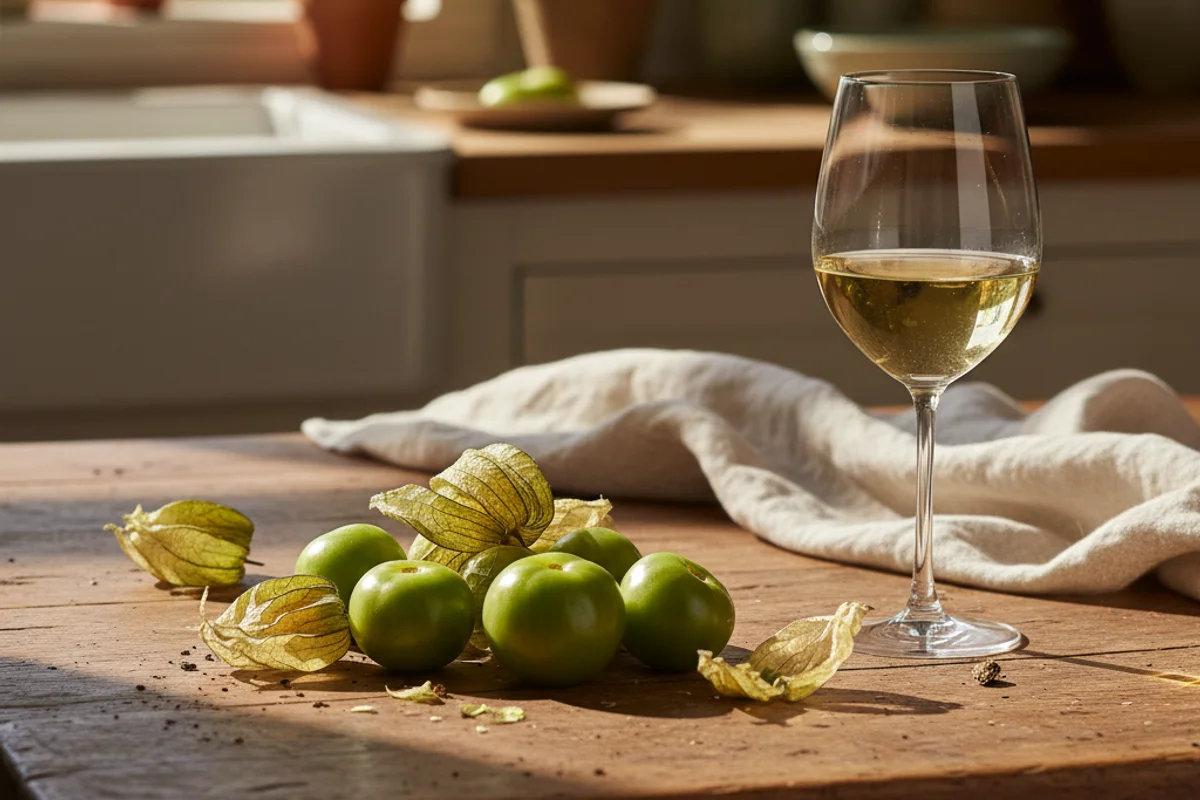
Tomatillos are the tangy, papery-husked fruits hiding in the produce section — best known for salsa verde, but capable of so much more. Their bright, citrus-forward acidity and subtle herbal edge make them a surprisingly strong foundation for a dry country wine. Lemon balm adds a soft floral note, while dried grain and raisins build the body that tomatillos alone can’t provide. The result is a pale, food-friendly wine with real complexity — one that rewards the patient winemaker willing to let it age a full year.
The beginner trap: Skipping the overnight grain soak or rushing the 24-hour Campden/pectic enzyme sequence will leave you with a starchy, hazy wine that never quite clears.
Ingredients
- 3 lbs tomatillos, fresh (husks removed) or canned whole
- 1 quart fresh lemon balm leaves and stalks (or substitute mint as a backup)
- 1 lb raisins, golden raisins, or currants
- 1 lb dried whole-kernel corn, pearl barley, or wheat berries (found in bulk bins or the grain aisle)
- 1⅔ lbs granulated white sugar
- 3½ quarts water, plus extra to top up
- 2 lemons or oranges (zest and juice, all white pith removed)
- 1 tsp pectic enzyme
- ⅛ tsp grape tannin (or substitute 1 cooled cup of strong black tea)
- 1 tsp yeast nutrient
- 1 Campden tablet, crushed
- 1 packet Champagne or Montrachet yeast
Method
- The evening before brew day, cover the dried grain with cold water and let it soak overnight. Drain before use.
- Pour 2 cups of boiling water over the raisins and let them soak for 15 minutes, then drain and set aside.
- Remove the papery husks from the tomatillos, rinse them well, and chop them roughly.
- Combine the drained grain, soaked raisins, lemon balm, chopped tomatillos, and citrus zest (no white pith) in a food processor or meat grinder and mince everything together.
- Place the minced mixture into a nylon straining bag and set it in your primary fermentation vessel.
- Add the sugar and grape tannin directly to the bag, then pour 3½ quarts of boiling water over everything and stir well until the sugar dissolves completely.
- Cover the vessel and let it cool for one hour, then stir in the crushed Campden tablet and the citrus juice.
- After 12 hours, add the yeast nutrient and pectic enzyme; stir to combine.
- After another 12 hours, pitch the yeast.
- Ferment for 7 days, gently squeezing the straining bag 2–3 times daily to extract flavor and color.
- On day 7, lift the bag, let it drip drain fully, then give it a firm (but not brutal) squeeze before discarding the solids.
- Transfer all liquid to a glass secondary fermenter and top up with water to within 2½ inches of the airlock.
- Rack after 3 weeks, then once a month until the wine is clear and shows no new sediment over a two-week window.
- Bottle and age at least 9–12 months before opening.
Why this works
Tomatillos are high in pectin — the same stuff that makes jam gel. That’s great for salsa, but terrible for wine clarity. Pectic enzyme breaks those long pectin chains apart, which lets the wine drop clear over time instead of staying stubbornly hazy. The 12-hour wait after adding the Campden tablet is intentional: sulfite needs time to neutralize wild yeast and bacteria before you introduce the enzyme, because sulfite can partially deactivate pectic enzyme if both go in at once. The grain pulls double duty — it adds fermentable starch and gives the finished wine a fuller, rounder mouthfeel that pure fruit wine often lacks.
Notes
Canned whole tomatillos (drained) work well if fresh aren’t available — look for them in the Mexican foods aisle. If lemon balm is out of season or hard to find, fresh mint is a reasonable stand-in, though the flavor will be a bit more assertive. Under-squeezing the grain bag at the end leaves wine behind; over-squeezing pushes bitter starchy compounds into your must — firm pressure, one slow squeeze, is the sweet spot.