Tomato Wines
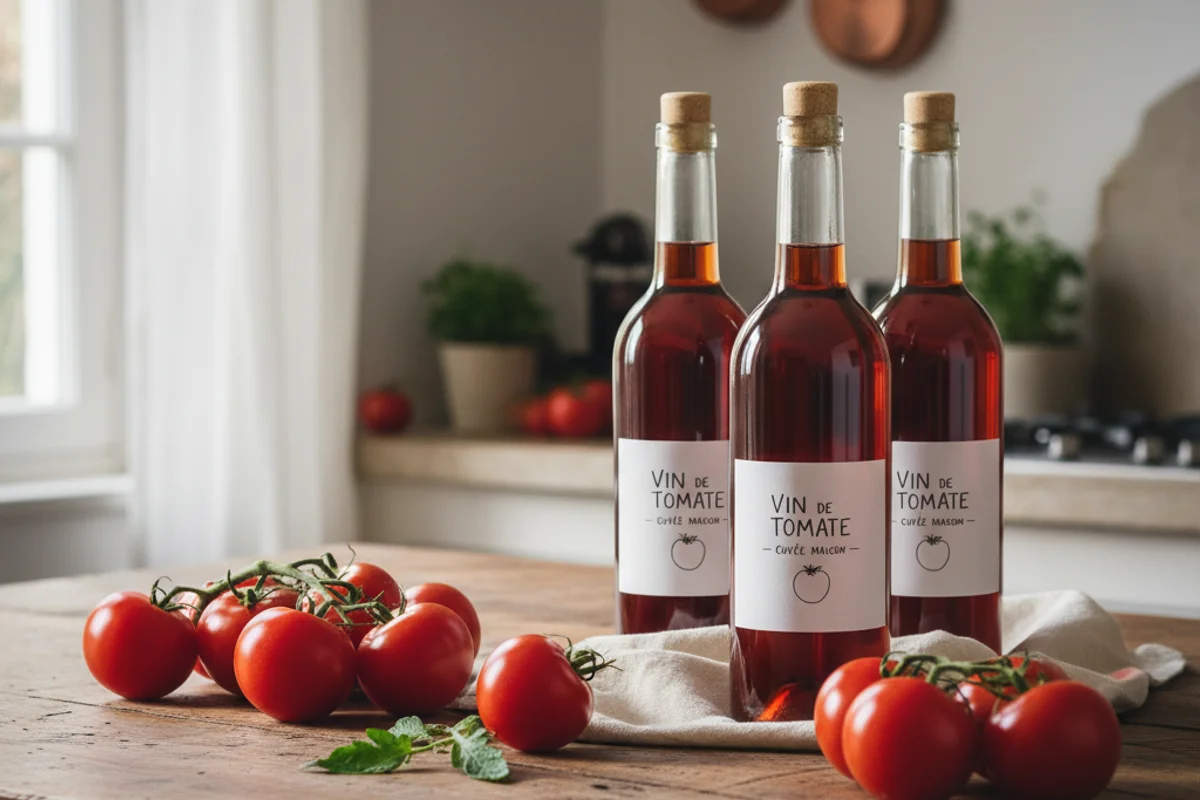
Tomatoes are mostly water, a little sugar, and a surprising amount of acid — which turns out to be a solid starting point for wine. Red tomatoes produce a pale, delicate wine with a faintly savory edge that disappears with age, leaving something clean and refreshing. Green tomatoes go in a totally different direction: sharper, more herbal, almost cidery. Both styles reward patience and reward you most when served well chilled.
The beginner trap: Using anything less than perfectly ripe, fully red tomatoes — underripe or overripe fruit will wreck the flavor before fermentation even starts.
Red Tomato Wine
Ingredients
- 4 lbs fresh, ripe red tomatoes (no bruises, no soft spots)
- 2 lbs granulated sugar
- 3½ qts water
- 2 tsp acid blend
- ½ tsp pectic enzyme
- ⅛ tsp grape tannin (or 1 unsweetened black tea bag, steeped and cooled)
- 1 tsp yeast nutrient
- 1 Campden tablet, crushed
- 1 packet Champagne or Montrachet yeast
Method
- Bring the water to a boil and dissolve the sugar completely into it.
- Wash the tomatoes, cut them into chunks, and discard any damaged sections. Place all the fruit and any cutting juice into a nylon straining bag set inside your primary fermenter, then tie the bag closed and crush the fruit by hand.
- Pour the hot sugar water over the bagged fruit. Cover the fermenter and let it cool for one hour.
- Add the acid blend, grape tannin, yeast nutrient, and crushed Campden tablet. Stir well, then re-cover.
- After 12 hours, add the pectic enzyme and stir it in.
- Wait another 12 hours, then pitch the yeast.
- Stir the must twice a day for 7 days.
- Lift out the nylon bag and let it drip-drain into the fermenter on its own — do not squeeze it.
- Siphon the liquid off the sediment into a secondary fermenter, top up to the shoulder, and fit an airlock.
- Rack every 60 days until the wine runs clear, then wait two more weeks and rack one final time.
- Add wine stabilizer (potassium sorbate), wait 10 days, then sweeten to taste with a simple sugar syrup if desired.
- Bottle and age for at least one year. Serve chilled.
Green Tomato Wine
Ingredients
- 3 lbs fresh green tomatoes, chopped
- 1 qt fresh lemon balm leaves and stems (or substitute 2 tsp dried lemon balm from a grocery herb section)
- 1 lb raisins (golden raisins, regular raisins, or dried currants all work)
- 1 lb whole grain — maize, pearl barley, or wheat berries (find these in the bulk or health food aisle)
- 1⅔ lbs granulated sugar
- 3½ qts water
- 2 lemons or 2 oranges
- 1 tsp pectic enzyme
- ⅛ tsp grape tannin (or 1 unsweetened black tea bag, steeped and cooled)
- 1 tsp yeast nutrient
- 1 Campden tablet, crushed
- 1 packet Champagne or Montrachet yeast
Method
- Cover the grain with cold water and soak it overnight. Drain before using.
- Pour boiling water over the raisins and let them soak for 15 minutes, then drain.
- Zest the citrus with a fine grater or peeler, removing only the colored outer layer — none of the white pith. Set the juice aside separately.
- Run the drained grain, soaked raisins, lemon balm, chopped tomatoes, and citrus zest through a food processor or blender until finely minced.
- Place the minced mixture into a nylon straining bag in your primary fermenter. Add the sugar and grape tannin directly to the bag and fermenter.
- Bring 3½ qts of water to a boil and pour it over everything. Stir well to dissolve the sugar, then cover and let cool for one hour.
- Add the crushed Campden tablet and the reserved citrus juice. Stir and re-cover.
- After 12 hours, add the yeast nutrient and pectic enzyme. Stir to combine.
- Wait another 12 hours, then pitch the yeast.
- Ferment for 7 days, squeezing the bag gently 2–3 times each day.
- Remove the bag and let it drip-drain, then give it a firm (but not punishing) squeeze to recover the remaining liquid.
- Transfer all liquid to a secondary fermenter and top up with water to within about 2½ inches of the airlock.
- Rack after 3 weeks, then monthly until the wine is clear and no new sediment forms over a two-week window.
- Bottle and age 9–12 months before opening.
Why this works
Tomatoes are high in pectin, which is the same stuff that makes jam gel. In wine, pectin causes a stubborn haze that just will not drop out on its own. That’s why pectic enzyme is non-negotiable here — it breaks the pectin chains apart so the haze-forming particles can clump together and sink. Adding it too early (before the must cools) or skipping it entirely are the two most common reasons tomato wine stays cloudy for months. The 12-hour wait after the Campden tablet also matters: sulfite needs time to off-gas before you add the enzyme, or it will inhibit the enzyme’s activity before it gets a chance to work.
Notes
Acid blend is available at any homebrew shop; if you can’t find it locally, use 1½ tsp of lemon juice per teaspoon of acid blend as a rough stand-in. Grape tannin can be swapped for one cooled, unsweetened cup of strong black tea in either recipe. For the green tomato wine, frozen green tomatoes work well — thaw them completely and proceed as written.