Turnip Wine
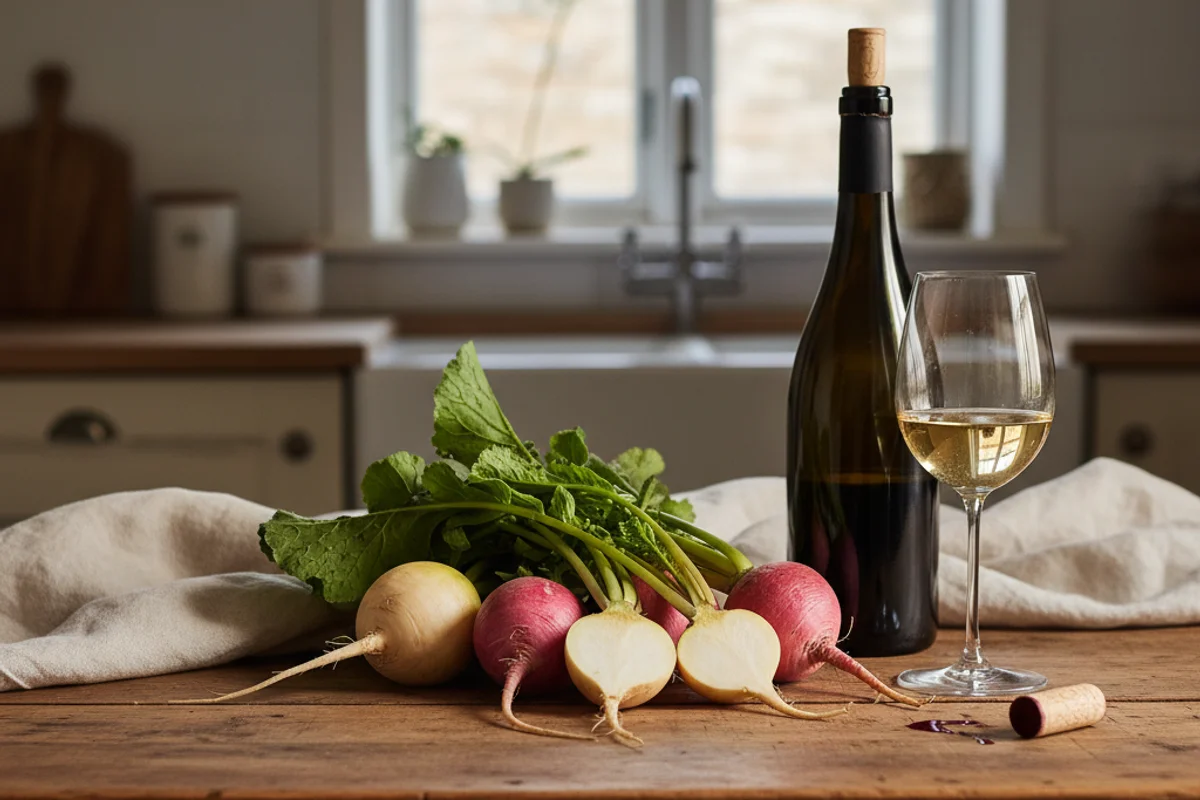
Turnips don’t get much respect at the dinner table, and honestly, that’s fair. Raw or boiled, they carry a sharp, earthy bite that not everyone warms up to. But here’s the thing — fermentation is a transformer. The same root that makes you push food around your plate becomes something dry, light, and pleasantly rustic in the glass. Two versions exist here: one built with grape leaves for tannin structure, and one with dried hops for a subtle herbal edge. Neither one tastes like a turnip. That’s the whole point.
The beginner trap: Squeezing the straining bag to speed up drainage will force bitter, starchy compounds into your must — drip drain only, every single time.
Ingredients
Version 1 — Grape Leaf
- 4½ lbs turnips, tops removed
- ½ lb fresh grape leaves (wild or store-bought; jarred grape leaves in brine work if rinsed well)
- 2 lbs light brown sugar
- 6½ pints water
- 1½ tsp citric acid (or lemon juice powder as a substitute)
- ½ tsp pectic enzyme
- ½ tsp wine tannin (or 2 tsp strong brewed black tea)
- 1 tsp yeast nutrient
- 1 packet Lalvin RC212 or Red Star Sherry yeast
Version 2 — Hops
- 4 lbs turnips, tops removed
- ½ oz dried hops (pellet or whole; find at any homebrew shop or order online)
- 2 lbs white granulated sugar
- 6½ pints water
- 1 tsp acid blend (or 1 tsp citric acid as a substitute)
- ½ tsp pectic enzyme
- ½ tsp wine tannin (or 2 tsp strong brewed black tea)
- 1 tsp yeast nutrient
- 1 packet Lalvin RC212 or Red Star Sherry yeast
Method
Version 1 — Grape Leaf
- Scrub the turnips well, remove any small roots and crowns, then chop them coarsely.
- Place chopped turnips in a pot with the water, bring to a boil, cover, and cook until tender.
- Pour the cooked turnips and liquid into a nylon straining bag set over your primary fermenter and let it drip drain completely — do not squeeze.
- Stir the brown sugar into the hot liquid until fully dissolved.
- Add the grape leaves into the straining bag with the turnip pulp, tie the bag closed, and place it in the primary fermenter.
- Once the liquid cools to room temperature, stir in the citric acid, pectic enzyme, tannin, and yeast nutrient.
- Cover the fermenter and wait 12–14 hours, then add your activated yeast.
- Ferment for 7 days, pressing the bag down (without squeezing) twice each day to keep it submerged.
- Remove the bag and let it drip drain, then discard the solids.
- Rack the wine into a clean secondary fermenter, top up if needed, and seal with an airlock.
- Rack every two weeks for three total rackings, topping up and reattaching the airlock each time.
- After those three rackings, rack every two months until the wine is clear and stops dropping sediment.
- If the wine hasn’t cleared after 6 months, add amylase enzyme (available at homebrew shops) and wait another two months.
- Stabilize the wine, sweeten to taste if desired, wait 10–14 days, then bottle.
- Age at least 12 months before opening a bottle.
Version 2 — Hops
- Scrub the turnips, remove roots and crowns, and chop coarsely.
- Place the chopped turnips in a nylon straining bag, tie it closed, and put it in a pot with the water.
- Bring to a boil, cover, and cook until the turnips are tender.
- Lift out the bag and let it drip drain over the pot — do not squeeze.
- Pour the hot liquid over the sugar in your primary fermenter and stir until fully dissolved.
- Add the dried hops to the straining bag with the turnip pulp, tie it closed, and place it in the primary.
- Once the liquid reaches room temperature, add the acid blend, pectic enzyme, tannin, and yeast nutrient.
- Cover and rest for 12–14 hours, then pitch your activated yeast.
- Ferment for 7 days, pushing the bag down twice daily without squeezing.
- Remove the bag, drip drain, and discard the solids.
- Rack into a secondary fermenter, top up, and fit with an airlock.
- Rack after one week, again one week after that, then once more two weeks later — topping up and reattaching the airlock each time.
- From there, rack every two months until the wine runs clear and sediment stops forming.
- If clarity hasn’t arrived by 6 months, treat with amylase enzyme and allow two more months.
- Stabilize, sweeten if you like, wait 10–14 days, and bottle; age a full year before tasting.
Why this works
Turnips are high in starch, which is why amylase enzyme sometimes becomes necessary late in the process — starch doesn’t ferment, but it does cloud wine stubbornly. Boiling the turnips extracts fermentable sugars and flavor compounds while leaving behind most of the sharp, sulfurous notes that make raw turnips polarizing. The grape leaves in Version 1 contribute tannins, which help with structure and clarity over time. The hops in Version 2 add mild bitterness and herbal aromatics that balance the residual earthiness of the root. Both additives serve the same structural role that grape skins play in traditional winemaking — giving the finished wine something to hold onto.
Notes
Jarred grape leaves packed in brine (found in most grocery stores near the olives) work fine in Version 1 — just rinse them thoroughly to remove excess salt. Pellet hops from a homebrew shop or online retailer are the easiest option for Version 2; any neutral hop variety works since you’re after bittering, not aroma. If the wine stalls before clearing, amylase enzyme is sold at homebrew retailers under names like “Amylase AG” — it breaks down leftover starch quickly and won’t affect flavor.