Watermelon-Grape Concentrate Wine (makes 1 gallon)
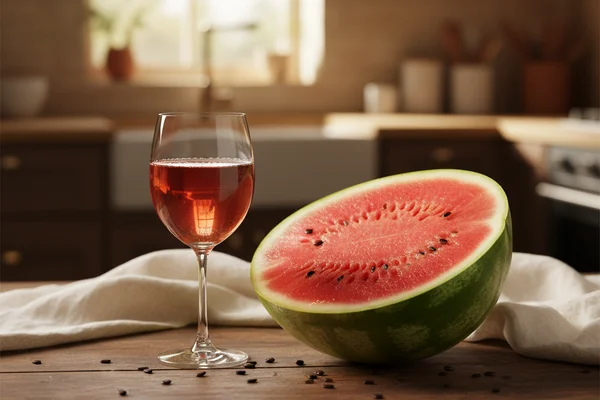
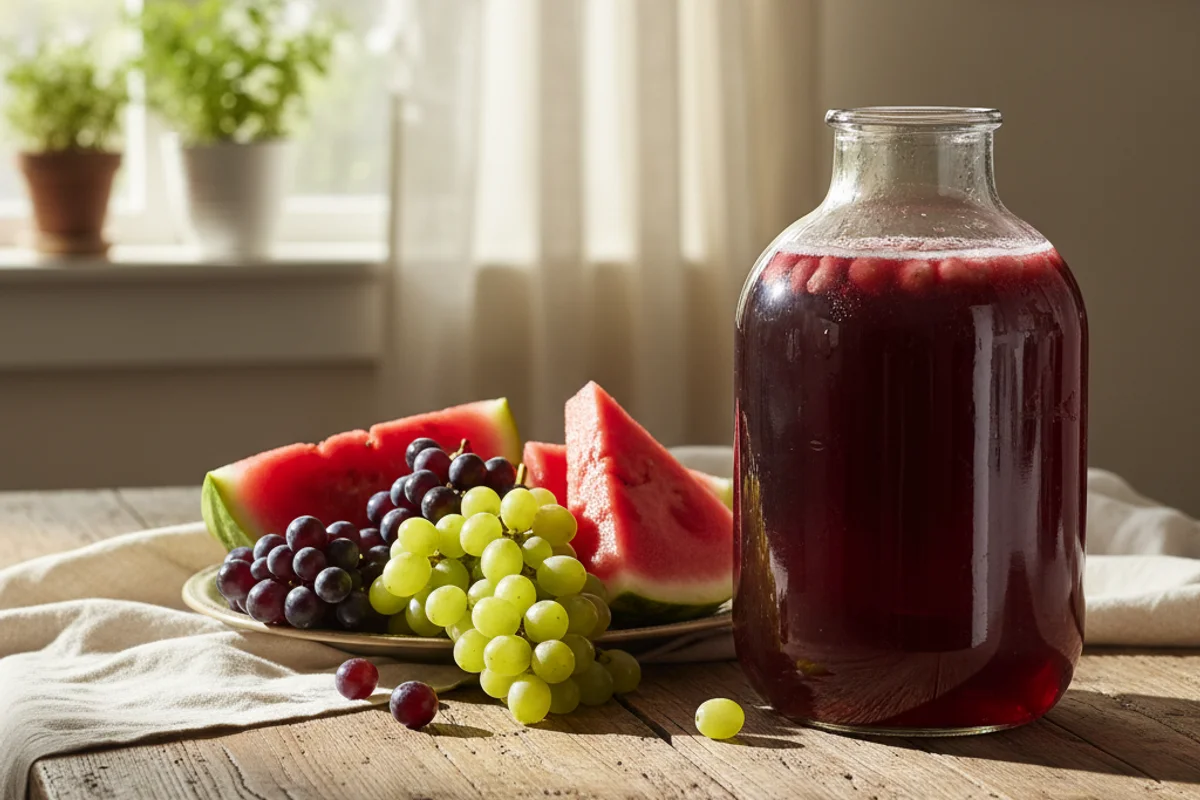
Watermelon is about 92% water, which sounds like a winemaker’s dream until you realize that water brings almost nothing to the flavor party on its own. The fix is white grape concentrate — a pantry-shelf powerhouse that donates body, natural grape sugars, and a backbone that keeps this wine from tasting like slightly boozy fruit punch. What you end up with is pale, refreshing, and just watermelon-forward enough to remind you of a July afternoon, with enough structure to actually age.
The beginner trap: Skipping the full secondary aging schedule — watermelon wine needs repeated racking and at least three months in the bottle, or it stays thin, hazy, and oddly flat.
Ingredients
- 6–8 lb watermelon (fresh; seedless varieties work fine)
- 12 oz white grape juice concentrate (frozen, thawed — find it in any grocery freezer aisle)
- Water to top up to 1 gallon total
- 2½ cups granulated white sugar
- Juice and zest of 2 lemons
- 1 Campden tablet, crushed (sodium or potassium metabisulfite; find it at homebrew shops or online)
- 1 tsp yeast nutrient
- 1 packet Champagne yeast or dry white wine yeast (Lalvin EC-1118 is a reliable grocery-store-adjacent option)
- ¼ tsp potassium sorbate (for stabilizing before bottling)
- 1 additional Campden tablet, crushed (for stabilizing)
Method
- Cut the rind off the watermelon, cube the flesh into roughly 1-inch pieces, and remove any loose seeds. Transfer the cubes and all free-running juice into your primary fermenter.
- Zest the lemons using a fine grater, taking only the bright yellow outer layer — avoid the bitter white pith. Juice both lemons and add the juice and zest to the fermenter.
- Add the grape concentrate and one crushed Campden tablet. Stir to combine.
- Add enough water to bring the total liquid volume to 3¾ quarts (just under 1 gallon). Add the sugar and stir until fully dissolved.
- Cover the fermenter with a clean cloth and let it sit for 24 hours — this gives the Campden tablet time to knock out wild yeast and bacteria.
- Sprinkle in the yeast and yeast nutrient, cover again, and ferment at room temperature for 5–7 days, stirring everything down once per day.
- Siphon the liquid off the pulp and sediment into a 1-gallon glass jug (your secondary). Fit an airlock and let it ferment undisturbed for 30 days.
- Rack (siphon) into a clean jug, top up with a small amount of water or similar wine to minimize headspace, refit the airlock, and wait another 30 days.
- Rack once more, top up, and wait 60 additional days.
- After that final 60-day rest, rack into a clean vessel and stabilize: stir in ¼ tsp potassium sorbate and one more crushed Campden tablet. This stops any remaining yeast from re-fermenting your finished wine.
- Wait 10 days, then rack one final time, sweeten to taste if desired, and bottle.
- Age in the bottle for at least 3 months; 6–12 months gives noticeably better results.
Why this works
Watermelon flesh is mostly water and fructose, with very little of the tannin or acid that gives wine its spine. Left alone, it ferments into something thin and oddly hollow. Grape concentrate solves two problems at once: it adds natural grape tannins for mouthfeel, and it loads in extra fermentable sugars with flavors that complement rather than compete with the melon. The lemon zest contributes aromatic compounds called terpenes, while the lemon juice drops the pH into a range where yeast thrives and spoilage bacteria don’t. Multiple rackings drop out proteins and dead yeast cells (lees) that would otherwise keep the wine cloudy and give it an off, bready taste. Patience is the actual active ingredient here.
Notes
Seedless watermelon makes prep much easier and works just as well as seeded varieties. If your watermelon is on the bland side (an off-season buy, for example), bump up to the full 8 lb to compensate. Potassium sorbate is sold at most homebrew supply shops; if ordering online feels like a hurdle, many homebrew starter kits include it. Do not skip stabilization before back-sweetening — adding sugar to active yeast just restarts fermentation in the bottle.