Watermelon-Strawberry Wine (makes 1 gallon)
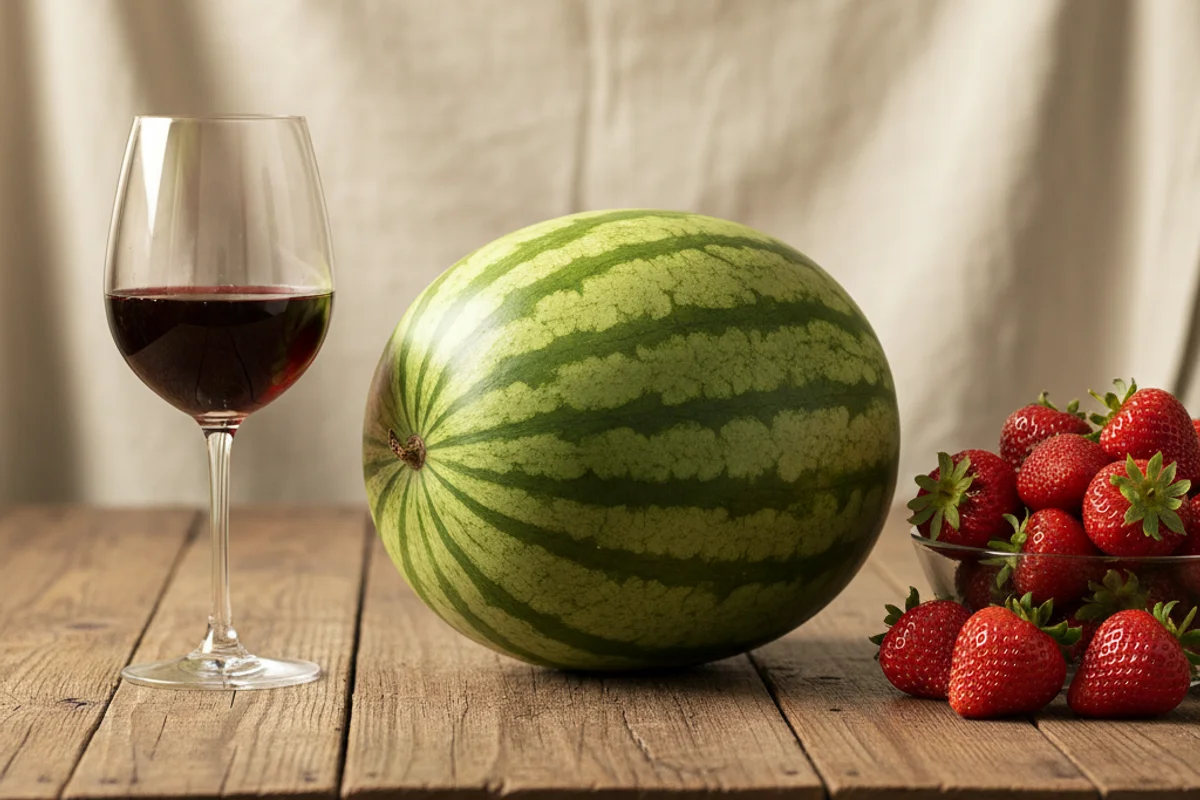
Watermelon is about 92% water, which means it’s also about 92% potential. That other 8%? Sugar, lycopene, and a clean, grassy sweetness that disappears fast if you don’t give it a partner. Strawberries are that partner — punchy, aromatic, and acidic enough to keep the whole thing from going flat on your palate. Together they make a pale pink wine that tastes like the best parts of a summer afternoon, somewhere between a rosé and a fruit punch that grew up and got serious.
The beginner trap: Skipping the reserved watermelon juice for topping up and using plain water instead — it dilutes the delicate flavor you worked hard to build.
Ingredients
- 3 quarts fresh watermelon juice (from 1 large watermelon), plus extra reserved for topping up
- 2–3 lbs strawberries, fresh or frozen
- 2 lbs granulated white sugar
- Juice and zest of 1 lemon
- 1 tsp pectic enzyme
- 1 Campden tablet, crushed
- 1 tsp yeast nutrient
- 1 packet wine yeast (Lalvin 71B or EC-1118, or any dry wine yeast)
Method
- Juice the watermelon and pour 3 quarts into your primary fermenter; store the remaining juice in a sealed container in the refrigerator.
- Remove stems from strawberries, chop them coarsely, and toss them with the lemon zest; place the mixture into a nylon straining bag and tie it closed.
- Squeeze the bag firmly into the watermelon juice, then leave the bag submerged in the fermenter.
- Add the sugar, lemon juice, and yeast nutrient; stir until the sugar fully dissolves.
- Add the crushed Campden tablet, cover the fermenter, and wait 12 hours.
- Stir in the pectic enzyme, re-cover, and wait another 12 hours.
- Pitch the yeast, cover the fermenter, and stir the must once daily for 7 days.
- After 7 days, squeeze the straining bag gently to release the remaining juice, then discard the pulp.
- Transfer the liquid to a 1-gallon glass carboy (secondary fermenter) and fit an airlock.
- Once active fermentation slows — usually 5 to 7 days — top up the carboy with your reserved refrigerated watermelon juice.
- Let fermentation continue for 30 days, then rack into a clean carboy; top up with fresh watermelon juice or water if needed, and refit the airlock.
- Wait until the wine is completely clear, then rack into bottles and age at least 3 to 6 months before drinking.
Why this works
Watermelon juice is naturally low in tannins and acid, which makes it a weak stand-alone wine base — it ferments fine but tastes thin. Strawberries bring malic and citric acids to the party, along with volatile esters that smell intensely fruity. The lemon juice backs up that acidity and brightens the whole profile. Pectic enzyme is the unsung hero here: both fruits are loaded with pectin, a natural thickener that causes permanent haze in finished wine. The enzyme breaks pectin chains apart before fermentation even starts, which is why your wine can eventually clear to that jewel-like finish. Skipping it means months of waiting for a wine that may never fully clear on its own.
Notes
Frozen strawberries work very well in this recipe — freezing ruptures cell walls and actually releases more juice and flavor than fresh fruit. If you can’t find wine yeast, look for Red Star Premier Blanc or Fleischmann’s ActiveDry as last-resort substitutes, though dedicated wine yeast gives cleaner results. If your watermelon is small, supplement with store-bought 100% watermelon juice to hit your 3-quart target.